Induction Seal Liner Size Guide: How to Match Cap Size, Bottle Mouth & Neck Finish
A practical sizing guide for buyers who need the foil disc to fit the cap correctly, cover the sealing land, and match the actual bottle-and-closure system rather than a single nominal diameter.
 Lena Schmidt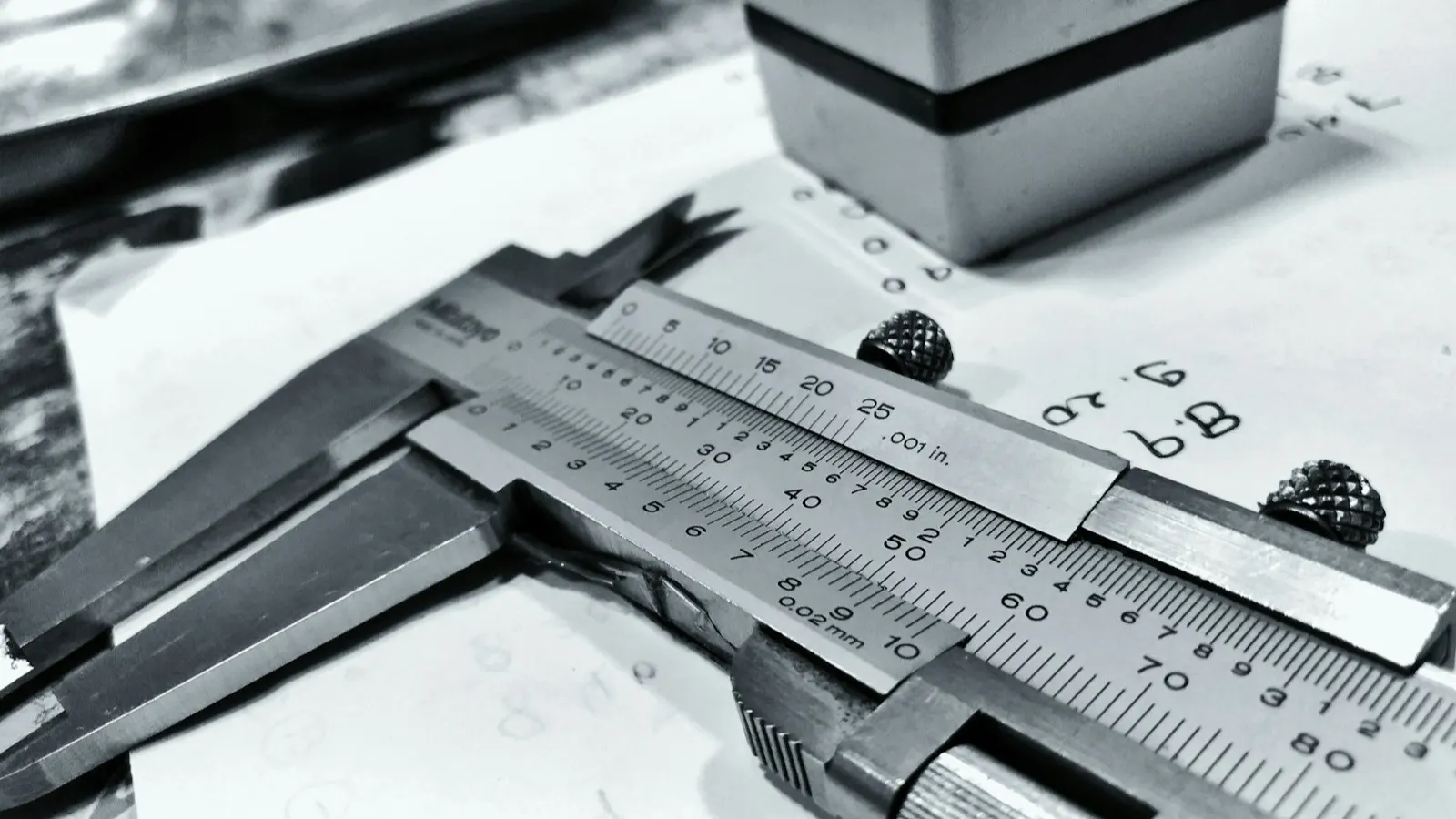
Disclosure: We may earn a commission if you purchase through links on this page, at no additional cost to you.
Quick answer. Do not order an induction seal liner from the bottle’s nominal neck size alone. A 38-400 bottle does not automatically mean that the die-cut liner itself should measure exactly 38.0 mm.
The correct liner has to satisfy two physical conditions at the same time: it must fit flat inside the closure’s liner pocket, and it must fully cover the bottle’s sealing land when the cap is applied. The closure and container must also share the correct neck finish so the cap seats at the intended height and pressure.
For a new package, send the supplier the actual bottle, cap, neck-finish designation, container resin, product chemistry and a physical sample or drawing. Then test the exact die-cut liner in production-intent components before buying bulk quantity.
The Most Common Sizing Mistake: Treating One Diameter as the Whole Specification
Three different dimensions are often collapsed into one number: the bottle’s neck-finish size, the cap’s nominal size, and the actual outer diameter of the induction liner. They are related, but they are not interchangeable.
For example, a 38-400 neck finish identifies the nominal thread diameter and thread style of the bottle-and-cap interface. It does not tell you the exact diameter of every liner that can sit inside every 38-400 closure. Cap shell geometry, liner-retention features and the bottle’s sealing land still have to be checked.
Industry liner suppliers also use nominal liner sizes. One current supplier example notes that a liner sold as a nominal 38 mm size may have an actual cut diameter around 36.8 mm. That number is supplier-specific evidence, not a universal conversion rule. The practical lesson is simpler: ask for the actual die-cut diameter, not only the nominal size.
What 38-400, 28-410 and Similar Neck-Finish Numbers Mean
On a common continuous-thread finish, the first number is the nominal neck diameter in millimetres. The second number identifies the thread-finish series. A 38-400 bottle therefore needs a compatible 38-400 closure; a 38-410 closure is not automatically equivalent just because both begin with 38.
The main bottle-finish dimensions usually include T, E, I, S and H. For liner selection, buyers often focus first on T and the sealing surface, but the full finish affects how the closure engages and where the liner is compressed.
| Dimension | What it describes | Why it matters to the liner system |
|---|---|---|
| T | Outside diameter across the threads | Defines the nominal neck/cap size and closure engagement |
| E | Outside diameter of the neck below/inside the thread crest | Useful reference when checking the sealing-land region and liner coverage |
| I | Inside diameter of the bottle opening | Important for filling, plugs and dispensing fitments; not the liner OD |
| S | Distance from top of finish to first thread | Affects where the cap stops and therefore liner contact |
| H | Finish height | Affects closure seating and skirt relationship |
The Liner Has to Pass Two Fit Checks
1. It must fit inside the cap. A loose die-cut disc cannot be larger than the usable liner pocket inside the cap. If it is oversized, the disc can buckle, dome, fold, sit off-centre or interfere with cap assembly. Those defects can become partial seals later.
Do not measure only the cap’s outside diameter. What matters is the internal cavity or the existing liner that actually sits inside the closure. If a cap already contains a correctly fitting gasket or liner, that physical disc is often a better starting reference than the cap’s exterior dimension.
2. It must cover the bottle’s sealing land. The liner also has to span the complete annular sealing surface at the bottle mouth. If the disc is too small, part of the land can be exposed and the heat-seal layer cannot form a continuous bond around the circumference.
A liner can therefore be “small enough for the cap” but still “too small for the bottle land.” That is why cap-only measurements are not enough.
How to Measure for an Induction Seal Liner
Use production-intent bottle and cap samples whenever possible. Calipers are preferred for repeatable millimetre measurements; a ruler is useful for a rough first check but is not a substitute for sample validation.
| Step | What to measure / record | What the supplier needs |
|---|---|---|
| 1 | Read the bottle neck-finish designation from the drawing, spec or known closure match | Example: 38-400, 28-410 |
| 2 | Confirm the closure has the same compatible neck finish | Cap SKU, material and liner-retention design |
| 3 | Measure the usable internal liner pocket or the existing correctly fitted disc | Actual cavity / liner OD in mm |
| 4 | Measure the bottle’s top sealing land / mouth geometry | Photo or drawing with the sealing surface identified |
| 5 | Confirm bottle resin | HDPE, PET, PP, glass, etc. |
| 6 | Confirm liner construction / sealant | Must match resin and product-contact requirements |
| 7 | Order samples in the proposed actual die-cut diameter | Do not approve from nominal size alone |
| 8 | Cap, induct, cool and inspect several production-intent samples | Check centring, full circumference bond and opening behavior |
Should the Liner Diameter Equal the Cap Size?
Not necessarily. The nominal cap size identifies the closure/neck family, not a guaranteed liner cut diameter. A liner supplier may intentionally cut the disc slightly below the nominal cap size so it seats correctly inside the closure.
That means a buyer should not write an RFQ that says only “38 mm induction liner” unless 38 mm is the supplier’s confirmed actual die-cut requirement for that exact cap. A better RFQ separates the fields: cap neck finish, cap internal liner pocket, bottle sealing-land diameter, requested actual liner OD and sample-validation requirement.
If a supplier quotes only nominal sizes, ask what the finished die-cut diameter and tolerance will be.
Why Measuring the Bottle Opening Alone Can Also Fail
The visible hole in the bottle is not the complete sealing interface. The foil bonds to the top land around the opening, while the cap threads engage a larger neck-finish geometry. Selecting a disc from the inner bore diameter can therefore produce a liner that is far too small.
Likewise, measuring across the outside of the threads and ordering a disc at that same number may create a liner too large for the cap pocket. The liner has to sit between these constraints: large enough to cover the sealing land and small enough to lie flat inside the cap.
Cap Fit Comes Before Liner Fit
Before fine-tuning the liner diameter, confirm that the bottle and closure themselves are a correct pair. A 38-400 cap belongs on a compatible 38-400 finish, not simply on any bottle that measures about 38 mm across.
Thread style affects how far the closure travels and where it stops. If the cap seats too high, too low or crooked, even a perfectly sized liner can have inconsistent contact pressure.
For this reason, neck-finish code, cap geometry, cap application and liner size belong in the same package specification.
How Much Oversize or Undersize Should You Allow?
There is no universal millimetre allowance that can safely be applied to every cap and bottle. Cap cavities, liner-retention designs, sealing-land widths and manufacturing tolerances vary.
Do not create your own rule such as “subtract 1 mm from the cap” or “add 2 mm to the bottle mouth” unless the closure and liner supplier have validated that rule for the exact package.
The correct method is to work from the actual closure cavity and sealing land, request the supplier’s recommended die-cut size and tolerance, then validate the sample.
When the Same Neck Finish Still Needs a Different Liner
Two packages can share the same nominal neck finish but still need different liner constructions or exact disc sizes. One cap may have a deeper retention bead or a different internal recess. One bottle may have a wider sealing land. The product chemistry may also require a different heat-seal layer.
Therefore, do not copy a liner specification from one 38-400 package to another without checking the cap SKU, bottle supplier and resin. Treat a component change as a revalidation trigger.
Sample Validation: Approve the Exact Package, Not the Drawing
A drawing narrows the choice, but final approval should use real components. Fit the proposed liner into the actual cap, cap the actual bottle, run the intended induction process, let the seal cool, then inspect the result.
Check that the liner stayed centred, the entire land bonded, there are no exposed arcs, folds or trapped edges, and the opening behavior matches the intended easy-peel or tamper-evident design.
Induction behavior also changes with closure diameter and process geometry. Research on induction sealing has shown that foil temperature can change with closure/foil diameter as well as line speed and sealing-head height. This is another reason to validate the exact size instead of assuming a setting transfers perfectly from a smaller or larger closure.
RFQ Template for a Custom Induction Liner
| Field | Example buyer entry |
|---|---|
| Bottle neck finish | 38-400 |
| Bottle material | HDPE |
| Bottle supplier / SKU | ___ |
| Cap supplier / SKU | ___ |
| Cap neck finish | 38-400 |
| Cap internal liner pocket | ___ mm actual measured |
| Bottle sealing land / mouth drawing | Attached |
| Requested liner type | One-piece / two-piece / easy-peel / other |
| Requested actual liner OD | Supplier to recommend and state die-cut OD + tolerance |
| Product / formulation | ___ |
| Sample quantity | ___ |
| Approval requirement | Must pass fit, induction-seal and opening tests on supplied bottle/cap |
Current Alibaba Sourcing Paths
The listings below are sourcing paths by sizing role, not supplier rankings. Always confirm the exact die-cut diameter, resin compatibility and cap/bottle fit before ordering bulk quantity.
Customizable-Diameter Induction Liner
A customizable-diameter induction liner listing with MOQ around 1,000 pieces and small sample availability, plus multiple seal-layer options. Confirm resin compatibility for the selected construction.
Best for: Validating an exact cap-and-bottle fit before scale-up, with customizable diameter and small samples.
- Customizable diameter
- MOQ around 1,000
- Small samples; multiple seal-layer options
- MOQ
- ~1,000 pieces — check current listing
Two-Piece Liner with Custom Sizing
A two-piece induction liner listing with customized sizing and a stated 10-120 mm range in current marketplace data.
Best for: Paper/cardboard-backed construction cut to the actual closure system rather than nominal cap size.
- Two-piece paper/cardboard-backed
- 10-120 mm range
- Cut to the actual closure system
- MOQ
- Check current listing
Two-Piece Liner — Wide-Diameter Scale-Up
A two-piece liner listing stating 20-120 mm cap-inside-diameter coverage, standard sizes including 36/38/47 mm and custom sizing, with a higher-volume MOQ.
Best for: Scale-up after the exact die-cut size is already validated on the production package.
- 20-120 mm cap inside diameter
- Standard sizes incl. 36/38/47 mm
- Higher-volume MOQ — validate size first
- MOQ
- Check current listing
Frequently Asked Questions
What size induction liner do I need for a 38-400 cap?
Use 38-400 as the closure/neck-finish starting point, not as a guaranteed 38.0 mm die-cut liner size. Confirm the actual cap liner pocket, bottle sealing land and the supplier’s recommended finished liner diameter.
Can I measure the inside diameter of the cap?
Yes, but treat it as one input. Measure the usable liner pocket or existing correctly fitted liner, not just an arbitrary point across the cap. Then confirm the disc still covers the bottle’s full sealing land.
Is the bottle-mouth opening diameter the liner size?
No. The inner bore is only the hole through the neck. The liner has to cover the sealing land around that hole, so the liner OD will normally be larger than the inner bore.
Can two 38-400 caps use different induction liners?
Yes. Different cap designs, retention features, liner constructions and bottle lands can change the required cut size or material even when the nominal neck finish is the same.
Do I need a custom liner if my size is not listed?
Often yes. Many induction-liner suppliers offer die-cut custom diameters. Send the actual package components or detailed drawings and approve samples before bulk production.
References
- Evans, S. (1997). Temperature Transfer Due to Induction Sealing. Rochester Institute of Technology thesis.
- Su, H. S. (2010). The Effect of Induction Sealing and Time on Removal Torque of Continuous-Thread and Child Resistant Plastic Closures. Rochester Institute of Technology thesis.
Hook this up to your favourite commenting platform — Giscus, Disqus, or your own.
Continue reading
Shrink Bands for Supplement & Vitamin Bottles: Tamper Evidence, Induction Seals & Child-Resistant Caps
A practical packaging guide for capsules, tablets, gummies and powders: decide what the neck band should do, when an induction seal is a separate requirement, and why child-resistant packaging must be evaluated independently.

Shrink Band Sample Testing Checklist: How to Approve Fit Before a Bulk Order
A practical sample-approval workflow for tamper-evident neck bands and sleeves: test the actual package, separate fit from appearance, document what passed, and turn one good sample into a reproducible production specification.

How to Choose Induction Seal Liners for PET, HDPE, PP & Glass Bottles
A practical buyer guide to matching the heat-seal layer, container material, product chemistry, closure and induction process before you order foil liners by the thousand.