Child-Resistant Caps With Induction Seals: What to Buy
A child-resistant cap and an induction liner answer two different questions. Buying both in one closure is possible, and the liner is the part that is easy to get wrong.
 Lena Schmidt
In this guide
- What is inside a child-resistant cap with an induction liner?
- Which liner suits which bottle?
- How big is the cap, and will your sealer take it?
- Why does torque get harder with a child-resistant cap?
- What do these caps cost?
- Does the induction seal count as child resistance or as tamper evidence?
- A ten-bottle trial
- How to read a listing before you order
- Where to buy the caps
- When the problem is the seal, not the order
- Questions to ask the supplier
- Common mistakes
- FAQ
- References
Quick answer. Most child-resistant caps sold in 38/400 and 45/400 arrive with an induction liner already inside, but the liner is matched to the bottle material: one common 38-400 cap is listed for HDPE, LDPE and MDPE bottles only, another for PET and PVC. Pick the liner type from your bottle, not from the cap’s looks. Expect to pay roughly 14 to 27 cents per cap at the sellers checked. Watch the torque: sealing lowers removal torque slightly, and a child-resistant mechanism needs enough turn to engage. Seal ten sample bottles, then measure removal torque with a downward force on the cap, before you buy a case.
What is inside a child-resistant cap with an induction liner?
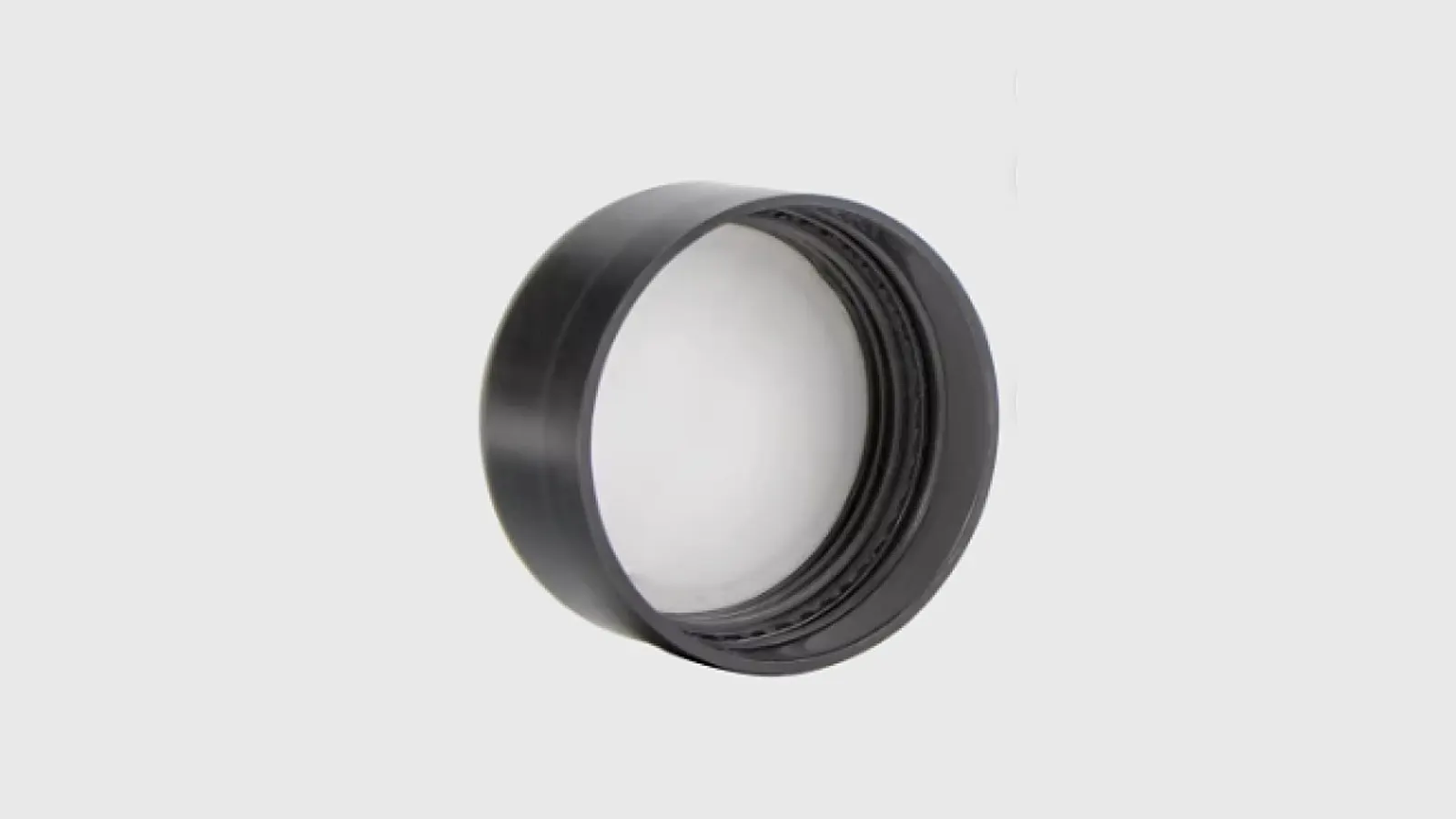
Most child-resistant caps have two parts: a continuous-thread inner cap and an outer shell you press and turn [12]. The liner sits in the inner part. One distributor says its induction-lined child-resistant caps ship with the liner already placed inside [1], so you do not insert it yourself. That makes them easier than loose caps and loose liners, and it is why the liner choice happens at the moment you pick the cap.
The liner is usually a two-piece design: a pulp board that stays in the cap, backed by a foil layer that bonds to the bottle when heated. Cary describes its 38-400 push-down-and-turn cap with a 0.020 inch two-piece pulp-backed foil liner [2]. When the cap is removed, the pulp stays in the cap and the foil stays on the bottle.
Which liner suits which bottle?
This is the step buyers skip. The foil’s coating bonds well to some plastics and not at all to others. Look at what the same sellers say about three caps with almost the same name.
| Cap | Finish | Liner as described | Bottle material stated |
|---|---|---|---|
| Container and Packaging L338 | 38-400 | Two-piece heat induction seal liner | HDPE, LDPE and MDPE only [1] |
| Cary 68W3FB | 38-400 | Pulp-backed foil, 0.020 in, clean peel | PET or PVC [2] |
| Cary 68BBC5 | 53-400 | Pulp-backed foil, 0.030 in, clean peel, barrier layer | PE and PP [2] |
Sources: [1] and [2]. Liner wording is paraphrased.
So a 38-400 cap is not one product. Put the wrong liner on a bottle and the foil may peel off the rim or never bond. Our page on [induction seal liners for PET, HDPE, PP and glass] explains the material logic. In short, the cap supplier needs to know your bottle’s resin before it quotes.
Cary’s configuration pages split the liners into groups. A tamper-indicating or welded-seal liner gives a bond that shows if it was removed. A clean-peel liner peels off cleanly and is not tamper-evident [3]. Read that twice. A clean-peel foil that you cannot see from outside is not a tamper-evident seal, whatever the cap’s description says. Cary’s own page on its 68W3FB cap adds the same warning [2]. If your goal is evidence of opening, choose the tamper-indicating type and test that it leaves a mark.
One more trap. WebstaurantStore answers a customer question on why the foil is not visible: in the manufacturing process the foil layer often lies between one or two other layers [5]. You cannot confirm the liner by looking at it. Test it.
How big is the cap, and will your sealer take it?
A 38-400 child-resistant cap is wider than a plain 38-400 cap. A Cary drawing for a push-down-and-turn 38-400 cap gives an outside diameter of 44.70 mm and an overall height of 16.54 mm [4]. Handheld induction sealers have a head or coil sized for a range of cap diameters, so the working check is simple: does the head cover a closure of about 44 to 45 mm without leaving an uncovered edge? Our guide to [handheld induction sealers for small batches] covers the specification to look for.
The larger shell is also why film sizes are different for these caps, which is the subject of the shrink-band page above.
Why does torque get harder with a child-resistant cap?
Torque is the turning force that tightens the cap. Insufficient cap torque is the main cause of poor induction seals, according to Enercon, an induction equipment maker [9]. The same article gives a rule of thumb: removal torque should be about half of application torque, so a 38 mm cap tightened to 18 inch-pounds should come off at roughly 9 [9].
Sealing then moves the number. Enercon says removal torque falls slightly after induction sealing, because the heat shrinks the liner and the sealing layer flows onto the rim [9]. It adds that child-resistant closures are where a re-torquer most often appears, since they may need extra torque after sealing to reach the level that engages the child-resistant feature [9]. That is a line-builder’s view, but it matches the physics of a spring-and-teeth mechanism that needs a minimum tightness to catch.
Cary’s drawing for the 38-400 cap gives a static torque recommendation of 17 to 26 inch-pounds, with the note that it may vary with container material, neck finish and capping equipment [4]. Treat that as the range to test inside, not a number to apply blindly. A Rochester Institute of Technology thesis tested continuous-thread and child-resistant closures on HDPE bottles at 19 inch-pounds, measuring removal torque right after sealing and over time [10]. The part of its abstract that could be read does not state the result, so it is not reported here. Our own pages on [cap torque control] and [torque testing] cover the practice.
When you measure removal torque on a child-resistant cap, the mechanism has to be engaged. A standard test description for torque retention says that for child-resistant closures you apply a static downward force while turning [11]. A torque tester without a way to press down will give you nonsense.
What do these caps cost?
| Item | Quantity | Price as displayed | Per cap |
|---|---|---|---|
| 38/400 black child-resistant cap, induction liner [5] | Case of 1,500 | $224.99 ($214.49 from 2 cases) | about $0.15 ($0.14) |
| 45/400 white child-resistant cap, induction liner [5] | Pack of 100 | $23.99 | about $0.24 |
| 38-400 white child-resistant cap, HIS foil liner [7] | Case of 1,600 | Not recorded | n/a |
| 38/400 unlined child-resistant cap [6] | Each | $0.26 | $0.26 |
Prices as displayed on different sellers’ pages and, for the unlined row, a catalogue price with volume discounts of 5 to 15 percent at 500, 1,000 and 3,000. The Aaron Packaging price was not recorded. Not a market survey. Per-cap figures are the arithmetic here.
The spread is real: about 14 cents for the case-quantity black cap, 24 cents for a pack of 100 in the larger 45/400 finish, and 26 to 27 cents for a distributor’s catalogue cap. For comparison, Uline lists a plain ribbed polypropylene 38/400 cap at $0.09 for a case of 150 [13]. So a child-resistant, induction-lined cap runs roughly 5 to 6 cents above the plain one at the cheapest end, though sellers, liners and colours differ. The 38/400 black cap shows how quantity moves the price: the 100-pack is $20.99, about 21 cents each, against 15 cents in the 1,500 case [5] (the arithmetic here).
Check what the price includes. TricorBraun lists a 38-400 black push-and-turn closure that includes a plain induction liner and a foam liner [8], which may or may not be what you want. A cap sold with two liners may carry a different price from one with only an induction liner.
Does the induction seal count as child resistance or as tamper evidence?
Neither is the same thing as the other. Child resistance is the cap’s mechanism. Tamper evidence is the foil. In US testing for child-resistant packaging, a tamper-resistant feature is taken off before the test unless it is part of the child-resistant design [14]. So the liner does not help or hurt the child-resistance test result as such. It is a separate layer that you add for a different reason.
What it does do is feed back into the first job through torque. If sealing lowers removal torque, you want to know that the cap still catches afterwards. That is a check on your own bottles, and no certificate substitutes for it. Whether your product falls under child-resistance rules, or an over-the-counter tamper-evident rule, is a legal question. Our page on [whether shrink bands are required by law] covers the ground, and the CPSC and FDA guidance are the places to confirm it.
A ten-bottle trial
-
Order a sample or a small pack of the cap with the liner type you picked, and a handful of your own bottles.
-
Cap five bottles at the middle of the supplier’s torque range and five near its upper end. Note the setting and the tool.
-
Seal all ten with your sealer at the settings you plan to use. Let them cool.
-
Measure removal torque on each, pressing down on the cap while you turn.
-
Open each by hand as a customer would. Check the foil sits on the rim, leaves a clear mark or tears as intended, and the cap still engages when you press and turn.
-
Leave a few filled bottles on their sides overnight and look for leaks.
Record the torque you used. A change of cap supplier, or even of lot, can move the answer.
How to read a listing before you order
Product pages for these caps are short, and the fields that matter are often missing. Work through them in this order.
-
Finish and shell size. A 38/400 label tells you the thread, not the width of the outer shell. Ask for the outside diameter, as the Cary drawing gives [4].
-
Liner type and bottle resin. Look for a stated material list, as on the Container and Packaging page [1] and the two Cary pages [2]. If the listing says only “induction liner”, ask.
-
Case size and price break. The same black 38/400 cap costs about 21 cents in a pack of 100 and 15 cents in a case of 1,500 [5]. A case of 1,500 caps is a lot of stock for a first run, so buy a pack first, then move up.
-
Sealer requirement. Aaron Packaging’s listing says the liner is activated only by an induction sealer [7]. That is true of any foil liner, so a brand without a sealer is buying a cap it cannot yet use.
-
Colour and print. A printed liner, offered on a second Container and Packaging cap [1], changes the minimum quantity and lead time. Ask before assuming it is stock.
This is slower than clicking the cheapest cap, but a wrong liner costs more than a day of emails. A case of the wrong cap is also hard to return once opened, so check the seller’s policy.
Where to buy the caps
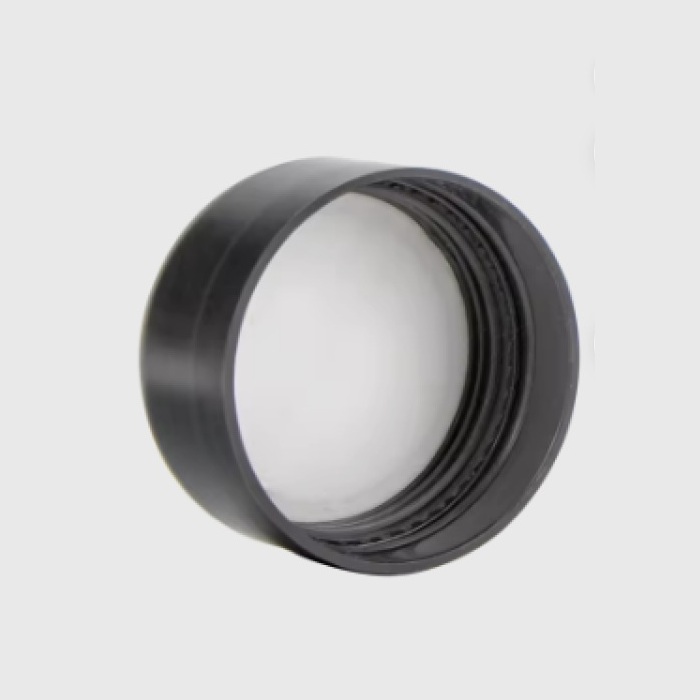
The listing below is the closure this page describes: a screw cap with a child-resistant shell and an induction liner, in several neck sizes.
When the problem is the seal, not the order
If a trial bottle leaks or the foil lifts, do not change three things at once. Enercon’s point that low cap torque is the leading cause of weak seals [9] is a good place to start: check the torque, then the liner and resin match, then the sealer setting. Our [induction seal troubleshooting guide] covers the order in more detail. Keep notes on each trial, because the cap supplier will ask which bottle, cap, liner and torque you used.
Questions to ask the supplier
-
What resin was this liner designed to bond with, and does it match my bottle?
-
Is the liner clean peel or tamper-indicating?
-
What are the outside diameter and height of the cap, shell included?
-
What is the recommended application torque and removal torque after sealing?
-
Has the cap been certified as child-resistant with this liner, and on what container?
-
Can I have samples before a case?
Child-resistant caps with induction seal liners
Screw caps with a child-resistant outer shell and a foil induction liner, listed in 20-400, 38-400, 53-400 and 89 mm necks, round or square.
- Role: Alibaba sourcing candidate
- 20–89 mm necks
- Induction liner
- Round or square
- MOQ: From 1,000 pieces
Common mistakes
-
Buying by thread size alone. The liner and the cap depend on the bottle’s material.
-
Choosing a clean-peel liner for tamper evidence. It is not tamper-evident [2][3].
-
Measuring removal torque without pressing down. The mechanism is not engaged.
-
Forgetting the shell diameter. It determines whether your sealer head and shrink band fit.
-
Trusting the description that a cap is child-resistant on any bottle. Cary notes it is the customer’s job to choose the right container [4].
FAQ
Do I have to insert the liner myself?
Not with caps that ship with it installed [1]. Loose liners are a different product.
Can I use a handheld sealer on a child-resistant cap?
Probably, if the head covers a cap of about 44 to 45 mm. Check the sealer’s range and test.
Does an induction seal replace a shrink band?
They show different things. See [shrink bands vs induction seals].
Will sealing make the cap too loose to be child-resistant?
It can lower removal torque slightly [9]. That is why you measure.
Are two-piece liners better than foam liners for these caps?
Container and Packaging describes its induction liner as the part that gives an airtight, tamper-evident seal [1]. A foam liner alone is a cushion, not a seal (the reading here). If the product needs neither, foam is simpler.
References
- Container and Packaging, child-resistant caps L338 and L936WHH32 with heat induction seal liner. containerandpackaging.com (packaging distributor; product pages).
- The Cary Company, 68W3FB 38-400 and 68BBC5 53-400 child-resistant caps with induction foil liners. thecarycompany.com (packaging distributor; product pages).
- The Cary Company, configuration pages for 38-400 and 45-400 child-resistant caps (liner options). thecarycompany.com (packaging distributor).
- Cary / manufacturer drawing DWG31856, 38-400 PP child-resistant cap, push down and turn, with liner. images.salsify.com (supplier drawing; PDF).
- WebstaurantStore, 38/400 and 45/400 child-resistant caps with heat induction liner. webstaurantstore.com (food-service supplier; prices as displayed).
- U.S. Plastic Corp., Polypropylene Child-Resistant Caps with modified buttress thread, 38/400. usplastic.com (packaging distributor).
- Aaron Packaging, 38-400 white child-resistant cap with HIS foil liner, case of 1,600; needs an induction sealer to activate. aaronpackaging.com (packaging distributor).
- TricorBraun, 38-400 black PP push and turn child-resistant closure. tricorbraun.com (packaging distributor).
- Enercon Industries, Understanding application and removal torque (page modified 31 Oct 2023). enerconind.com (induction equipment maker).
- Su, The Effect of Induction Sealing and Time on Removal Torque of Continuous-Thread and Child Resistant Plastic Closures (2010). Rochester Institute of Technology thesis (abstract partly read).
- Mecmesin, ASTM torque retention test summary for continuous-thread closures. mecmesin.com (test equipment maker).
- C. L. Smith Company, Child Resistant closures. clsmith.com (packaging distributor).
- Uline, ribbed polypropylene caps, 38/400. uline.com (supplier catalogue; price as displayed).
- 16 CFR 1700.20, testing procedure for special packaging (copy on chanrobles.com; official text on eCFR).
Continue reading

Stand-Up Pouches: Fill Weight, Gusset and Usable Height
A pouch is listed by three numbers and none of them is the fill volume. Width, height and gusset describe a flat sheet of film, not the space left after the seal.
Spice Shaker Caps: Hole Size, Fit and Product Match
A shaker cap is three parts that are usually sold separately: the base, the rotating or flapping lid, and the liner. Buy them apart and the hole size is the last thing you check.

Metal Balm Tins: Fill Weight, Lid Type and Label Area
The ounce stamped on a balm tin is a trade size, not a fill weight. A 1 oz tin holds about 28 g of wax, and a little less of anything with oil in it.