How Much Do Shrink Bands Cost? Price per Band vs. Cost per Sealed Jar
Bands run from about two cents to five cents each in retail packs and far less by the thousand. What decides your real cost is the film tier you buy, the spoilage on your first run, and the unit count.
 Lena Schmidt
Disclosure: We may earn a commission if you purchase through links on this page, at no additional cost to you.
Quick answer. In the listings I checked, clear perforated PVC shrink bands ran from about 1.7 cents each in a 1,000-piece case to about 14 cents each in a pack of twelve. Pack size explains most of that spread more than band width does. The band is usually the smallest part of your real cost per sealed unit: a heat gun, the bands you spoil while learning, and your own time all add to it. A simple formula covers it: band price divided by the share you apply successfully, plus tool cost spread over its life, plus labor. Time ten jars with a stopwatch before you decide whether buying in bulk or paying more per band for a small pack is the better deal for your volume.
What suppliers charge per band
Shrink band prices are usually listed per pack or per thousand, which hides the number you care about. Dividing it out gives the table below. The listings are not like-for-like, since sizes, heights and film vary, so read it as a range of what small buyers meet rather than a league table.
| Listing (supplier) | Pack and price | Per band | Notes |
|---|---|---|---|
| 66 x 28 mm perforated (Uline) | 1,000 for $17 | 1.7 cents | 200 gauge PVC; $16 and $15 per 1,000 at 2 and 3+ |
| 165 x 28 mm perforated (Uline) | 1,000 for $21 | 2.1 cents | $20 and $19 per 1,000 at 2 and 3+ |
| 205 x 28 mm perforated (ePackageSupply) | 1,000 for $48.16 | 4.8 cents | Case of 1,000 |
| 105 x 25 mm perforated (WebstaurantStore) | 250 for $12.99 | 5.2 cents | 4.8 cents at 2+ bags |
| 120 x 55 mm perforated (Wholesale Supplies Plus) | 50 at 6 cents each | 6.0 cents | Listed per piece |
| 84 x 54 mm perforated (Voyageur, CAD) | 144 for $10.25 | 7.1 cents CAD | 12 for $1.65 is 13.8 cents CAD |
| 28 x 63 mm lip tube band (Wholesale Supplies Plus) | 50 for $5.85 | 11.7 cents | Tube-specific size |
Prices shown by suppliers; Voyageur and WebstaurantStore figures come from their own price pages. Uline prices come from search-result copies of its pages and were not re-checked live; ePackageSupply from a search snippet. Per-band figures are our division. Prices change and exclude shipping and tax.
Two patterns stand out. First, the cheapest listings are the largest packs. Uline’s 66 mm band at 1.7 cents in a 1,000 case is roughly a third of the cost per piece of a 250 bag at WebstaurantStore, and about an eighth of the per-piece price of a twelve-pack at Voyageur (which is priced in Canadian dollars). Second, band width matters far less than pack size: Uline’s 165 mm band costs only about four tenths of a cent more than its 66 mm band per piece, while the small-pack tube bands cost several times as much per piece as the thousand cases.
There is no mystery in that. Packing, handling and picking cost roughly the same per order whether the order is 12 bands or 1,000, so small packs carry more overhead per piece. You are paying for convenience when you buy twelve. That is a reasonable thing to pay for during testing, and a poor deal once you know the size.
How to read a supplier’s price page
Price pages make the same comparison harder in five ways, and each can change the answer by a factor of two.
The unit. Uline quotes “price per 1,000”, WebstaurantStore quotes per bag of 250, Wholesale Supplies Plus quotes per piece and per pack, and ePackageSupply quotes per case of 1,000. Divide to a price per band before you compare anything.
The tiers. Uline’s price falls by a dollar per thousand at two cases and again at three, and WebstaurantStore drops about a dollar per bag of 250 at two bags. Those steps are small. A bigger step is between a small pack and a case.
The size and height. A 28 mm band uses less film than a 56 mm one, so a cheaper price per piece may simply be a smaller band. Compare like with like, and confirm the lay-flat and height are the ones you measured for.
The film. Uline lists its bands as 200 gauge clear PVC, which is the same as 2 mil. Other sellers don’t always state thickness, and a few state it inconsistently, so a low price with no thickness is an open question, not a bargain.
The currency. Voyageur’s prices are in Canadian dollars. Converting changes the comparison slightly, but not the pattern.
The band is rarely the biggest cost
At 2 to 5 cents a band, the film itself is small beside the product it protects. A jar that sells for $12 carries a 5 cent band at well under half a percent of its price. That ratio is just arithmetic, but it changes how you should think about the decision. Saving a cent per band by buying a size that doesn’t quite fit is a false economy; the real money is in the things around the band.
The heat source. A handheld heat gun is a one-time purchase. Marketplace listings I saw ranged from about $17 for a mini heat gun and $26 to $28 for 1,200 W and 350 W models, up to $58 for a two-speed shrink gun at one packaging supplier, with an industrial unit at $649. Sellers disagree on whether a hair dryer will do. One packaging supplier says it can technically shrink film but isn’t recommended for consistent work, and another bottle supplier says a heat gun is better than a household dryer. Our heat tools guide compares them. For costing purposes, take a gun in the $25 to $60 range as a one-off.
Bands you spoil. Every first-time user ruins some. A buyer review of a lip balm band says it took a few tries to get the result and was glad the bands were cheap. Spoiled bands can’t be reused, so scrap is a real input.
Your time. Sliding on a band, heating it evenly and checking it takes seconds per unit, and those seconds multiply. For small runs, labor is usually the largest line, even at a modest hourly rate.
A formula you can use
Put the pieces together and the cost per sealed unit is: band price divided by the share you apply successfully, plus the heat tool’s price divided by the number of units it will seal, plus your labor per unit.
Here is a worked example with made-up assumptions, to show the shape, not to quote your costs. Say a band costs 5 cents, 10 percent are spoiled, a $30 heat gun seals 5,000 units over its life, and each jar takes 20 seconds at $20 an hour. The band is 5 ÷ 0.90 = 5.6 cents per good unit. The tool is $30 ÷ 5,000 = 0.6 cents. Labor is 20 ÷ 3,600 × $20 = 11.1 cents. The total is about 17.3 cents, and labor is the biggest piece by a wide margin.
The point of the example is the ranking, not the number. If your own timing shows labor dominating, the way to cut cost is a faster routine or a better fixture, not a cheaper band. If scrap is high, the fix is a better-fitting size or lower heat, and our troubleshooting guide covers common causes. If you only seal a few hundred jars a season, the heat gun’s share of each unit will be higher than in the example, because it is spread over fewer jars.
What the savings look like at different volumes
Bulk pricing sounds attractive until you put your own volume into it. The table’s gap between a thousand case and a small pack is real, but it only matters in proportion to how many jars you seal. Here is the arithmetic at three volumes, using the per-band figures above. These are illustrative volumes, not a forecast.
600 jars a year. At 5 cents a band the annual spend is $30. At 1.7 cents it would be $10.20. The saving is under $20 for the year, and a 1,000-piece case would take about 20 months to use, even before any spoilage. At this scale, convenience and a correct fit matter more than the unit price.
6,000 jars a year. At 5 cents the spend is $300; at 1.7 cents, $102. The saving of about $198 is now worth planning for, and a case lasts about two months.
20,000 jars a year. The spend is $1,000 versus $340, a gap of $660. At this scale, the supplier’s tier pricing, shipping and a second source all justify real comparison.
The lesson is practical. Small sellers shouldn’t agonize over a few cents a band; they should get the size right, avoid ordering a year or more of film at once, and put their effort into a quick routine. Larger operations are the ones for whom each tenth of a cent compounds into a meaningful line.
Costs that don’t show in the price table
Returns. A wrong size is cheaper to correct when the seller takes returns. TricorBraun’s product page states that it does not allow returns on shrink bands and suggests contacting its customer service if you are unsure of the size. A marketplace seller selling a 250-pack on Walmart’s site advertises free 30-day returns. Policies differ, so read them before you order a case.
Shipping and tax. The prices above are product prices. A box of film is light, but a case of a thousand wide bands is bulkier than it looks, and shipping can narrow or reverse a small price gap. Compare the delivered price, not the listed price.
Storage. A case you will use over two years has to be kept somewhere sensible. Because the film is made to react to heat, keep it away from heaters and sunlit shelves, and note the date you opened each case so that old film is used first.
Mistakes. The costliest line item is usually a wrong-size case. Check the lay-flat against your measurement before you click, and when the product page names only a cap diameter, ask what lay-flat that means. Our size guide covers this.
How much should you buy at once?
The price tables reward volume, but the cheapest order is only cheapest if every band gets used. A case bought in the wrong size is a case of waste, while a small pack bought at every reorder keeps your per-band price high. The two risks pull in opposite directions, so settle the size before you scale the quantity.
A workable sequence is to buy a pack of 50 to 250 in the size your measurements point to, test it on a real batch, and only then order the thousand case. The premium you pay per band in the small pack is the cost of finding out your size was wrong cheaply. At the prices above, a 250 bag at about $13 is a smaller risk than a $17 case of 1,000 that doesn’t fit.
When you do scale, compare quotes on the same basis. Convert each to a price per band, check the lay-flat and height match your measurements, and add shipping, because a heavy-looking case of light film can carry freight that changes the ranking. Our size guide covers measuring and our perforation guide covers the opening style, both of which change what you should order.
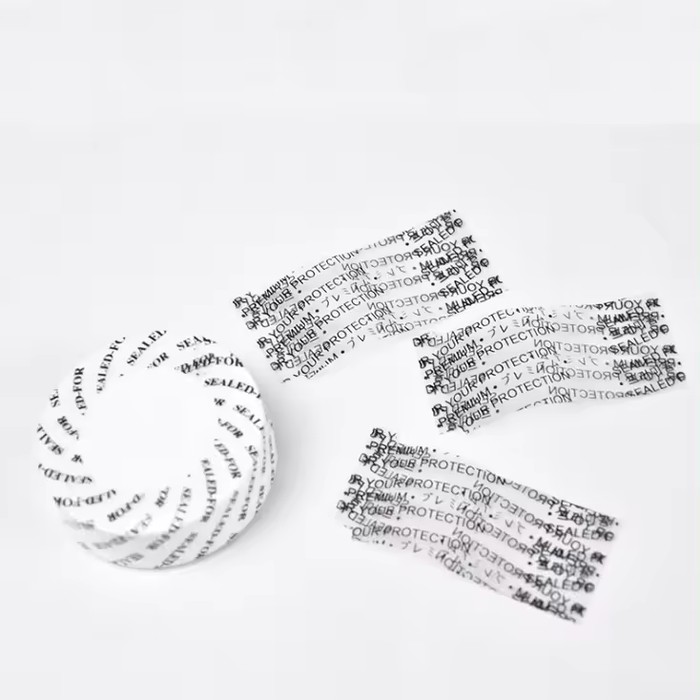
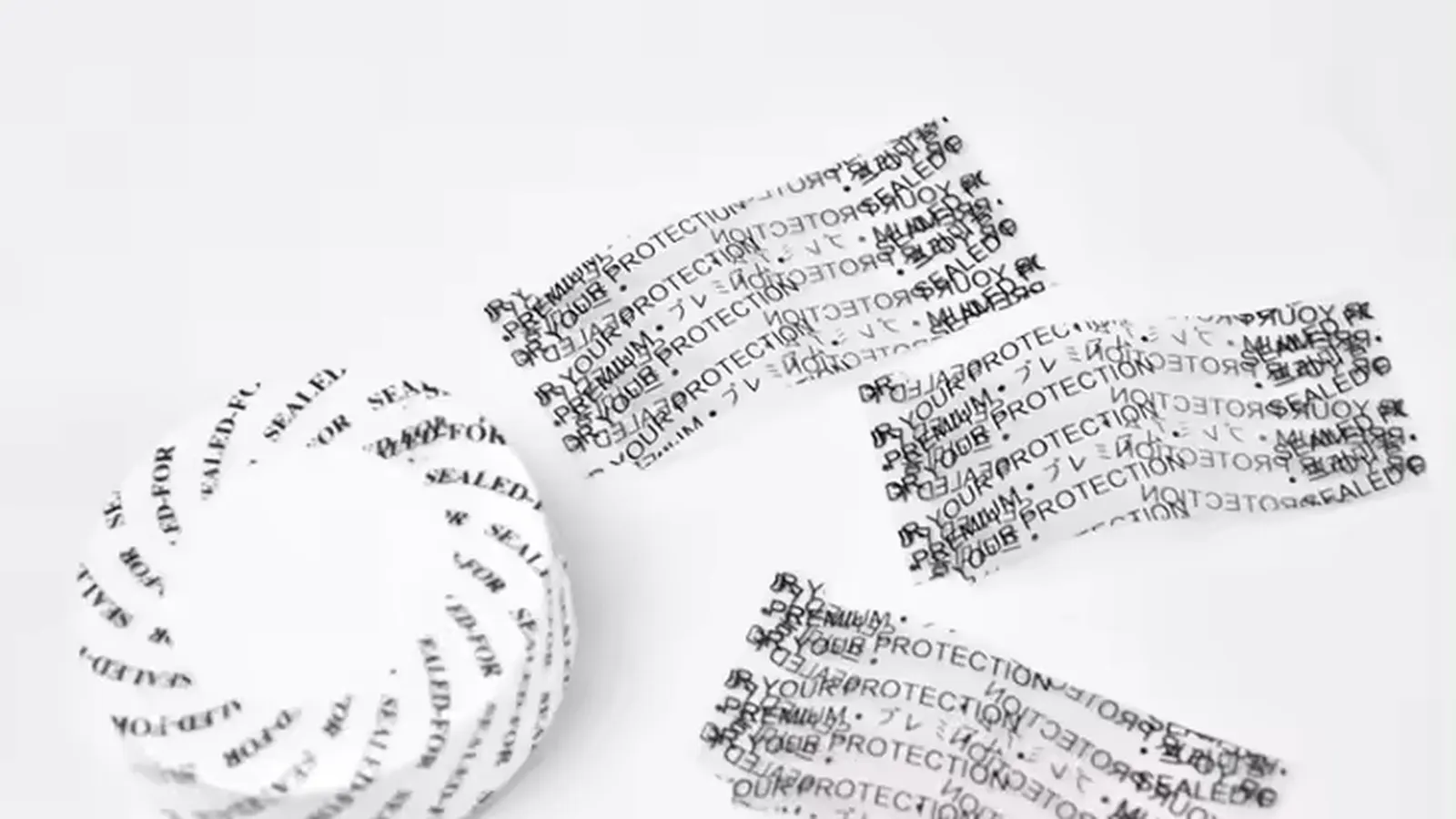
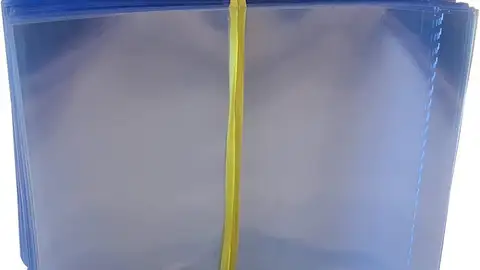
Clear perforated PVC shrink band, sold by the thousand
A clear perforated band at factory pricing: fractions of a cent per band at 20,000 pieces, which is an order of magnitude below the retail packs priced in the table above. That gap is the tier structure, not the film, so compare it only against the per-thousand lines and add shipping and duty before calling it cheaper.
- Role: Amazon consumer option
- Clear, perforated
- Bulk tier pricing
- From 20,000 pcs
- MOQ: Check current listing
When bands cost more than they are worth
Most of the time the band is cheap insurance against a customer finding a loose lid. But the calculation changes in two cases. If the product’s margin is thin, a few cents per unit plus labor may matter, and a different closure with a built-in tamper band might cost less overall. If you sell through a channel that already requires an induction seal, the band may be optional. Our comparison with induction seals covers that trade-off.
This page doesn’t cover custom-printed bands. Their minimums and set-up costs work differently, and the custom printed bands guide covers them. For standard stock bands, the sums above are all you need.
FAQ
What should a first sample order cost? At the listed prices, 50 bands at 6 cents come to about $3, and a 250 bag at WebstaurantStore is about $13, before shipping. If a seller wants far more than that for a trial size, ask why, and compare it with a bulk case that has returns.
Does cutting the price per band ever backfire? Yes. A band that is slightly too narrow or too short raises your scrap rate and your labor per unit, which can cost more than the cents you saved. Choose fit first and price second.
Why does the same band cost so much more in a small pack? Packing and handling are per order, so they weigh more on a pack of 12 than on a case of 1,000. The table above shows a roughly eightfold difference per piece between a thousand case and a small pack.
Is it cheaper to buy a roll of film and cut my own? I did not find a sourced comparison, and cutting adds a sizing and perforation problem, so I have not costed it. Treat it as an experiment, not a saving.
Do I need a $600 heat gun? The listings I saw span $17 to $649. For hand application on small runs, a light-duty gun in the tens of dollars is the starting point, and our heat tools guide covers when a bigger tool makes sense.
Do prices include shipping? The supplier prices above are product prices. Shipping and tax are extra and can matter for a heavy case.
Will prices change? Yes. Use the table to understand the scale, and check the live listing before you order.
References
Price figures in this article come from supplier price pages rather than academic sources; each figure is attributed to the seller it came from in the table.
Hook this up to your favourite commenting platform — Giscus, Disqus, or your own.
Continue reading
Shrink Bands for Honey Jars: Size by Lid, Cork Fit & Tamper-Evident Sealing
Honey brings three problems a spice jar does not: sticky threads, a warm fill, and lids that are often cork or flip-top. Size from the closure you actually use, then band after the jar cools.
Shrink Bands for Lip Balm & Salve Tins: Size by Diameter, Height & Heat Budget
Tins and tubes have no neck bead, so the band has to wrap the body. Measure the widest diameter with the lid on, choose a seam band or a full wrap, and keep the heat low enough for the balm.
Shrink Bands for Supplement Bottles: Size by Cap, Neck Bead & Seal Setup
A child-resistant cap is wider than its thread size suggests, so the band has to be sized to the closure. Measure the cap, confirm the neck bead, and test on filled bottles.