Why Is My Drip Irrigation Pressure Regulator Not Working
A dynamic pressure troubleshooting guide for fertigation and low volume systems
 Lena Schmidt
Disclosure: We may earn a commission if you purchase through links on this page, at no additional cost to you.
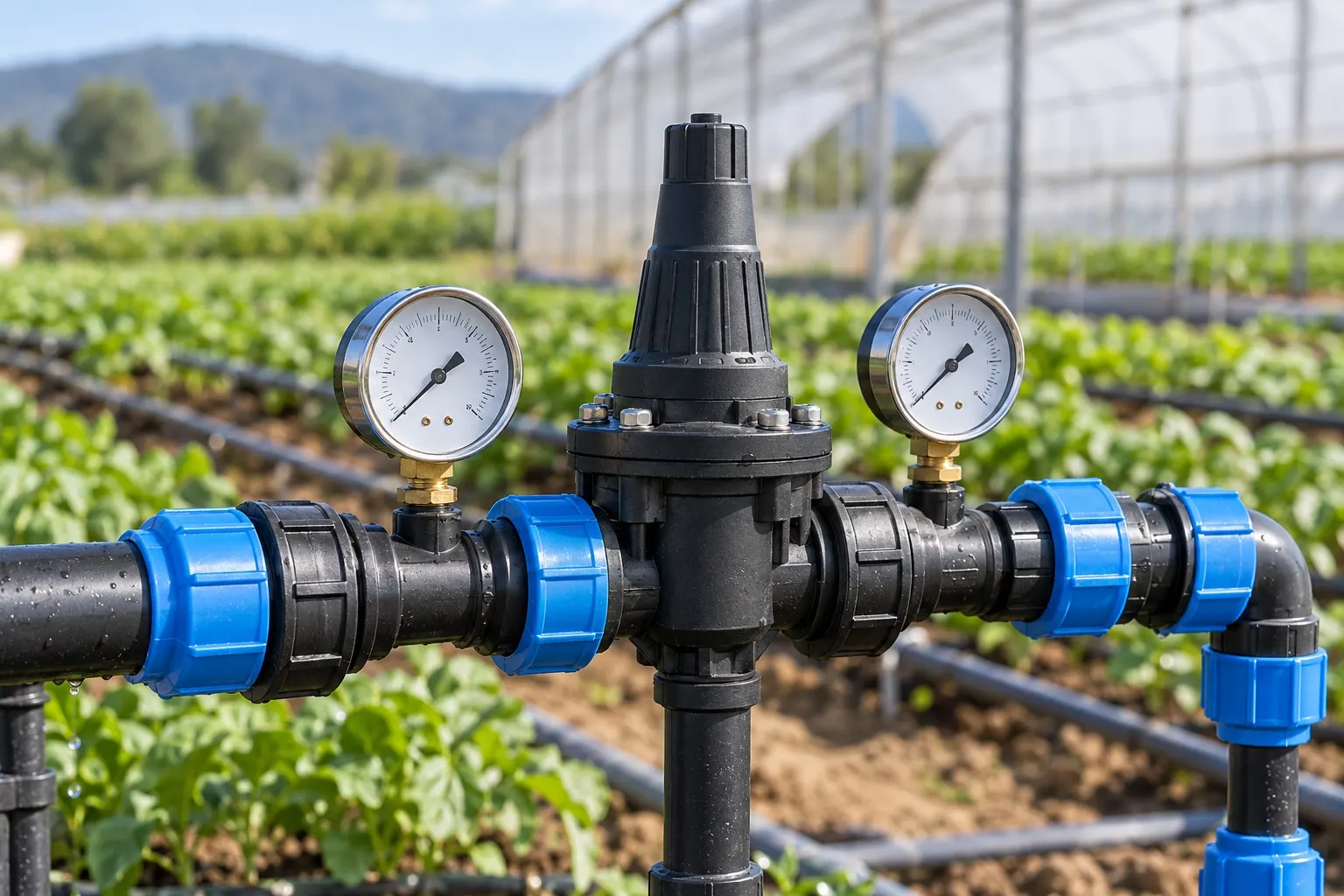
A pressure regulator that appears to be “not working” is often being tested at the wrong moment. A gauge on a closed line shows static pressure; the regulator is supposed to control pressure while water is flowing through the zone. Before replacing the valve, run the zone, measure the pressure under load, and separate a regulator fault from a clogged filter, a weak supply, a closed valve or a zone that demands more flow than the assembly can deliver.
This guide focuses on the field decision after a drip or fertigation system is installed: is the regulator passing too much pressure, starving the zone, leaking, or simply being measured incorrectly? It does not repeat the previous layout guide’s component-order discussion or the emitter-clogging guide’s fertilizer chemistry diagnosis.
The short answer
Test the regulator with the irrigation zone operating and water discharging. Put the gauge downstream of the regulator, allow the line to fill, and compare the reading with the regulator’s stated outlet pressure and minimum-flow requirements. UC Cooperative Extension recommends checking both preset and adjustable regulators against a reliable gauge; DIG’s troubleshooting guidance likewise calls for a dynamic, end-of-line pressure check rather than an assumption based on the valve body. [E01][E02]
If the outlet pressure is high, check flow direction, installation location, minimum flow and whether the device is a preset low-flow regulator being held under constant pressure. If the outlet pressure is low, check the source under flow, the filter pressure drop, valve opening, elevation, pipe losses and total zone demand before condemning the regulator.
Match the symptom to the next measurement
| Observed symptom | Do not assume | First measurement |
|---|---|---|
| Downstream pressure is almost the same as inlet pressure | The regulator is automatically defective | Measure both sides while the zone is flowing; confirm the model has enough flow to regulate |
| Pressure drops sharply when emitters open | The regulator is causing the loss | Check inlet pressure under flow, filter differential, valve opening and total zone flow |
| Pressure is correct near the valve but weak at the far end | The regulator needs a higher PSI setting | Measure pressure at several laterals and inspect line length, elevation, restrictions and leaks |
| Water escapes from a small relief opening | Every drop means failure | Confirm whether the model has a relief port, verify direction and observe whether a steady stream continues |
| Pressure looks correct with the zone off | The system is commissioned | Repeat the test with the normal zone running and record flow and far-end pressure |
The same gauge number can mean different things at different operating states. A regulator cannot create pressure that the source or pump does not provide, and it cannot make an undersized zone supply more flow than the upstream assembly can pass. Treat the symptom table as a routing tool, not a substitute for the manufacturer’s performance curve.
Why a static pressure reading misleads buyers
A regulator needs flow to regulate
Many preset drip regulators are non-direct-acting devices. They need water moving through the valve and enough differential pressure above the set point to control the downstream side. DIG notes that these models may not lower pressure at all below their minimum flow, while Drip Depot explains that a gauge attached immediately after a closed regulator may only be reading the static water pressure. [E02][E03]
Use the operating pressure, not the hose-bib number
Take the upstream reading with the zone running, then take the downstream reading after the line has filled and emitters are discharging. If the supply pressure collapses when the zone opens, the regulator may be receiving too little pressure to maintain its set point. If the supply remains stable but the downstream reading is outside the specified range, then orientation, flow range, fouling or valve damage become stronger candidates.
Do not borrow a PSI recommendation from a different emitter
A 25 PSI recommendation for one commercial drip kit is not a universal setting. Drip tape, pressure-compensating emitters, micro-sprinklers and long elevation-changing blocks have different operating requirements. Drip Depot distinguishes ordinary drip systems from thin-wall drip tape, while UCANR frames the selection around the desired downstream pressure and system design. [E01][E03]
A six step pressure test
-
Identify the device. Record the manufacturer, preset or adjustable type, connection standard, arrow direction, pressure setting and any minimum-flow or continuous-pressure warning.
-
Clean the measurement points. A blocked gauge port or damaged adapter can create a false reading. Use the same known-good gauge upstream and downstream where possible.
-
Start the normal zone. Open the control valve fully, allow the line to fill, and wait for the reading to stabilize. Do not close the far end while deciding whether the regulator is working.
-
Record three values together: inlet pressure under flow, outlet pressure near the regulator, and pressure at a representative far-end lateral. Add total zone flow or a measured sample flow if available.
-
Check the filter differential and valve position. UGA’s startup checklist treats a pressure drop across the filter as a cleaning signal and recommends checking pressure and flow as part of the same commissioning routine. [E04]
-
Repeat at another normal operating flow. A device that regulates one small zone may fall outside its usable range when several laterals or an injector bypass are opened. Compare the readings with the supplier’s curve rather than with a generic PSI target.
Separate regulator failure from system failure
| Check | What it can reveal | Decision |
|---|---|---|
| Inlet pressure under flow | Weak pump, restricted source, partly open valve or shared demand | Repair the supply or reduce zone demand before replacing the regulator |
| Pressure across the filter | Loaded screen/disc element or a restriction upstream of the regulator | Clean or service the filter and retest |
| Outlet pressure near regulator | Incorrect direction, fouling, wrong flow range or damaged diaphragm | Compare with the device specification and inspect the regulator |
| Far-end pressure and discharge | Elevation, long run, undersized tubing, leaks or partial blockage | Correct distribution hydraulics; do not increase the regulator setting blindly |
| Pressure after shutdown | Static pressure and relief behavior | Use only as a leak/constant-pressure check, not as proof of dynamic regulation |
Agriculture Victoria recommends recording operating pressure and emitter discharge over time. A pressure variation greater than 10% or discharge variation greater than ±5% for non-pressure-compensating emitters is a signal to investigate design, control-block pressure or partial blockage. [E05] Those are system-performance checks; they do not, by themselves, prove that the regulator is the failed component.
Select a replacement by duty, not by connection size
| Specification | Why it matters | RFQ wording |
|---|---|---|
| Outlet pressure | Protects tape, tubing and emitters while preserving required discharge | State preset tolerance or adjustment range under the actual flow |
| Minimum and maximum flow | A regulator can fail to regulate below its minimum or lose pressure at high demand | Provide a flow-pressure curve and minimum regulating flow |
| Inlet pressure and pressure class | The body must survive the source and transients | State maximum inlet pressure, operating temperature and pressure class |
| Pressure state when off | Some preset devices are not designed for constant pressure | Confirm whether continuous upstream pressure is permitted |
| Connection and materials | Threads, seals and fertilizer exposure determine fit and life | Confirm BSP/NPT/hose thread, seal material and chemical compatibility |
For a mainline that stays pressurized, a direct-acting adjustable regulator may be appropriate. For a zone that is pressurized only during irrigation, a preset low-volume regulator can be simpler. This is a duty distinction, not a quality ranking. DIG separates these regulator families for that reason. [E02]
Buyer acceptance checklist
Before approving a pressure regulator for a drip-fertigation assembly, ask the supplier to provide: the exact model and outlet setting; a flow-pressure curve; minimum operating flow; maximum inlet pressure; installation direction; continuous-pressure limitations; thread and seal details; allowable water or fertilizer chemistry; replacement diaphragm or valve parts; and a sample-test procedure using two gauges while the zone is flowing.
For a product that will be installed near an injector, add the injector’s operating pressure and pressure-loss budget to the RFQ. The regulator must protect the drip network without removing the pressure differential required by a Venturi injector. Test the complete installed chain: filter, regulator, injector or bypass, zone valve, tubing and emitters.
Sourcing candidates for technical follow up
The following Alibaba listings are sourcing routes, not independent approvals. Both listing links were checked to confirm they open the matching product pages. Marketplace fields remain seller/platform statements; current technical documents and delivered variants must be confirmed in the RFQ.
Sourcing Candidate A Chinadrip high flow pressure regulator
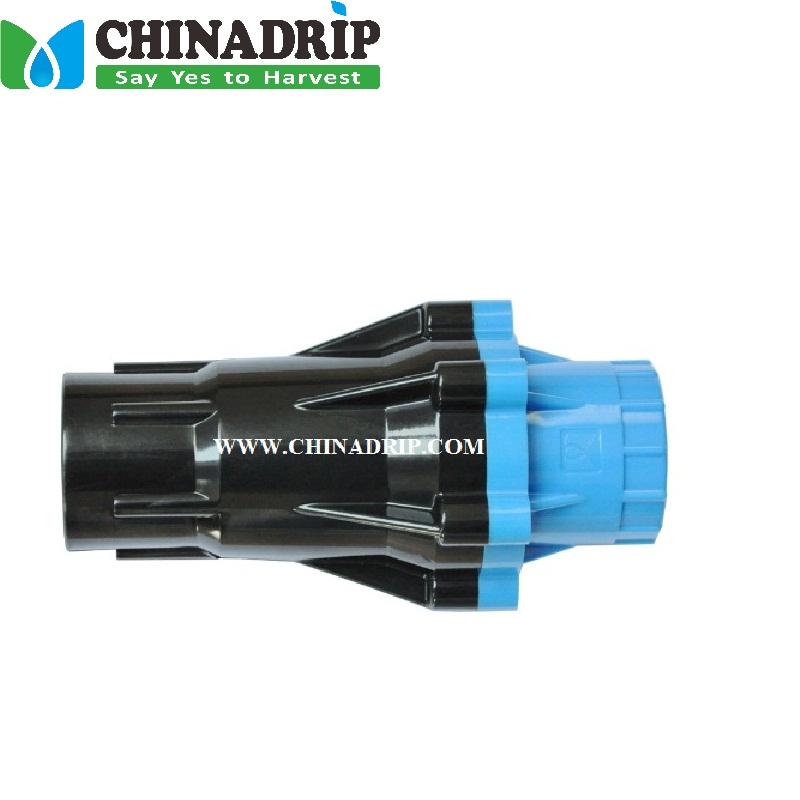
Chinadrip high-flow pressure regulator
A supplier route for a high-flow regulator candidate with multiple outlet options. Marketplace specifications remain seller-stated and need RFQ confirmation. Verify the exact model, curve, operating range and delivered variant before purchase.
- Role: Alibaba sourcing candidate
- Request the technical curve
- Test pressure while flowing
- Confirm fittings and spare parts
- MOQ: Check current listing
Marketplace observations: Chinadrip model PR023415B/PR023430B; 3/4-inch and 1-inch options; listing-stated working pressure 20–120 psi (1.3–8.5 bar); supplier description lists 15, 20, 25, 30 and 40 PSI outlet options. The supplier profile displays 17 years, 4.9/5 from 178 store ratings and a 10% reorder rate. The exact product page did not present a stable product-review summary, so the store signal is recorded separately from product evidence. Ask for the selected preset, flow curve, minimum flow and continuous-pressure limit.
Sourcing Candidate B 1 inch direct acting regulator
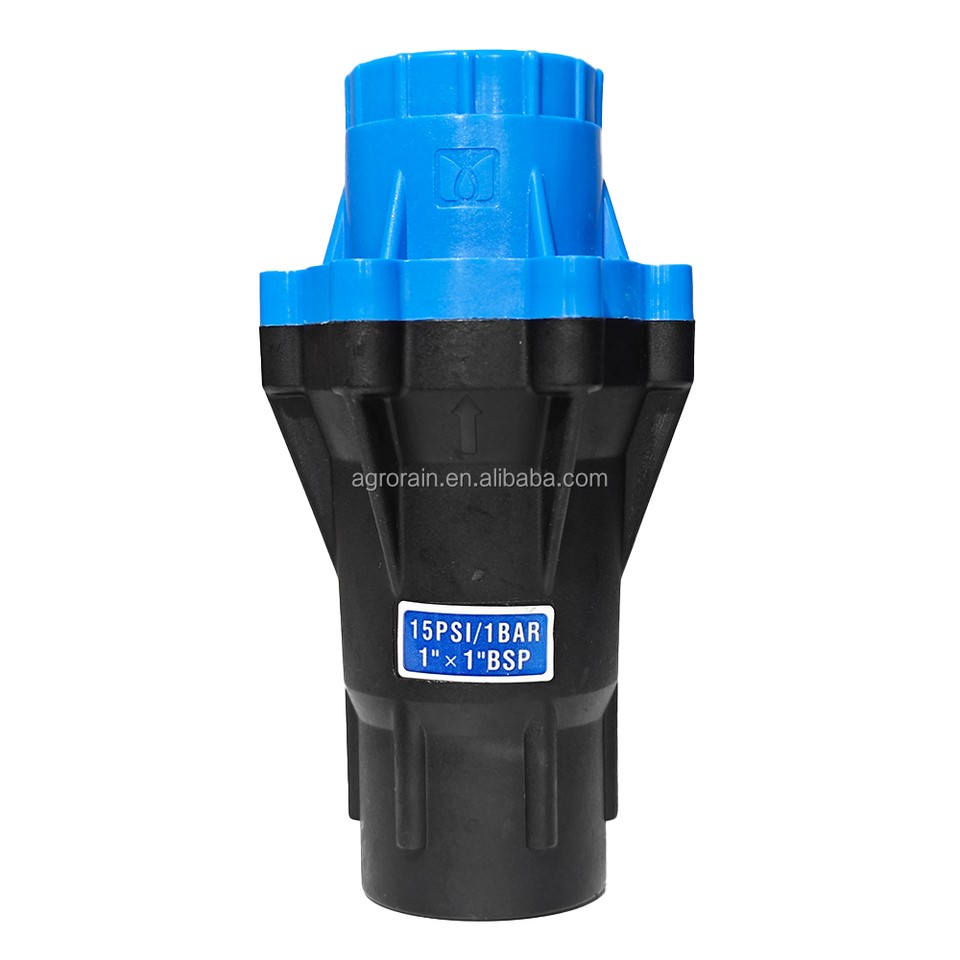
1-inch direct-acting pressure regulator
A supplier route for a direct-acting regulator candidate. Confirm the model drawing, minimum flow, adjustment range and continuous-pressure statement. Verify the exact model, curve, operating range and delivered variant before purchase.
- Role: Alibaba sourcing candidate
- Request the technical curve
- Test pressure while flowing
- Confirm fittings and spare parts
- MOQ: Check current listing
Marketplace observations: 1-inch direct-acting pressure regulator; listing title shows 15, 20 and 30 PSI options; Alibaba search data displayed 4.7/5 from 7 reviews. Supplier age and full curve were not confirmed in the reviewed result, so treat this candidate as VERIFY until the seller supplies the model drawing, adjustment range, minimum flow, inlet-pressure rating and continuous-pressure statement.
These candidates are deliberately not ranked. Candidate A has stronger supplier-history evidence; Candidate B may fit a direct-acting/mainline duty, but its pressure curve and supplier evidence need more confirmation. The final choice should follow the measured operating point and documented duty.
Questions buyers commonly ask
Why does the regulator show the same pressure on both sides
If the zone is closed, both sides may equalize. Open the zone, let water flow and measure again. If the inlet pressure is above the set point and flow is within the regulator’s operating range but the outlet remains high, inspect direction, fouling and the diaphragm.
Can a pressure regulator fix low water pressure
No. A regulator reduces or maintains downstream pressure; it does not increase a weak supply. Check the source, filter, valve, elevation, pipe losses and total demand first.
Should I increase the PSI setting when the far end is weak
Not before measuring the system. A weak far end can result from long runs, elevation, leaks, undersized tubing, filter loading or partial blockage. Increasing the setting may overpressure the first emitters while leaving the real restriction unchanged.
References
-
UC Cooperative Extension, “Checking pressure-regulating valves.” Source
-
DIG Corp, “Troubleshooting an Irrigation System” and “Selecting a Pressure regulator.” Troubleshooting source · Selection source
-
Drip Depot DIY Irrigation Support, “Drip Irrigation Pressure Regulators FAQ.” Source
-
University of Georgia CAES Field Report, “Drip Irrigation Checklist: Start-Up,” C1093. Source
-
Agriculture Victoria, “Drip system maintenance and monitoring.” Source
-
Chinadrip Irrigation Equipment, supplier catalog and product listing for pressure regulators. Seller-stated specifications require RFQ confirmation. Catalog
Hook this up to your favourite commenting platform — Giscus, Disqus, or your own.
Continue reading
Why Does Fertilizer Concentration Change During Fertigation?
A stock-tank and injection guide for diagnosing dilution, settling and uneven nutrient delivery
What Level Sensor Should a Fertigation Stock Tank Use
A practical guide to low level shutoff continuous monitoring and refill alarms
Why Drip Emitters Clog After Fertilizer Injection
A troubleshooting and prevention guide for fertigation buyers