Are Shrink Bands Required by Law? What FDA Rules Cover
Most small sellers are not required to use a band. A few are, and a plain catalogue band may not meet the rule. Here is which products the federal tamper-evident rules actually reach, what FDA says a qualifying band looks like, and how to test one.
 Lena Schmidt
In this guide
- Which products does FDA require tamper-evident packaging for?
- How do you know if your product is a drug, a cosmetic or a supplement?
- What does FDA say a qualifying shrink band looks like?
- What does the label have to say?
- What if your product is not covered?
- Does a shrink band make a package child-resistant?
- What about selling outside the United States?
- What should you do before you order bands?
- How do you test whether a band can be removed and put back?
- What records are worth keeping?
- Where to buy the bands
- Three examples
- FAQ
- References
Quick answer. In the United States, FDA requires tamper-evident packaging for over-the-counter drugs sold at retail and for two narrow cosmetic types, liquid oral hygiene products and vaginal products. Dietary supplements, ordinary foods and most other cosmetics are not covered by those rules, so a band on them is a commercial choice. If your product is covered, FDA’s guidance says a shrink band can qualify only if it cannot be removed and reapplied unnoticed and carries a feature that is hard to copy, which on our reading means printing your own name or logo on it. This is not legal advice.
Are Shrink Bands Required by Law? What FDA Rules Cover
Most small sellers are not required to use a band. A few are, and a plain catalogue band may not meet the rule.
Open almost any listing for shrink bands and you will see the words “tamper-evident”. Some add “FDA compliant”. Neither phrase tells you whether the law requires a band on your product, and for most small sellers the honest answer is that it does not.
That answer has edges, though. A handful of product types do carry a federal rule, and a band bought off a shelf may not satisfy it. This guide sorts products by what FDA’s rules actually cover, sets out what the agency says a qualifying band looks like, and flags what could not be confirmed. It deals with United States federal rules, plus a short note on Australia. We are not lawyers. For a product near the line, an hour with a regulatory adviser costs far less than a recall.
Which products does FDA require tamper-evident packaging for?
The main rule is 21 CFR 211.132. It covers over-the-counter (OTC) human drugs packaged for retail sale, when the public can reach them on the shelf [1]. FDA’s compliance policy guide adds the carve-outs: dermatologics, dentifrices, insulin and throat lozenges are outside it [3].
A second rule, 21 CFR 700.25, brings in two kinds of cosmetics and no others: liquid oral hygiene products, such as mouthwash, and products used vaginally [2]. A third, 21 CFR 800.12, handles contact lens solutions and the tablets used to make them [3]. FDA’s cosmetic guide, CPG 590.500, does little more than point readers to 700.25 and to the OTC guide for the list of qualifying technologies [4].
The rules are old. FDA published them in November 1982 [3]. An amendment in 1989 required two tamper-resistant features for two-piece hard gelatin capsules unless the capsules themselves are sealed [3], and a 1998 final rule made sealing mandatory for those capsules and changed the labelling term from “tamper-resistant” to “tamper-evident” [8]. A law-firm Q&A notes that FDA uses the two terms as synonyms [12].
| Product type | Federal tamper-evident rule? | Where it comes from |
|---|---|---|
| OTC human drug sold at retail (oral pain relievers, for example) | Yes | 21 CFR 211.132 [1] |
| OTC dermatologic, dentifrice, insulin, throat lozenge | Carved out of that rule | FDA CPG 450.500 [3] |
| Cosmetic liquid oral hygiene product, or any vaginal product | Yes | 21 CFR 700.25 [2] |
| Other cosmetics: creams, balms, soaps, perfume oils | Not under 700.25 | 21 CFR 700.25 [2], [5] |
| Dietary supplements | Not generally mandated federally | Industry guide [6] |
| Ordinary foods: sauces, honey, jams | None found in the sources we read | See below [7], [9] |
Read the bottom rows with care. “Not covered” means these rules do not reach the product. It does not mean no rule anywhere applies.
How do you know if your product is a drug, a cosmetic or a supplement?
By what you say it does, not only by what is inside. One packaging-compliance guide puts it plainly: a product counts as an OTC drug based on its intended use and active ingredients [5]. So the same plant oil in the same ten-millilitre roller bottle can be a perfume to one seller and, with a different label, a headache remedy to another. We have not tested how FDA reads any particular claim. If your label implies the product treats or prevents a condition, get a professional read before you choose packaging.
Two questions get you most of the way. What does the front label say the product does? And will the customer swallow it, rinse with it or use it internally, or only apply it to the skin? Mouthwash-type products and anything used vaginally go straight to 700.25. Anything that sounds like medicine goes to 211.132. Skin creams, lip balms, soaps and candles do not trigger either rule on their face.
What does FDA say a qualifying shrink band looks like?
FDA’s guide for OTC drugs, CPG 450.500, names heat shrink bands among the technologies that can meet the standard. It adds a warning: using one of the listed technologies does not by itself make a package compliant, because the feature has to be properly designed and appropriately applied [3]. The band entry sets out a few conditions:
-
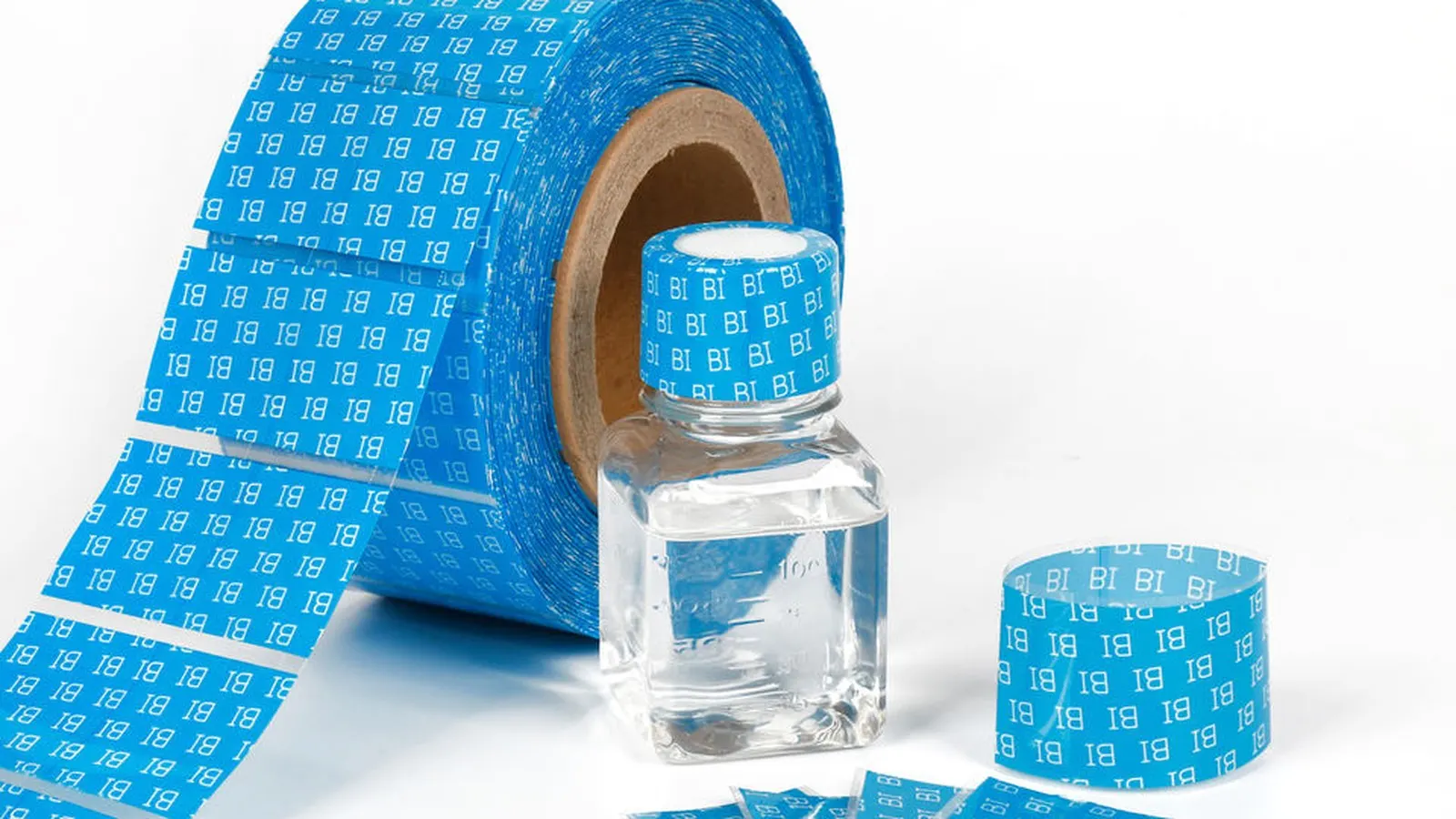
The band is applied securely to part of the container, usually where the cap meets the body, and heat shrunk to a tight fit.
-
It must be cut or torn to open the container, and it cannot be worked off and put back on without visible damage.
-
A perforated tear strip can make it more effective.
-
Cellulose wet shrink seals are not acceptable, because the knowledge to remove and reapply them without a trace is widespread.
The regulation itself adds the part that trips up small brands. A tamper-evident feature has to be either distinctive by design or carry an identifying characteristic such as a pattern, a name, a trademark, a logo or a picture. “Distinctive by design” means common materials and processes cannot easily copy it [1].
Here is the reading taken here, and it is an inference, not an FDA statement. A clear, unprinted band from a catalogue is something anyone can buy, including someone who wants to fake an intact seal. It is hard to square with that rule. If your product is covered, printing your name, logo or a pattern on the band is the straightforward fix. It is also why a listing that calls a plain band “FDA compliant” deserves a raised eyebrow. Under FDA’s own wording, compliance belongs to the finished package, not to a bag of bands [3]. Ask the seller for the film, the perforation and the print option instead of accepting the phrase.
What does the label have to say?
A covered package needs a statement that names every tamper-evident feature, sits somewhere prominent and stays readable if the feature is broken or missing [1]. When the feature relies on an identifying characteristic, the statement has to refer to it. The regulation’s own example is a shrink-banded bottle with an imprinted seal around the neck, described as such [1]. Aerosol products are exempt from the statement, though not from the packaging requirement [2].
The practical trap is placement. If the statement is printed on the band or the cap, it disappears with the very thing it describes. Put it on the body label. An example in plain words is “Do not use if the printed band around the cap is missing or broken”, but have your adviser approve the exact wording.
What if your product is not covered?
Then the federal rules above do not require a band. For supplements, an industry packaging guide says tamper-evident packaging is not generally mandated at federal level the way it is for many OTC drugs [6]. A packaging supplier reads the guidelines the same way: only OTC human drugs need it, and elsewhere it is a widely used extra [7]. For ordinary food, no general federal tamper-evident rule was found in the sources reviewed.
That is a statement about that reading, not proof that nothing applies. The National Agricultural Law Center points out that states have broad discretion in regulating food businesses, cottage food operations included [9]. State and local rules, and the vendor manual of any store that stocks you, are where a requirement is most likely to hide. We did not check individual states.
Plenty of brands add a band anyway. A band does not stop anyone opening a jar. One reference site says it gives an indicator that a buyer or inspector can check at a glance [10]. We found no data showing that bands reduce complaints or returns for small brands, so treat the benefit as plausible and unproven. For the trade-offs against other seals, the guides to shrink bands vs induction seals and shrink bands vs tamper-evident stickers cover them.
Does a shrink band make a package child-resistant?
No, and the two are regulated separately. Child-resistant packaging falls under the Poison Prevention Packaging Act, enforced by the Consumer Product Safety Commission, with detailed rules in 16 CFR 1700 [5]. The text of 211.132 states that its own requirements do not affect special packaging under that Act [1]. Australia’s regulator says the same thing the other way round: tamper-evident packaging does not replace child-resistant packaging where the law requires it, and the two are used together [11].
What about selling outside the United States?
We checked one other market. Australia’s Therapeutic Goods Administration publishes a code of practice for tamper-evident packaging of therapeutic goods. It lists heat shrink bands as an acceptable feature, with the same tests as FDA’s guide: no removal and reapplication without visible damage, a tear strip as an aid and no cellulose wet shrink seals [11]. That code covers therapeutic goods, not every product. We did not research the EU or the UK, so do not assume the US picture carries over.
What should you do before you order bands?
-
Write down what your label says the product does and how it is used. Use the exact words that will be printed.
-
Match it against the table above. If it is a mouthwash-type product, a vaginal product or anything that reads like an OTC drug, stop and talk to a regulatory adviser or your contract packer first.
-
If it is not covered, decide on commercial grounds. Check your state and local rules and any retailer vendor manual that applies to you.
-
Specify the band: perforated, printed with your own name or logo, sized for your closure (the size guide covers measuring), and with the film named. The [PVC vs PETG comparison] helps with that last part.
-
Test samples yourself. Shrink a band on a filled container, then try to remove it and put it back so the damage does not show. If you can, it is not evidence of anything. Photograph the result and keep it with the batch record.
-
Place the label statement on the body label, away from the band and cap, and keep the supplier’s written specification on file.
How do you test whether a band can be removed and put back?
This is a screening method of the kind described here, not an FDA procedure, but it follows the idea in the guide: the band must not come off and go back on without a trace [3]. Take ten filled, capped containers and shrink a band on each. Try to take five off without tearing, using only things a curious customer or a careless stockroom worker would have to hand: fingernails, a butter knife, a hair dryer. Then try to place each band back. Photograph every attempt under a bright light and note the creases, whitening, stretch marks and misaligned perforations.
If even one band can be lifted, reseated and passed off as untouched, switch to a different perforation pattern, a thinner film or a printed band before you order a carton. Repeat the test with a cold-stored sample, since film behaves differently chilled. Keep the photographs with your batch notes.
What records are worth keeping?
We did not find a rule telling small brands exactly which records to hold for a band, so this is a sensible habit, not a legal checklist. Keep the supplier’s written specification with the film, size, perforation and print, a sample of the finished band, the photographs from your removal test, a proof of the label with its statement, and any note from your adviser on how the product is classified. If a stockist or inspector asks how you decided, you can answer in minutes instead of days.
Where to buy the bands
Two of the band types the rules above distinguish: a printed band, which can carry a distinctive feature, and a stock clear perforated band, which cannot.
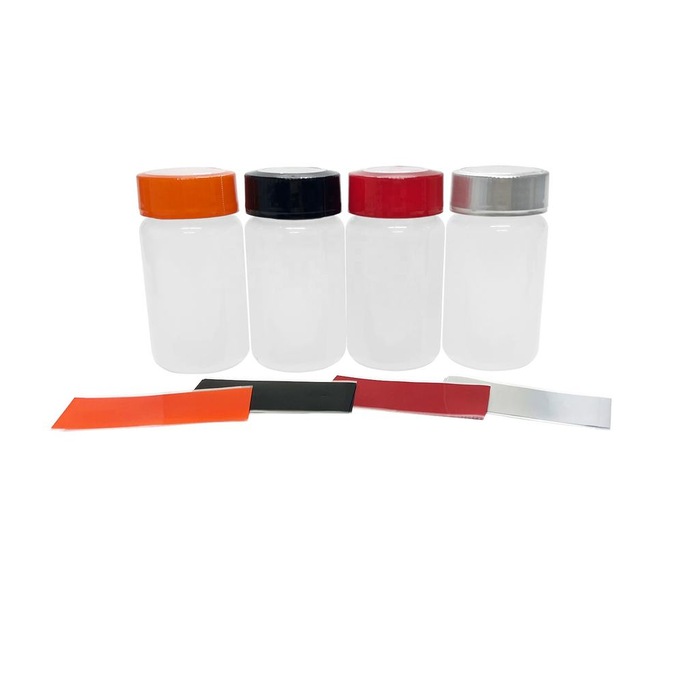
Custom-printed perforated heat shrink bands
Bands printed with your own artwork or pattern, perforated for a tear line.
- Role: Alibaba sourcing candidate
- Custom printing
- Perforated
- Multiple colours
- MOQ: From 5,000 pieces
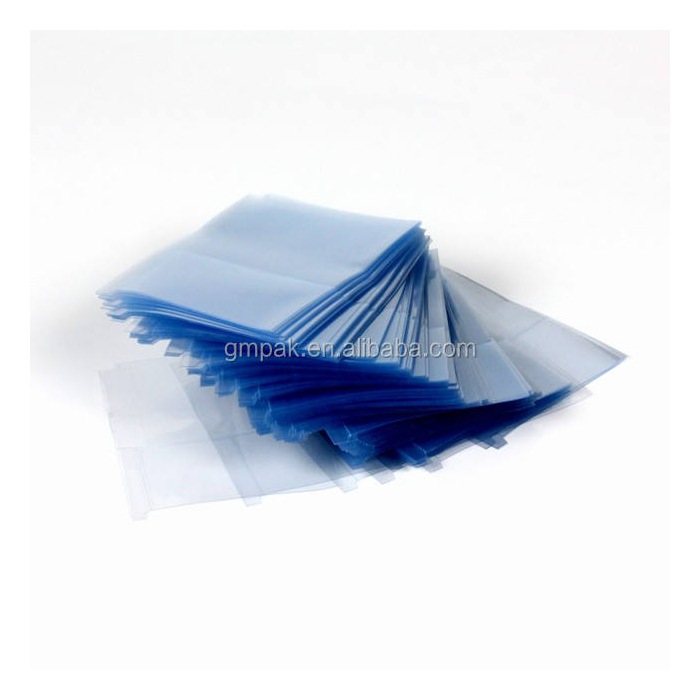
Clear perforated shrink band for bottles and jars
A stock clear band with a perforated tear line, sold for Boston round bottles and jars.
- Role: Alibaba sourcing candidate
- Clear film
- Perforated
- Bottles and jars
- MOQ: From 3,000 pieces
Three examples
A mouth rinse brand. A liquid oral hygiene product is one of the two cosmetic types named in 700.25 [2]. It needs a qualifying tamper-evident feature and the labelling statement, and a stock clear band is unlikely to be enough. This is the case for a printed band and an adviser.
A hot sauce maker. No federal tamper-evident rule for ordinary food was found in the sources reviewed. The band is the maker’s decision, driven by customers and stockists. The hot sauce shrink band guide covers sizing for woozy bottles.
A capsule product sold with health claims. Intended use decides whether it is a supplement or a drug [5]. If the claims push it into OTC drug territory, 211.132 applies, and two-piece hard gelatin capsules need either sealing or two tamper-resistant features [3]. A band alone would not settle that. Get the classification checked before the packaging.
FAQ
Is tamper-evident the same as tamper-proof?
No. A band shows that someone may have opened the package. It does not prevent it [10].
Does a perforated band count as compliant?
FDA says a perforated tear strip can enhance tamper resistance [3]. Whether a particular band meets the rule depends on the design, the print and how it is applied.
Do I need FDA approval for my bands?
We found no FDA approval process for bands. The guide treats the tamper-evident feature as part of the finished package, which is yours to design and apply [3].
Can a tamper-evident sticker do the same job?
A packaging supplier lists tape seals, sealed paperboard and pressure-sensitive liners among options that will not pass FDA’s OTC drug rule on their own [7]. For non-covered products the choice is commercial, and the bands vs stickers guide compares them.
Where do I check the current rule text?
We read copies of the regulations on a university law site and FDA’s own pages. Check the Electronic Code of Federal Regulations for the current wording before you rely on any of it.
References
- Legal Information Institute (Cornell), 21 CFR 211.132, Tamper-evident packaging requirements for OTC human drug products. law.cornell.edu (copy of the regulation).
- Legal Information Institute (Cornell), 21 CFR 700.25, Tamper-resistant packaging requirements for cosmetic products. law.cornell.edu (copy of the regulation).
- U.S. Food and Drug Administration, CPG Sec. 450.500, Tamper-Resistant Packaging Requirements for Certain Over-the-Counter Human Drug Products. fda.gov (government guidance).
- U.S. Food and Drug Administration, CPG Sec. 590.500, Packaging Technologies and Tamper-Resistant Packaging Requirements for Cosmetic Products. fda.gov (government guidance).
- SPS Commerce, Packaging Compliance: Tamper Evidence, Child-Resistance, and Safety Seals. spscommerce.com (retail supply-chain software vendor; secondary source).
- Colorcon, Dietary Supplement Packaging: Regulations and Best Practices. colorcon.com (industry supplier; secondary source).
- Container and Packaging, What is Tamper-Resistant Packaging? containerandpackaging.com (packaging supplier; secondary source).
- Federal Register, Tamper-Evident Packaging Requirements for Over-the-Counter Human Drug Products, final rule, 63 FR 59463, 4 November 1998. federalregister.gov.
- National Agricultural Law Center, Cottage Food Laws. nationalaglawcenter.org (university-affiliated legal research centre).
- Racklify encyclopedia, Shrink Bands for Tamper Evidence: Regulations, Best Practices and Application. racklify.com (logistics reference site; secondary source).
- Therapeutic Goods Administration (Australia), Code of practice for tamper-evident packaging of therapeutic goods. tga.gov.au (government).
- PackagingLaw.com, Ask an attorney: requirements for skin care packaging materials. packaginglaw.com (law-firm Q&A; secondary source).
Continue reading
Supplement Bottle Shrink Band Size: Match the Band to Cap and Neck Bead
A child-resistant cap is wider than its thread size suggests, so the band has to be sized to the closure. Measure the cap, confirm the neck bead, and test on filled bottles.
Stand-Up Pouches: Fill Weight, Gusset and Usable Height
A pouch is listed by three numbers and none of them is the fill volume. Width, height and gusset describe a flat sheet of film, not the space left after the seal.
Spice Shaker Caps: Hole Size, Fit and Product Match
A shaker cap is three parts that are usually sold separately: the base, the rotating or flapping lid, and the liner. Buy them apart and the hole size is the last thing you check.