Shrink Bands vs Tamper-Evident Stickers: Which Should a Small Seller Use?
Both seals show a lid was opened. They differ in what they grip, what they cost per jar, and how they behave on a sticky honey jar. Compare them on your own container before buying a case.
 Lena Schmidt
In this guide
Quick answer. Choose a shrink band when you want a seal that wraps the whole closure and can’t be peeled off and put back, and when you can accept a heat gun in your routine. Choose a perforated lid-seal sticker when you need a small run, no heat tool and a printed brand mark you can order from a hundred pieces. They are not equal evidence. FDA’s guidance for over-the-counter drugs lists heat shrink bands as an acceptable technology, but says adhesive tape seals can’t meet the standard because they can be removed and reapplied unless the adhesive prevents it. Per-piece cost is similar, at roughly 2 to 5 cents for stock bands and stickers alike, so the decision rests on surface, volume, branding and the rules of your channel.
What counts as a sticker seal
Sellers use “tamper-evident sticker” for several different products, and the differences matter more than the name. There are four you are likely to meet.
Lid-seal stickers. A paper label with a round head that sits on the lid and a tail that runs down the jar. Avery’s UK print service describes its version as a 40 mm round head on a 60 mm tail, made from paper so that it tears when the jar is opened, and says plastic or waterproof stock isn’t offered because it is too tough to tear. They suit honey, jam and Mason jars.
Perforated label tabs. A tab added to a product label that overlaps the lid and tears from the label along a perforation. Online Labels describes this as common on lip balm labels.
Void labels. A film label that leaves a “VOID” message behind when it is peeled. Online Labels and others describe a silver version in several sizes.
Tamper-evident tape and stock seals. Strips or round stickers made for takeout and shipping, such as the 1 by 9 inch and 2 inch round seals sold for food delivery. These are made for bags, drink lids and boxes rather than for jar lids.
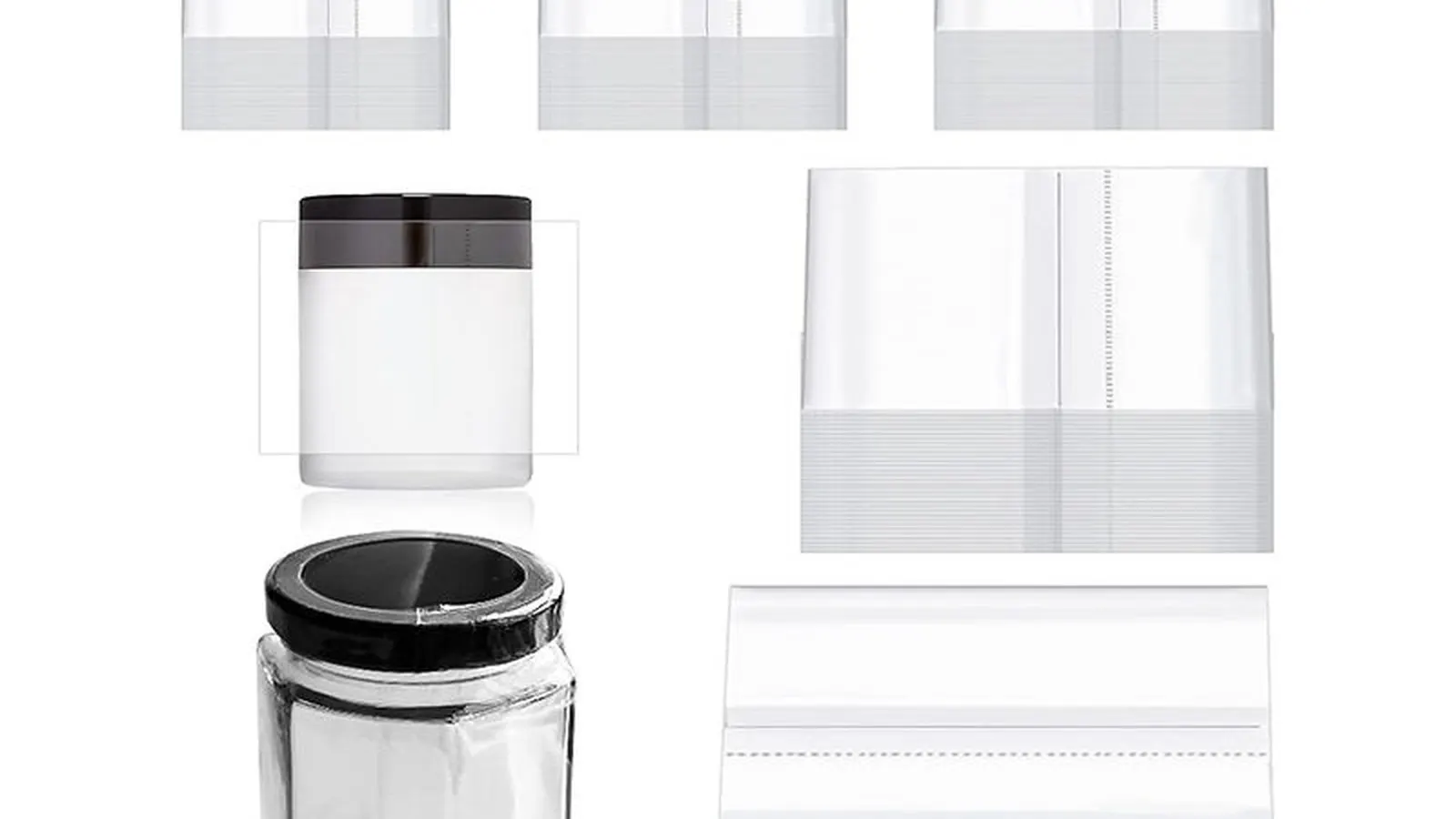
A shrink band is different in kind. It is a film sleeve shrunk onto the closure, and it must be cut or torn to remove. Our size guide and application guides cover how it goes on; this page is about when to choose it over a sticker.
What each one actually proves
Both seals are tamper evident, not tamper proof. A beekeeping writer notes that these products should properly be called tamper-evident seals because they don’t stop anyone opening a jar. What they do is leave a visible sign. The question is how reliable that sign is.
FDA’s compliance policy guide for over-the-counter drugs, CPG 450.500, is the most explicit public comparison I found. It names heat shrink bands among technologies capable of meeting the tamper-resistant standard, describing a band that must be cut or torn to open the container and can’t be worked off and reapplied without visible damage. It also notes that a perforated tear strip helps. For tape seals, it says adhesive-based ones are not capable of meeting the standard as designed, because they can be removed and reapplied, though it allows that adhesive innovations might change that, and it requires an identifying characteristic that can’t be readily duplicated.
That guide covers OTC drugs, not honey or jam or balm, and I am not suggesting any of those products fall under it. But it shows how a regulator reasons about the two seal types: a band fails visibly in a way that’s hard to undo, while an adhesive seal depends on how well the adhesive and the label material cooperate. A container maker, Inline Plastics, makes a related point in its own marketing, saying a band’s full perimeter seal is better than labels or tapes that cover only part of a container. Treat that as a supplier view, though it matches the logic.
Paper lid-seal stickers sit between the two. Because they are made of paper that tears, a successful removal destroys them. One UK beekeeper who buys clear tamper-evident labels says any attempt to lift the lid stretches the label destructively, which makes opening obvious. That’s a good result, and it depends on the label bonding well to both lid and jar.
Where stickers go wrong
The common failures are about adhesion, not design.
They don’t stick to some surfaces. Reviews of food-service tamper labels at WebstaurantStore include one saying the label did not stick enough, came off easily and could be put back on, and others reporting labels that wouldn’t hold on brown paper bags. A buyer on a tin-lid product says earlier stickers struggled to adhere to tins. These are single reviews of products made for takeout, not jars. They show the pattern: surface, dust, oil and temperature decide whether an adhesive seal holds.
Sticky and oily surfaces are hard. A honey or balm jar can have residue on the lid and neck. A band grips by shrinking around the closure, and residue matters less, though a sticky neck still affects the finish. An adhesive label is more sensitive to it. Wipe and dry before applying either.
Reapplication. If a sticker peels off whole, it can be put back, and a customer may not notice. Paper stock that tears is the countermeasure, and the cost is that the label tears when a customer opens it carefully, which can look untidy on a gift jar.
Coverage. A sticker covers a strip of the lid-and-jar gap. A band wraps all the way round. If your concern is that someone could lift the lid at a point the sticker doesn’t reach, the band closes that route.
What each costs per piece
Stickers are often assumed to be the cheap option. The listings I checked don’t show a large gap. Stock food-service labels and stock shrink bands sit in the same range, and custom stickers cost more per piece than stock bands do.
| Listing | Pack and price | Per piece | Type |
|---|---|---|---|
| 66 x 28 mm band (Uline) | 1,000 for $17 | 1.7 cents | Stock band |
| 105 x 25 mm band (WebstaurantStore) | 250 for $12.99 | 5.2 cents | Stock band |
| 6 x 1.5 in white label (WebstaurantStore) | 250 for $7.99 | 3.2 cents | Stock tamper label |
| 2.5 x 6 in blue label (WebstaurantStore) | 250 for $10.99 | 4.4 cents | Stock tamper label |
| 7 in custom printed seal (YourBrandCafe) | 100 to 499 at $0.1201 | 12.0 cents | Custom printed |
| Same seal, 10,000 or more | $0.0914 each | 9.1 cents | Custom printed |
| 5-7/8 x 4 in sealing labels (Avery, Staples) | 30 for $22.99 | 76.6 cents | Printable sheets |
Prices read from supplier listings and search-result copies, not all re-checked live. Per-piece figures are our division. Stickers were designed for takeout, not jars, except Avery’s. Prices exclude shipping and tax. The Uline price comes from a cached copy of its page.
Two readings follow. First, the stock label is not meaningfully cheaper than the stock band, so cost shouldn’t drive the choice. The same arithmetic as our cost guide applies: the seal itself is a few cents, and your time and any tool matter more. Second, a sticker saves you a heat gun. If you seal a few hundred jars a year, that saves a purchase of tens of dollars and a step in your routine.
The Avery sheets are a different offer: you print them yourself on a desktop printer, at about 77 cents each. That’s expensive per piece, and for a tiny run it can still make sense because it gives you a printed, jar-specific label with no minimum order.
Branding and small runs
Branding is where the two diverge most for small brands. Custom printed shrink bands, as our custom printed bands guide explains, come with minimums that start in the thousands. Custom stickers can be ordered in far smaller quantities. One printer lists custom 7 inch tamper-evident seals from 100 pieces at about 12 cents each, falling to about 9 cents at 10,000. Printing in-house on sheet labels needs no minimum at all.
So if your goal is a branded seal on a few hundred jars, a sticker gets you there sooner. If your goal is a clear, quiet seal that doesn’t compete with your label, a plain stock band does that with no artwork at all. And if you want both, some brands combine them: a label seal under the lid and a band over it. A fulfillment-industry encyclopedia describes a nutraceutical brand doing exactly that, though I would treat it as an illustration of the idea rather than evidence of best practice.
Which fits which container
Honey and jam jars. Paper lid-seal stickers are common and look traditional, and Avery markets them for exactly these. Bands work too, and for a corked honey jar a band also holds the cork in place. See our honey jar guide.
Mason jars. Both work. A sticker needs a clean, flat lid; a band needs a lip below the lid. Our Mason jar guide covers fit.
Lip balm tubes and tins. Safety tabs on labels are common for tubes, and bands wrap the whole container. Our lip balm and tin guide covers sizing.
Supplement and dropper bottles. Bands are the conventional choice because the bottle neck has a bead to grip. For stickers, the cap and neck geometry decides whether there is a flat surface to bridge.
Items that go in the fridge or get wet. I did not find a source comparing adhesion in cold or damp conditions, so test either seal under the conditions your customers will meet.
Applying a sticker seal so it holds
A lid-seal sticker is simpler than a band, but it is not foolproof. The steps that matter are the ones that affect adhesion. These are practical suggestions rather than supplier instructions, so check them against your own labels.
Start with a clean, dry lid and jar. Wipe off any honey, oil or balm residue and let the surface dry fully. Place the round head in the centre of the lid, then run the tail down the side of the jar without stretching it, and press along the whole length so there are no lifted edges. Avoid creases, because a crease can start a tear in the wrong place. If the jar will be cold, damp or handled in a warm car, test the seal under those conditions before you commit to a batch.
Check the opening too. A good paper seal tears cleanly when the lid is turned, without pulling the label off the jar or leaving shreds that make the jar look damaged. If it doesn’t tear, the paper may be too strong or the bond too weak; if it tears too easily, it may split during handling. Ask the supplier for sample sheets and test both.
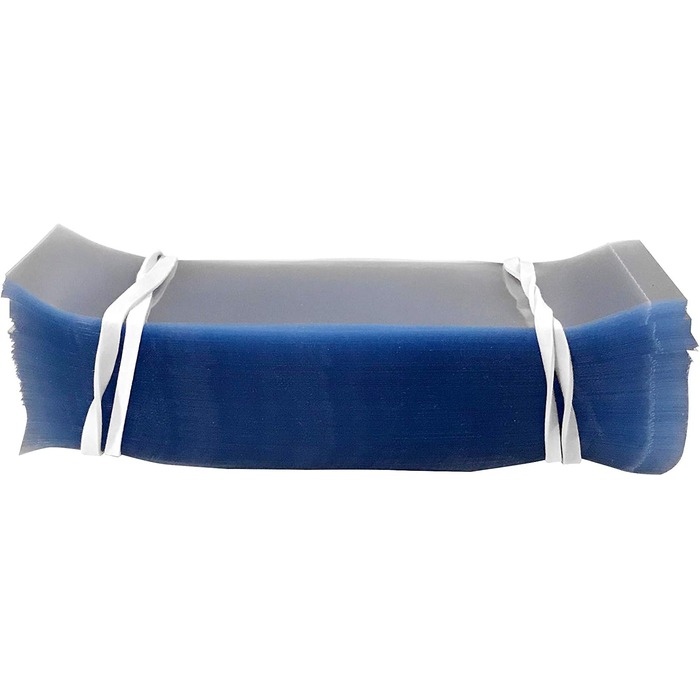
94 x 28 mm clear perforated shrink band, 250 pack
A 250-count pack of clear perforated bands sized 94 x 28 mm, listed for jars with a 2 to 2¼ inch cap.
- Role: Amazon consumer option
- 94 x 28 mm
- 250 per pack
- Perforated
- MOQ: Check current listing
A test you can run in an afternoon
Rather than rely on a spec sheet, run a simple comparison on your own containers. It takes ten jars per seal type and a day.
- Seal ten jars with each option. Same lids, same fill, same room, applied the way you would on a real packing day.
- Leave them for 24 hours. Adhesives and shrunk film settle, and any early lifting shows up.
- Handle them like a courier. Shake, stack and carry them in a bag for a while.
- Try to defeat each seal. Open the jar, then try to reseal it so the opening isn’t obvious. Photograph the result.
- Open as a customer would. Note how easy it is, and whether the seal leaves a mess.
- Count and time. How many failed, and how long did each take to apply?
The result will tell you more than any general comparison. If the sticker survives handling, resists a reseal and opens cleanly, it may be all you need. If it lifts, or you can put it back unnoticed, the band is the better answer for your container. If neither stands out, pick the one that is faster to apply and cheaper to reorder.
A short decision guide
| If this is true for you | Lean towards |
|---|---|
| You want no heat tool and a very small run | Lid-seal sticker |
| You want a branded seal on fewer than a few thousand units | Custom sticker or printable sheet |
| You need a seal that cannot be peeled off and reapplied | Shrink band (perforated) |
| Your containers have a neck bead or lip below the closure | Shrink band |
| Your lids are flat, clean and dry, with a smooth surface | Either |
| Your surface is oily, sticky, textured or cold | Shrink band, or test the sticker first |
| Your product category or channel has its own tamper-evidence rule | Check the rule before choosing either |
None of these is a rule. They are starting positions, and your own test on a real batch should overrule them. Apply the seal, handle ten jars as a customer or courier would, then try to open each one and put it back. Whichever seal shows the opening most clearly on your container is the right one for you.
FAQ
Is a sticker or a band more tamper-evident? A band is harder to remove and reapply without visible damage, and FDA’s OTC guide says adhesive tape seals can’t meet its standard unless the adhesive prevents reapplication. A paper lid-seal sticker that tears on opening can also show tampering clearly. Test on your own container.
Can I use takeout tamper labels on jars? They are made for bags and drink lids, and reviews show adhesion varies by surface. Jar-specific lid seals fit better, and you should test adhesion on your lid.
Which is cheaper? The listings above put stock bands and stock labels in a similar range, a few cents each. Custom printed stickers cost more per piece than stock bands but have much lower minimums than custom bands.
Do I need both? Usually not. Some brands combine them for retail or higher-risk products, but one correctly applied seal is the norm for small sellers.
Does either replace an induction seal? They do different jobs. An induction seal covers the mouth of the container; a band or sticker covers the closure. Our comparison with induction seals covers the trade-off.
References
- U.S. Food and Drug Administration. (n.d.). Compliance Policy Guide Sec. 450.500: Tamper-resistant packaging requirements for certain over-the-counter human drug products (May 1992). Source
Continue reading
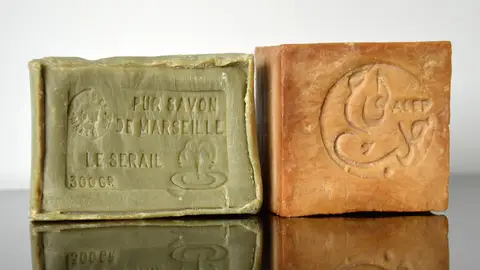
Shrink Bands for Handmade Soap and Bath Bombs: How to Size the Wrap
A soap band is an open-ended sleeve, so the sizing starts from the bar’s perimeter rather than from a cap diameter. Here is the halving rule, why cured bars measure differently from fresh ones, and how loose the published soap band sizes really are.
Shrink Bands for Candle Tins: Sizes for 8 oz and 16 oz Slip-Lid Tins
On a slip-lid tin the band bridges the lid and the body, so the maths starts from the tin’s diameter rather than a bottle cap. Here are the bands two suppliers pair with their own tins, the two-line check you can do yourself, and why their suggested bands are taller than the tin.
Shrink Band Problems and Fixes: Wrinkles, Holes, Loose Bands and Crooked Tears
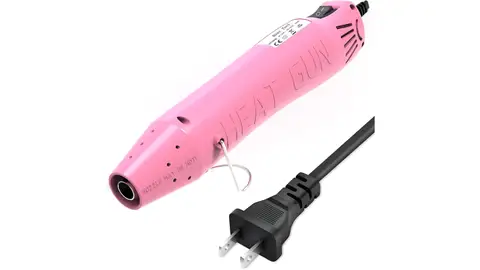
A symptom-by-symptom guide for people shrinking bands by hand: what each fault looks like, which cause the supplier instructions actually name, and which fixes are reasoning rather than a sourced rule.