How to Keep a Cutting Board From Sliding on a Countertop
Most boards move because of a film of water or oil, a warped corner, or an overhang, not because the board is light. Find the cause, then pick a damp cloth or a grip pad.
 Lena Schmidt
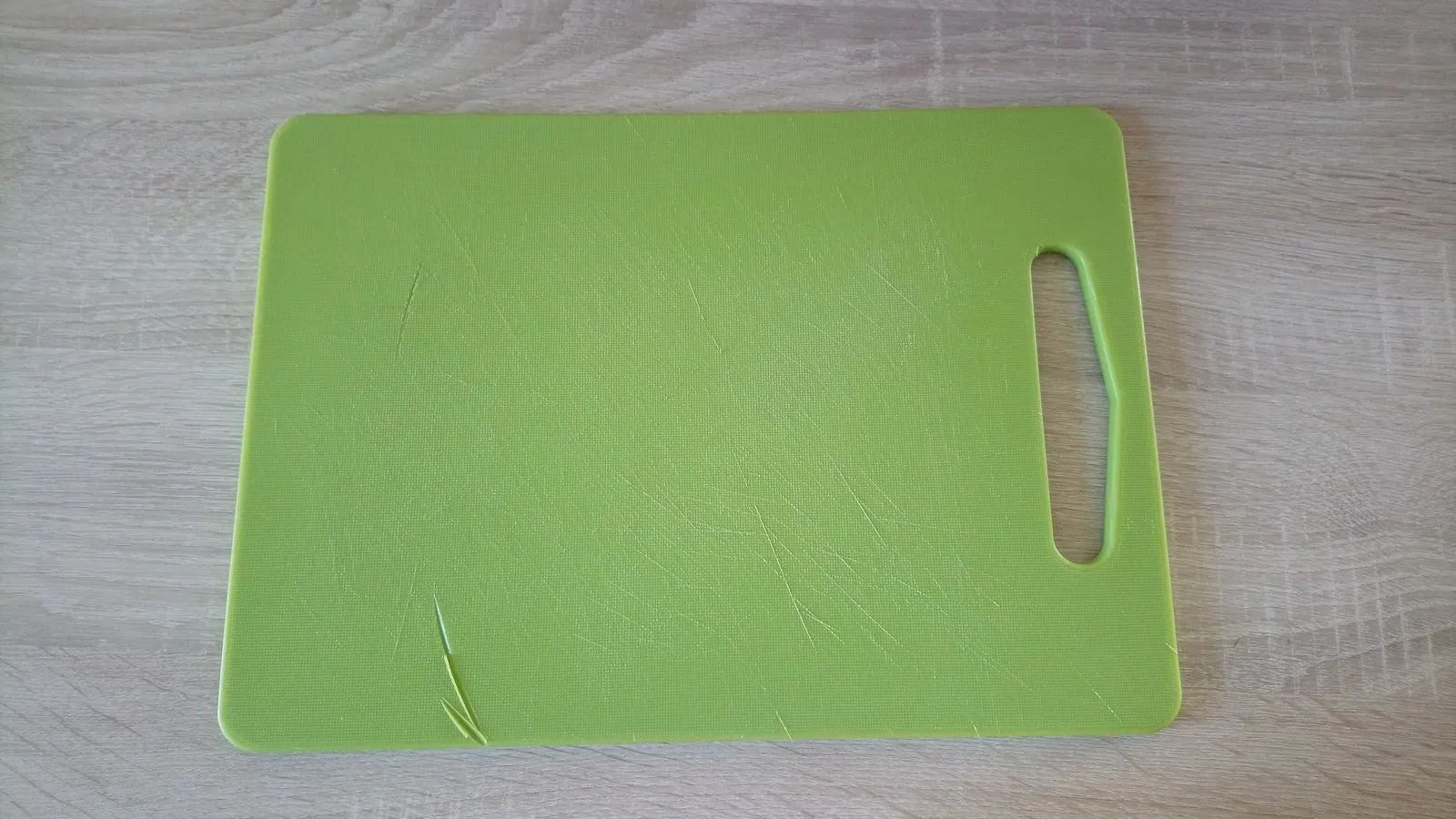
Disclosure: We may earn a commission if you purchase through links on this page, at no additional cost to you.
Quick answer
If a cutting board moves while you chop, stop using the knife and secure the board first. For an immediate fix, put a clean paper towel or dishcloth under the board, dampened just enough to cling to the counter and board. Lay it flat with no folds, set the board on top, then push the empty board forward, sideways, and at the corners. If it still shifts, do not start cutting.
For daily prep, a reusable non-slip pad is more convenient than wet paper. The 8-by-12-inch CatTongue Gription pad is one option for smaller boards; compare its footprint with the board before buying. A warped board, loose feet, grease, or a wet counter can defeat either fix. [1][2][3][5][6]
Find out why the board is moving
A board can slide because the counter is slick, because water or oil has formed a film under it, or because the board itself no longer sits flat. Those causes look similar while you are chopping, but they call for different fixes. Empty the board, move the knife away, and test the setup with your hands before deciding that you need a new mat.
Start with the underside. Put the board on a dry, clean counter and press gently on each corner. If it rocks, one corner is raised, the board is warped, or a rubber foot is missing or loose. A grip mat cannot correct a board that is teetering. If the board is flat but slides with light pressure, inspect the counter for water, grease, cleaner residue, flour, or crumbs. A thin film is enough to change the contact between two smooth surfaces.
Then think about the board material and how it is supported. A light plastic board may move more readily than a heavy butcher block, but weight alone is not a dependable safety measure. A board with small feet may grip well in one orientation and slide when flipped. Some boards are designed for use on both faces and have no feet at all. The practical question is not whether a board is generally “non-slip”; it is whether this board stays still on this counter in the direction you use force.
A countertop overhang matters too: a board extending beyond the counter can tip or flex when pressed near its edge. Move it onto a flat, supported area before adding a mat. Do not hold a moving board with your free hand while cutting.
Use the damp towel method for a quick fix
The fast fix shown in many cooking guides is simple: wet a paper towel, wring it until damp rather than dripping, and spread it flat between the counter and the board. A clean dish towel or thin cloth works the same way. The Utah State University Cooperative Extension knife-skills material also recommends a damp, not wet, cloth and says to slide-test the board before cutting. The Kitchn and Bon Appétit describe the same basic technique. [1][2][4]
The water is not meant to make the whole counter wet. It helps the cloth maintain contact with both surfaces. If the towel is saturated, it can squirm out from under the board, leave a puddle, or make the setup less predictable. If the towel is so dry that it slides freely, re-dampen it, wring it out again, and repeat the push test. Keep the towel fully underneath the board so its exposed edge cannot catch your hand or a utensil.
This method is useful when you cook occasionally, travel, or need a fix before buying anything. It also works with boards that do not have built-in feet. Its drawback is upkeep: paper is disposable, and cloth must be clean and removed after prep. A wet towel left under a wooden board for hours can hold moisture against the wood. A chef interviewed by Simply Recipes cautions that extended damp contact can contribute to warping and that wet towels can trap moisture beneath the board. Use the towel during the task, then lift it and let both surfaces dry. [3]
A Muy Bueno YouTube clip demonstrates the same temporary setup with a wet paper towel. It is a quick illustration, not a test of every board and counter combination. [5]
When a reusable grip pad makes sense
A reusable mat is worth considering if the board gets used every day, if you dislike repeatedly wetting a towel, or if several boards need a stable base. A good pad for this job is non-adhesive, lies flat, and has enough grip on the surfaces that touch the counter and board. It should be easy to lift for cleaning. Adhesive feet or glue may keep a pad from moving, but they also make cleaning and repositioning harder and can leave residue on the board or counter.
The CatTongue Gription pad is sold as a non-adhesive, double-sided grip pad. The company lists an 8-by-12-inch version for temporary non-slip use in the kitchen and elsewhere. Amazon identifies the linked product as an 8-by-12-inch black mat. Those are product-specific details, not proof that it will hold every board on every countertop. Before ordering, compare its footprint with the flat contact area under your board and read the live listing for the current variant. [6]
Size is easy to overlook. A pad much smaller than the board may leave the edges unsupported; an oversized one may stick out or curl. Choose a size that lies flat under the main contact area without folding, and check the fit rather than relying on “universal.”
A non-adhesive shelf liner can also provide friction, but only if it lies flat and the maker allows the surface and care method. A chef interviewed by Simply Recipes says he uses foam drawer liner beneath his board; that is one product choice, not a claim that every drawer liner is washable or suitable for kitchen use. Check its material and cleaning guidance before adapting one. [3]
Clean the contact surfaces before testing again
Remove the board and any pad. Wipe away food debris and grease with a cleaner that is suitable for the counter material, then dry the counter completely. Clean the board underside according to its manufacturer’s instructions. A damp towel is a temporary grip aid; a wet or greasy film between the board and the counter is a different condition and can make movement less predictable.
Check both faces of a reusable mat. Dust, oil, flour, and crumbs can collect in textured surfaces. Rinse or wipe it only as the maker permits, and let it dry before putting it back. Do not assume that every non-slip mat is dishwasher-safe just because another brand’s mat is. If the product has no clear care guidance, use a conservative wipe-clean method and contact the maker before exposing it to heat or a dishwasher.
Keep food residue and cleaning chemicals from becoming trapped under the mat. Lift it after spills, wash the board and pad according to their separate care instructions, and let both dry before storage. This also helps you notice cracks, damage, or worn grip.
Test the setup before you pick up a knife
Place the empty board in the position where you plan to work. If you are using cloth, make sure it is damp, flat, and fully covered by the board. If you are using a pad, make sure it is not curled and does not extend into a place where it can catch. Push the board gently toward the front, back, left, and right. Press near each corner as well as the center. The board should stay planted rather than creeping, pivoting, or rocking.
If the board still moves, stop and change one thing at a time: dry the counter again, reposition the towel or mat, turn the board over if its maker allows it, or move to a wider supported area. Then repeat the same push test. Do not test with a knife in your hand, and do not press hard enough to tip the board off the counter. If the mat itself slides, check for residue underneath or try a different size or material.
The Utah State extension handout specifically suggests trying to slide the board before cutting and re-dampening the cloth if the board moves. The test is a small step, but it answers the question that a product label cannot: is the board stable in the direction your hands will push it? [1]
Know when a mat will not solve it
Replace or retire a board that is deeply warped, cracked, or unstable on a dry, flat surface. A grip pad cannot flatten a rocking board. If its feet are replaceable, use the maker’s correct parts; improvised adhesive may fail during washing or leave the board uneven.
If the counter is textured, uneven, or has a deep seam directly under the board, a very thin pad may not bridge the variation. Move the board to a smoother section if possible. If the counter is wet because you are prepping next to a sink, dry the area before working. Do not put a cutting board on a stovetop, hot pan, or surface that its maker has not approved.
A rubbery or textured mat can also hold grit against a delicate countertop. Lift it occasionally and clean underneath, especially if it stays on the counter between meals. If you are renting or have a stone, glass, or specialty-finish surface, avoid adhesive products unless both manufacturers say they are compatible. A removable pad is usually easier to inspect than a permanent attachment.
Choose the fix that matches how you cook
For an occasional meal, start with a clean, damp paper towel or dishcloth. It costs almost nothing, takes little space, and can be removed immediately after use. For daily chopping, a washable reusable pad can save repeated setup, provided it fits the board and its care instructions work for your kitchen. For a board with built-in feet, inspect and replace worn components before layering another product underneath.
The linked CatTongue 8-by-12-inch Gription pad is a compact option to compare if your board is small enough for that footprint. Its non-adhesive format makes it removable, and its stated double-sided grip matches the basic job of adding friction between board and counter. Measure the board’s supported underside first; if the pad cannot lie flat beneath it, choose a larger product instead. Check the current Amazon listing for color, dimensions, seller, and care details before purchase. [6]
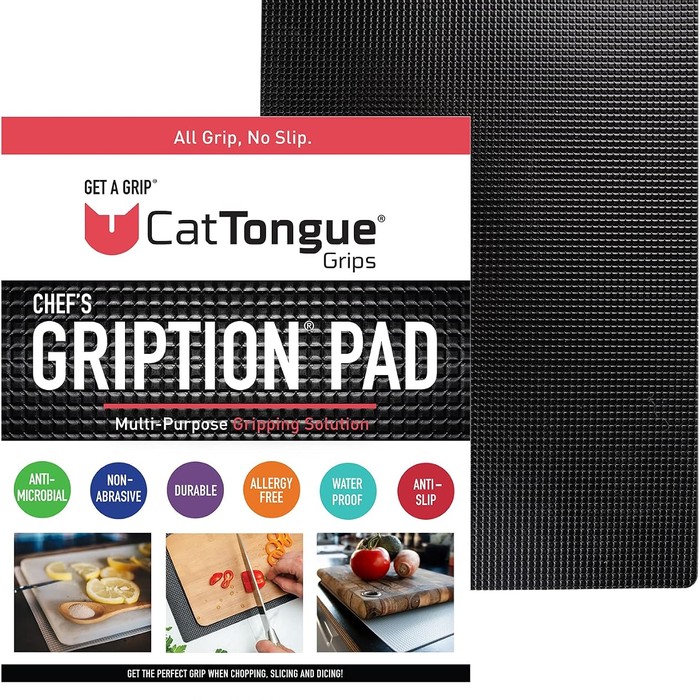
CatTongue Grips 8 x 12 non-slip mat
A non-adhesive 8-by-12-inch grip pad sold for use under a cutting board. Check the size against the flat contact area under your board, and read the live listing for the current variant.
- Role: Amazon consumer option
- 8 x 12 inches
- Non-adhesive
- Double-sided grip
- MOQ: Check current listing
Common questions
Can I use a damp paper towel every time?
Yes, as a temporary method, if it is clean, wrung out, and removed after prep. A reusable cloth works too, but do not leave a damp cloth under a wooden board for hours. If daily prep makes the towel method inconvenient, compare a washable grip mat that fits the board.
Can I use shelf liner under a cutting board?
A clean, non-adhesive liner can add friction, but not every liner is made for kitchen use or repeated washing. Check the product material and care instructions, and do not use one that sheds, smells strongly, or cannot be cleaned properly. A pad sold for cutting-board stability has a clearer use case.
Why does the board slide only in one direction?
The counter may slope slightly, the board may be uneven, or the mat may not cover the areas where force is applied. Test the empty board in several directions, check its feet, and verify that it sits fully on the counter. A partial overhang can make it pivot even when the center feels grippy.
Should I tape the mat to the counter?
Usually not as a first step. Tape can leave residue, react with a finish, or create a raised edge. Try cleaning, drying, correct sizing, and a removable non-adhesive pad first. If you use tape, confirm compatibility with both surfaces and test in an inconspicuous spot.
A stable board is a setup, not a product label
Secure the board before every prep session: clean and dry the contact surfaces, use a flat damp cloth for a quick fix or a correctly sized reusable mat for repeated use, then test the empty board by pushing it in several directions. If it rocks or still shifts, stop and inspect the board, counter, and mat before cutting. That short check is more useful than trusting a “non-slip” label on its own.
Sources
-
Utah State University Cooperative Extension, Tips for Teaching Knife Skills Source
-
The Kitchn, The Best Trick for Keeping a Cutting Board from Slipping Source
-
Simply Recipes, How I Fix the Most Annoying Thing About Cutting Boards Source
-
Bon Appétit, How to Keep a Cutting Board from Slipping Source
-
Muy Bueno, How to Keep Your Cutting Board from Slipping, YouTube Source
-
CatTongue Grips, Non-Abrasive Gription Pad 8 x 12 Source
Hook this up to your favourite commenting platform — Giscus, Disqus, or your own.
Continue reading
Do Washing Machine Anti-Vibration Pads Stop Walking?
A pad that has shifted out from under the washer is a symptom, not the diagnosis. Check the machine is stable and the foot fits the cup before buying a grippier set.
When a Silicone Faucet Mat Pools Water, Check the Fit and Drain Path
A mat that holds a puddle is failing at one of three points: the counter does not drain toward the bowl, the mat is set the wrong way, or its outlet is blocked.
Window Screen Spline Keeps Popping Out? Match the Cord to the Frame and Mesh
The cord that holds the mesh is sized to the frame groove, not to the window. Read the failure pattern, measure the channel, and test a few inches before you roll a whole screen.