How to Choose a Handheld or Benchtop Screw Capper for Small Batch Bottles
Match the closure, bottle support and torque process before you buy
 Lena Schmidt
Disclosure: We may earn a commission if you purchase through links on this page, at no additional cost to you.
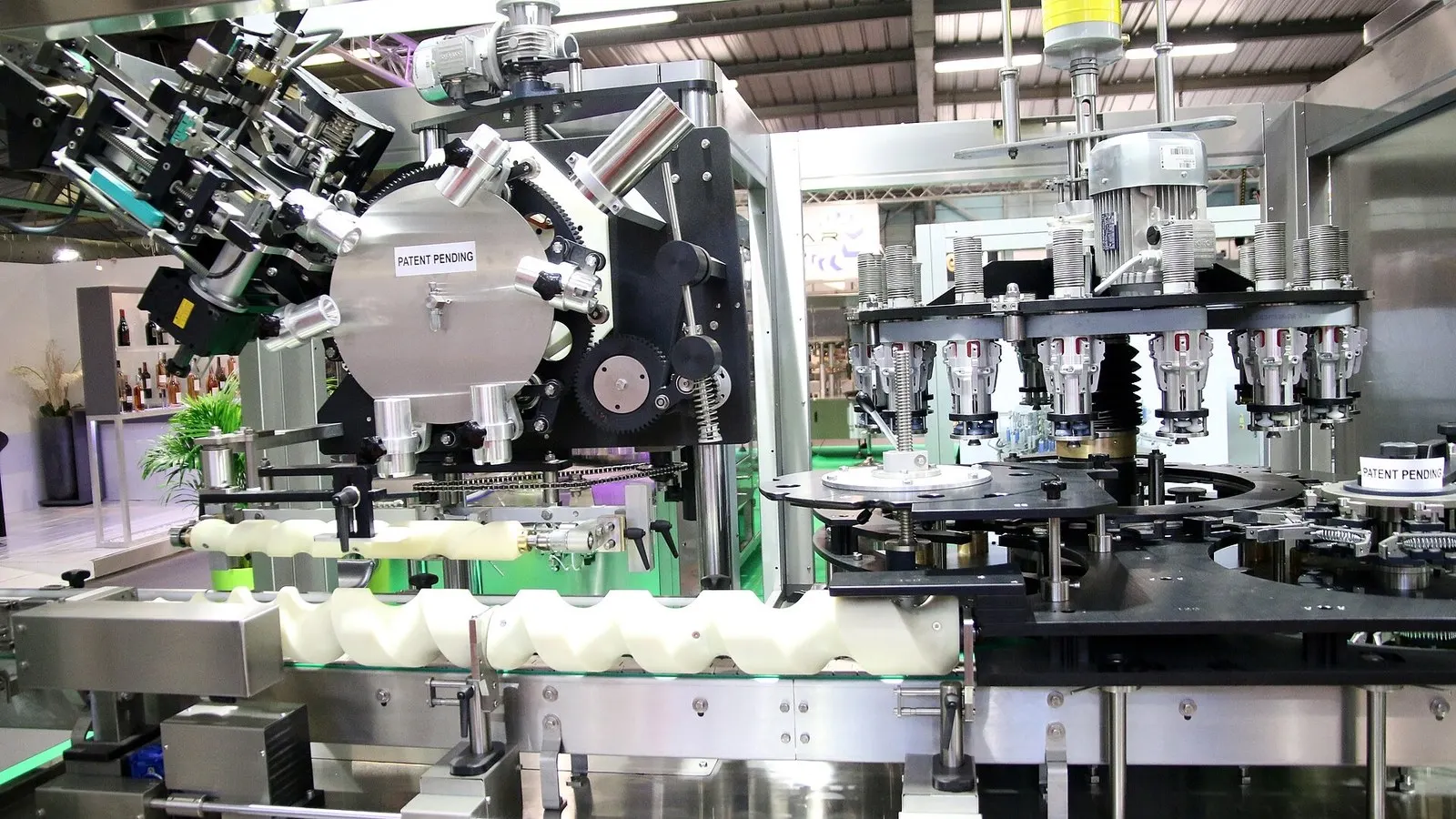
A manual bottle capper looks simple until a batch starts to drift. One bottle receives a cap that is slightly cross-threaded; another is tightened too hard; a third is hard to open after storage. The machine may still appear to be working. The real question is whether it applies the same closure to the same package, repeatedly, without making the operator fight the process.
This guide is for small-batch operators using continuous-thread screw caps on food, cosmetic, supplement, household or laboratory bottles. It covers the purchase decision between a handheld and a benchtop format, the specifications that deserve evidence, and a trial method that turns a marketplace listing into a qualified setup.
Scope boundary: this is an equipment-selection guide. It does not replace ObjectBrief pages on bottle-cap torque testing or on adjusting a semi-automatic capper; those pages begin after the equipment and package format have been chosen.
The short answer
Choose a handheld capper when the operator can present each bottle squarely, the cap family is stable, and one-at-a-time inspection is practical. Choose a benchtop or fixture-based capper when bottle support, alignment, operator fatigue or repeatability—not raw motor speed—is the constraint. In either case, select against the exact cap, bottle finish, closure insert, torque method and electrical setup you will actually use.
| Your operating reality | Start with | Reason |
|---|---|---|
| Samples, pilots, seasonal runs or several cap sizes | Handheld | Flexible and easy to move; the operator can see every closure. |
| One bottle and cap family, recurring small batches | Handheld with a support fixture, or benchtop | The improvement comes from repeatable presentation and less fatigue. |
| Long runs, several operators or costly rejects | Benchtop / semi-automatic | A clamp, chuck or guide can control position and make training easier. |
| Multiple formats or line integration | Automatic or dedicated semi-automatic | Cap placement, handling and inspection become the bottleneck. |
These are workflow boundaries, not universal units-per-hour thresholds. A listing speed is not the same as staffed, inspected output on your package.
Why a screw capper is a package-system purchase
A continuous-thread closure is not sealed by torque alone. The cap, liner or plug, bottle finish, product, temperature and time after application all affect the finished package. ASTM D2063/D2063M describes torque-retention testing for packages with continuous-thread closures; ASTM D3474 covers calibration and use of torque meters for applying or removing a closure. Those standards are reminders to define the package and measurement conditions, not a license to copy one universal torque number.
The machine applies a setting or force. The finished package gives you an application result and, later, a removal-torque result. Thread engagement, cap geometry, liner compression and bottle stiffness can make two packages with the same machine setting behave differently. That is why “adjustable torque” in a listing is useful, but not proof that the delivered package will meet your opening, leak or shelf-life requirement.
First identify the closure you are actually buying
Continuous-thread is not the same as every screw-looking cap
Before comparing machines, photograph the cap from above, below and in profile. Record the nominal outside diameter, the thread or lug pattern, the liner or plug, the bottle finish and whether the cap includes a tamper-evident band, child-resistant feature or dispensing insert. A chuck capper for a continuous-thread cap is not automatically suitable for lug, ROPP, crown or crimp closures.
Write a one-line package specification
Use a line that a supplier can repeat back to you: “HDPE round bottle, [finish/neck], PP continuous-thread cap, [liner construction], [product], [fill temperature], target opening behaviour, [voltage].” If you cannot write this line, you are not ready to compare a 10–50 mm or 15–70 mm machine range.
-
Measure the cap outside diameter and the usable sealing land; do not assume the two are equal.
-
Check bottle height, shoulder shape and whether the base needs a nest or clamp.
-
State whether the cap is supplied loose, pre-positioned or placed by the operator.
-
Tell the supplier if the product is oily, dusty, hot-filled, solvent-containing or sensitive to contamination.
Handheld versus benchtop: the decision that matters
| Decision factor | Handheld | Benchtop / fixture-based |
|---|---|---|
| Bottle presentation | Operator holds or positions the bottle under the head. | A nest, clamp or guide reduces movement and height variation. |
| Changeover | Fast when sizes are close; easy to carry between stations. | More deliberate, but a fixed setup is easier to document. |
| Operator load | Wrist, shoulder and visual alignment matter over a run. | Less hand positioning; loading and unloading still need a rhythm. |
| Torque repeatability | Depends strongly on cap placement, downward force and timing. | A controlled chuck, clutch or spindle can reduce presentation variation. |
| Best fit | Pilots, low-volume work, mixed locations. | Recurring batches where consistency and fatigue are the problem. |
A benchtop machine is not automatically more accurate. It is valuable when it removes a source of variation that the operator cannot reasonably control. Conversely, a heavy benchtop unit can be a poor choice if your work changes between bottle formats every few minutes. The right format is the one that makes the critical motion repeatable at the point where the work actually fails.
The specifications worth asking for
1. Cap range and the actual change parts
Listings often show a range such as 10–50 mm. Ask whether that range refers to cap outside diameter, chuck capacity, spindle spacing or a family of interchangeable heads. Request the head, insert, pad, roller or chuck included for your exact cap. A range without the change-part list is not a fit confirmation.
2. Bottle support and anti-rotation
A round bottle that spins with the cap can defeat a good torque control. Ask how the bottle is supported, whether the base is clamped, and how an oval or shoulder-heavy bottle is located. For a handheld unit, a simple nest or non-slip support may improve the process more than a larger motor.
3. Torque mechanism and what it controls
Clarify whether the machine uses a mechanical clutch, a pneumatic clutch, a servo or a spindle system. Ask what the displayed or adjusted value represents, how it is calibrated, and what the supplier recommends for verifying removal torque. Avoid treating kgf·cm or another seller-supplied scale as a finished-package specification unless the calibration and test method are documented.
4. Speed, duty and cooling
“30–90 bottles/min” or “20–50 caps/min” is a seller claim, not a staffed production rate. Ask for the cycle definition: does it include loading, cap placement, bottle release and inspection? Ask for the permitted duty cycle, cooling requirements and a video of the exact variant. For small batches, a comfortable station often beats a faster motor that creates more rejects.
5. Electrical and service details
Confirm 110 V or 220/240 V, frequency, plug, fuse, emergency stop and protection features. The voltage must match the delivered model, not merely an option in a dropdown. Request the manual, wiring/nameplate photo, spare chuck or pad pricing, warranty, replacement motor or clutch availability and a clear model number.
6. Cleanability and product risk
For food, cosmetics or supplements, look at surfaces around the cap and bottle. Ask how product drips are cleaned, whether lubricants can contact the package, and which parts are removable. A machine that is easy to wipe and inspect is often a better fit than one with a more impressive speed claim.
A buying trial that can reject the wrong machine
Do not approve a capper from an empty-bottle demonstration. Ask for a trial using your bottle, cap, liner or plug, product and intended cap-placement method. The point is to find a repeatable process window and expose awkward handling before money is committed.
| Step | Action | Evidence to keep |
|---|---|---|
| 1. Freeze the package | Use production-equivalent bottle, closure, insert, product and fill. | Package code, supplier, lot and fill condition. |
| 2. Set up the station | Use the intended nest or support; define bottle orientation and cap placement. | Photos, head/fixture ID and operator motion. |
| 3. Start conservatively | Use the supplier’s starting setting and change one variable at a time. | Setting, cap torque method, time and operator. |
| 4. Run a series | Include first pieces, middle pieces and pieces after a short pause or changeover. | Seal appearance, cross-threading, damage and rejects. |
| 5. Measure the result | Use a defined removal-torque method and consistent elapsed time; add leak, inversion or opening checks suited to the product. | Instrument, fixture, direction, time and results. |
| 6. Approve narrowly | Approve the exact package and operating window; trigger requalification after any material or closure change. | Signed setup sheet, photos and change-control note. |
A torque tester is useful only when the measurement is defined. Keep the instrument, fixture, direction, elapsed time and operator instructions consistent. An adjustable capper setting is not itself an acceptance criterion, and a single easy-to-open bottle is not a process study.
How to read a marketplace listing without being misled
| Listing phrase | What it tells you | What it does not tell you |
|---|---|---|
| 20–100 mm | A stated nominal range for a version of the machine. | That your liner is covered evenly or that every cap in the range is comfortable to seal. |
| 500 W / 800 W / 1,200 W | A seller’s stated power or model rating. | How much usable energy reaches your closure, or whether more power is safer. |
| 5–50 pieces per minute | A claimed cycle or seller estimate. | A staffed, inspected output for your bottle, cap and operator. |
| Universal plastic and glass | A broad compatibility claim. | Evidence for your material, finish, liner and product combination. |
| Overheat protection | A stated protection feature. | A successful closure, service quality or regulatory approval. |
| High rating / many reviews | A marketplace signal worth investigating. | Reviews on the exact variant, long-run duty or your application. |
Treat the supplier page as a candidate record. Capture the exact product ID, voltage, head option, manual, quoted accessories, warranty and test video. If the page has multiple variants, take a screenshot of the selected option before asking for a quote. This prevents a low-priced 110 V listing or a small head from silently becoming the delivered version.
Sourcing candidates for a first comparison
The links below are comparison routes, not endorsements. Marketplace data is a screening signal; it can change, and seller pages may combine several variants. Verify the live model, voltage, head, warranty, shipping and package trial before ordering. The Amazon link is a raw product route because no confirmed Associates tag was supplied for this article.
Candidate A — ZONESUN ZS-XG600 handheld electric capper
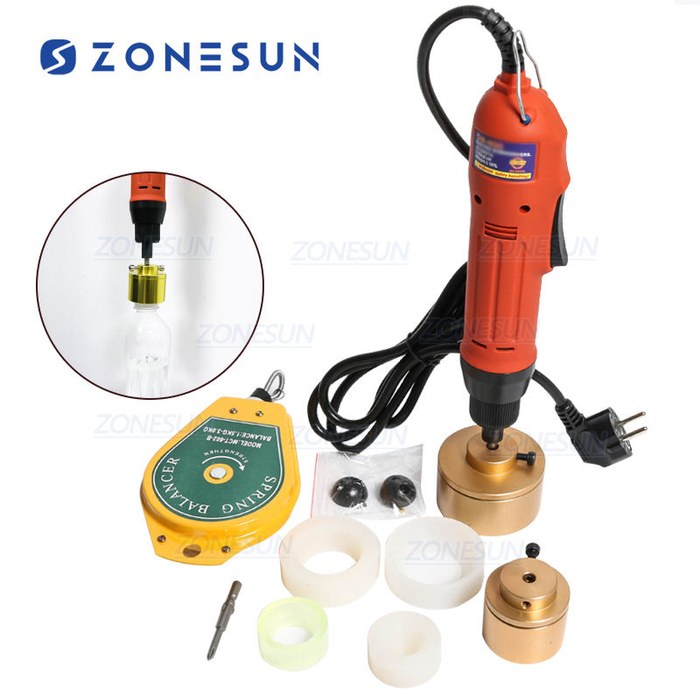
ZONESUN ZS-XG600 handheld electric screw capper
A handheld electric capper route for one closure at a time. The checked listing showed 5.0/5 from 9 product reviews, 2 sold, MOQ 1, 80 W and 110/220 V options. Product reviews are a useful signal but not a package trial: ask for the manual, the model plate, the chuck or head that is included, a cap sample video and removal-torque evidence.
- Role: Alibaba sourcing candidate
- Handheld format, 80 W, 110/220 V options
- Confirm the included chuck and closure range
- Ask for removal-torque evidence on your closure
- MOQ: MOQ 1
Candidate B — ZONESUN 28–32 mm plastic bottle capper
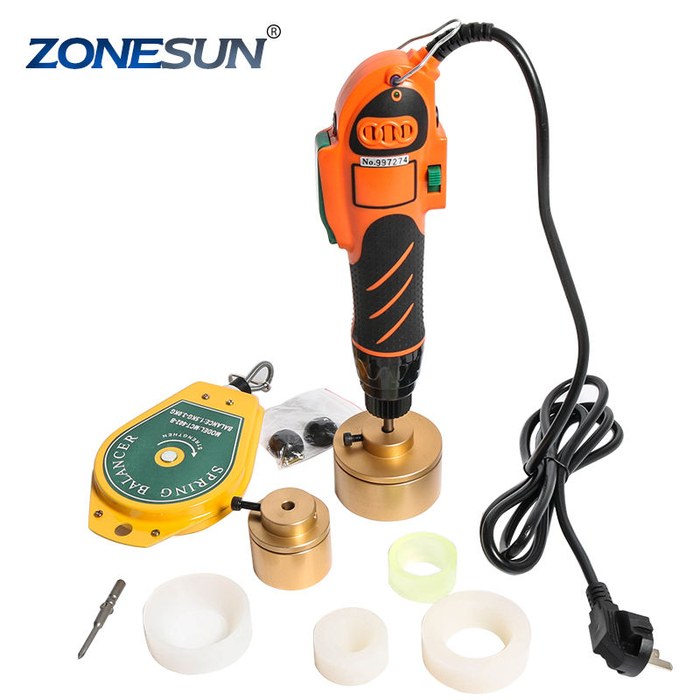
ZONESUN 28–32 mm plastic bottle screw capper
A capper route aimed at a defined closure range. The store-level snapshot showed 4.7/5 from 1,683 reviews, 8 years, 93% on-time dispatch and 29% reorder, but the product itself had no visible product reviews. Store reputation is not product validation: confirm the exact model, the 160 W claim, the 110/220 V version, change parts, warranty and a sample test.
- Role: Alibaba sourcing candidate
- Defined 28–32 mm closure range
- Store reputation is not product validation
- Confirm change parts and sample test before ordering
- MOQ: Check current listing
RFQ checklist: copy this into a supplier message
-
Bottle material, finish/neck specification, height, diameter and shape
-
Cap outside diameter, thread or closure family, liner/plug construction and tamper feature
-
Product type, fill temperature, viscosity or dust/oil risk and intended storage test
-
Required head, chuck, pad, spindle or fixture; list every included change part
-
Voltage, frequency, plug, duty cycle, cooling and protection features
-
How the stated torque is adjusted and how the supplier recommends verifying removal torque
-
Exact model number, manual, nameplate photo, warranty and spare-part pricing
-
Video of the exact machine sealing the customer’s bottle and cap, not a similar listing
-
Trial acceptance: no cross-threading, acceptable appearance, leak/opening result and measured torque method
If a supplier cannot answer the closure and trial questions, a low price does not reduce the technical risk. Keep the machine in the candidate pool only when the missing information has a clear path to verification.
When a handheld capper is the wrong purchase
-
The operator must hold the bottle, cap and head in alignment for a long run and fatigue is already causing variation.
-
Bottle shapes need a nest or clamp to prevent rotation, tipping or shoulder damage.
-
Multiple people need to reproduce the same setup without relying on feel.
-
A leak or opening failure is expensive enough that the process needs recorded torque, fixed presentation and formal change control.
-
Cap placement, feeding or inspection—not the tightening motion—is slowing the station.
In those cases, ask for a benchtop chuck, spindle or fixture-based system, then repeat the same package trial. A larger machine is justified by a specific removed variation, not by a larger number in the catalog.
References and evidence notes
ASTM D2063/D2063M-24 — torque retention for continuous-thread closures (official standard page).
ASTM D3474-23 — calibration and use of torque meters in packaging (official standard page).
Accutek — torque control explanation and why loose or over-tightened caps matter.
Accutek — capping machine overview, including handheld and semi-automatic formats.
Hook this up to your favourite commenting platform — Giscus, Disqus, or your own.
Continue reading

How to Choose a Small-Batch Bottle Rinser
Air, water, or manual: match the cleaning job to the bottle and the next process

Why Candle Labels Wrinkle on Glass Jars
A geometry-first troubleshooting guide for small candle brands applying pressure-sensitive labels to glass jars.

How to Ship Candles in Hot Weather Without Treating Insulation as a Guarantee
A risk-based shipping and package test guide for small candle sellers.