How to Wash a Wool Sweater Without Shrinking It
A care-label decision guide for washing, drying and buying the right support tools.
 Lena Schmidt
Disclosure: We may earn a commission if you purchase through links on this page, at no additional cost to you.
Quick answer. The safest way to wash a wool sweater is to start with the care label, then control the three things that most often change the garment: heat, movement and weight while wet. A machine-washable sweater can usually follow its stated wool or gentle cycle with a suitable detergent. A hand-wash or dry-clean-only label needs a different path. No detergent, mesh bag or drying rack can override a label or guarantee that a felted sweater will return to its original size.
This guide is written for people who own expensive knitwear and for small clothing sellers who want to assemble a practical care kit. It explains what each tool can and cannot do, then shows how to choose a ready-to-use retail option or source a small branded laundry accessory. The product links are purchasing routes, not proof that a garment is safe for every wash setting.
The Decision Starts With the Care Label
Read the sewn-in label before choosing a detergent or cycle. Separate the garment into one of three paths: machine washable, hand wash, or dry clean only. Fiber content alone is not enough. A 100% wool sweater may be treated for machine washing, while a wool blend, loose hand-knit, lined piece or structured garment may carry a different instruction.
| Label or garment situation | Safer starting path | What to avoid assuming |
|---|---|---|
| Machine washable / wool cycle shown | Use the labelled wool or gentle program and the stated temperature; keep handling low | That every washer’s “delicate” cycle is equally gentle |
| Hand wash | Use a basin or a machine hand-wash program only if the label and appliance instructions support it | That a generic delicate cycle is interchangeable with hand washing |
| Dry clean only or structured garment | Use the specified professional route | That a home soak is a safe substitute |
| Label missing or unreadable | Treat the item as high risk; test a hidden area only if appropriate and avoid heat | That the fiber percentage tells the whole care story |
The label is also a limit on product claims. If a seller says a detergent is suitable for wool, that does not make every wool garment machine washable. If a drying rack says it is designed for sweaters, that does not make a dryer safe. Keep the garment decision and the accessory decision separate.
Why Wool Felts and Changes Shape
Wool fibers have a scaled surface. When crossing fibers move against one another under moisture and load, those scales can act like a ratchet: movement in one direction is easier than movement back. That mechanism helps explain why rough agitation can change a knitted fabric’s density and dimensions. A classic Textile Research Journal study described this directional friction in Merino fibers. [1]
Heat is only one part of the risk. Friction, repeated movement, temperature changes, and the weight of a saturated sweater can all contribute to felting, stretching or distortion. Research on wool fabrics dried in a domestic dryer found pilling and dimensional shrinkage, with the largest shrinkage occurring in the early drying cycles. [2] A recent study of wool-blend knitted fabrics also found that wash-related dimensional change depends on knit structure and is often most visible during the first washing treatments. [3]
That is why “cold water” is not a complete method. A cold cycle with aggressive tumbling can still be a poor match for a fragile knit, while a labelled wool cycle may be designed to reduce movement. Use the label, the washer’s actual program and the garment’s construction together.
Machine Washing: When It Is Reasonable
If the label allows machine washing, turn the sweater inside out and close zippers or fasteners that could snag it. Use the wool or labelled gentle program at the label’s temperature. Keep the load small enough that the garment is not crushed against heavy items. Use a mild detergent made for wool or delicate fibers and follow that product’s dosing instructions rather than adding extra soap for reassurance.
A mesh laundry bag is a containment tool. It can reduce contact with hooks, zippers and rough neighboring items, but it does not cancel heat, spin or an unsuitable cycle. Choose a bag that lets the sweater lie without tight compression. A bag that forces the knit into a small ball can create a different kind of stress. Check the zipper and seams before each use; a damaged bag can snag the garment.
Do not treat a successful first wash as permanent approval. Record the program, temperature, spin setting and detergent. Compare the sweater’s length, width, sleeve shape and surface before and after drying. If the garment changes, do not repeat the same experiment with a more valuable piece.
Hand Washing: Lower Movement, Not Zero Care
For a hand-wash label, fill a clean basin with water at the temperature stated on the label. Dissolve a small amount of wool-safe detergent before adding the garment. Let the sweater become wet without rubbing it against itself. Press water through the knit with your hands and lift the garment with full support when moving it.
Drain and refill as directed by the detergent. If rinsing is required, use water at a similar temperature and press rather than twist. Do not wring the sweater: a wet knit carries much more weight than a dry one, and twisting can distort its shape. Roll it in a clean towel and press the roll to remove water. This is a water-removal step, not a replacement for a spin program that the label does not allow.
No-rinse products can simplify a hand-wash routine when their own instructions permit that use. They still need the garment label to allow home washing, and they should not be described as a repair for previous felting. If the sweater has already become dense, stiff and substantially smaller, a home “unshrink” promise is not a reliable product claim.
Drying Decides Whether the Shape Survives
After washing, support the sweater from underneath. Lay it flat on a dry towel or a flat mesh sweater rack, reshape the shoulders and side seams, and keep the proportions close to the original garment. Avoid hanging a saturated knit from the shoulders. Gravity can lengthen the body and create shoulder points even when the washing step was gentle.
A towel is inexpensive and works when you have a clean, flat surface and enough room for air to circulate. A flat rack is useful when you need airflow below the garment or when counter space is limited. It should support the full sweater rather than letting sleeves or the body hang over an edge. Foldable mesh racks are storage tools; they do not speed every sweater equally, and they do not eliminate the need to reshape the knit.
Keep the garment away from direct high heat unless the label specifically permits a suitable tumble program. Research on domestic dryer exposure found cumulative surface and dimensional damage in wool fabrics. [2] Do not infer a universal “safe” dryer time from one brand, one sweater or one cycle. If the label permits tumble drying, follow the garment and appliance instructions and monitor the result on a lower-value item first.
Choose Tools by the Problem They Solve
| Tool | Useful when | Limits |
|---|---|---|
| Wool or delicate detergent | You need a formula whose label covers the garment and washing method | It cannot make a dry-clean-only garment washable |
| Mesh laundry bag | You need to reduce snagging and keep a light knit contained | It cannot correct heat, rough agitation or over-compression |
| Flat sweater rack | You need full support and airflow while the sweater dries | It cannot reverse felting or replace reshaping |
| Clean towel | You need a low-cost way to press out water and provide a flat surface | A damp towel can slow drying if airflow is poor |
The best setup is often a combination: the correct label-approved wash method, a suitable detergent, optional containment during machine washing, and a flat drying surface. Buying all four items before checking the label adds cost without reducing the main risk.
A Practical Product Route: Retail First, Volume Second
For a single household or a small number of high-value sweaters, a ready-to-use retail product is the shorter purchasing route. The retail candidate below is included as the consumer option; check the live listing for its current title, size, instructions, seller and delivery terms before buying, because marketplace details can change.
For a boutique, knitwear seller or care-kit brand, sourcing becomes useful when you need custom sizing, logo printing, packaging or a repeatable batch. The sourcing candidates below are mesh laundry bags: leads for a branded care kit, not evidence that a bag itself prevents wool shrinkage. Request a sample and test it with the garment types you actually sell.
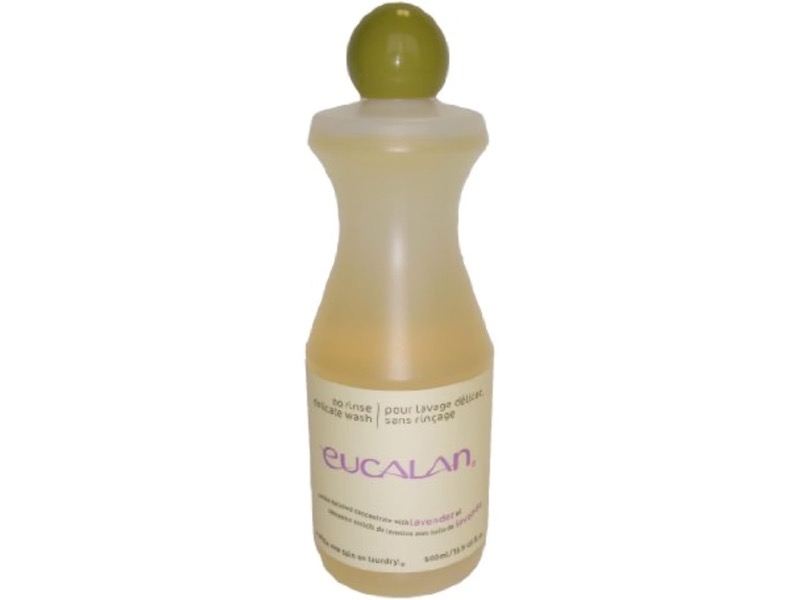
Eucalan No Rinse Delicate Wash, Unscented 16.9 oz
A no-rinse delicate wash for wool and fine fibers, listed as unscented 16.9 oz. A no-rinse product can simplify a hand-wash routine when its instructions permit that use, but it still requires the garment label to allow home washing — and it is not a repair for previous felting. Confirm the current listing, size and dosing instructions before buying.
Best for: A no-rinse wool and delicate wash for hand-washing labelled garments, when the product's own instructions permit it.
- No-rinse delicate wash
- Wool and fine fibers
- Check label and dosing first
- MOQ
- Retail single unit
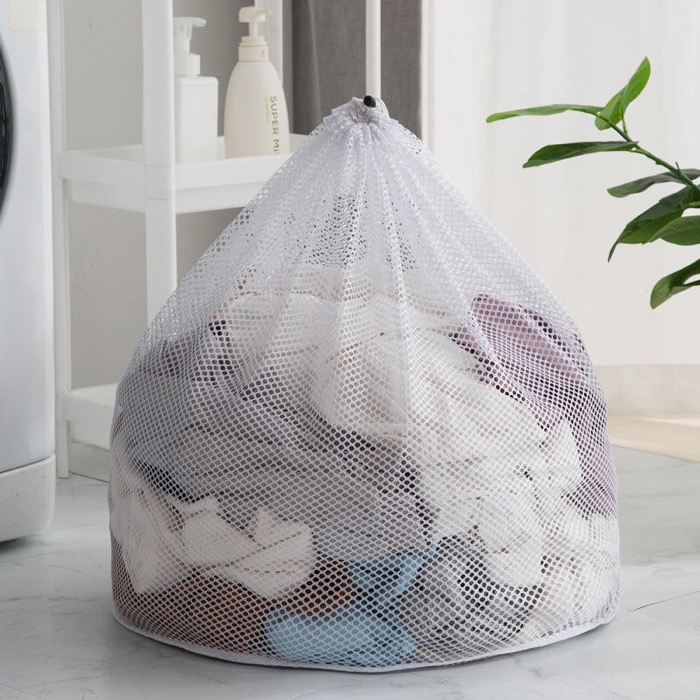
Multi-Size Custom-Logo Mesh Laundry Bag
An indexed offer describing 30×40, 40×50, 50×60 and 60×80 cm options with custom logo support and a supplier showing 10 years on the listing. Ask for a sample in the size that lets one sweater lie without compression, and confirm zipper protection, mesh density, seam strength, packing, MOQ and sample cost before ordering.
Best for: A branded care kit needing a mesh bag size that lets one sweater lie without compression.
- Multi-size mesh laundry bag
- 30×40 to 60×80 cm options
- Confirm zipper and mesh density
- MOQ
- Check current listing
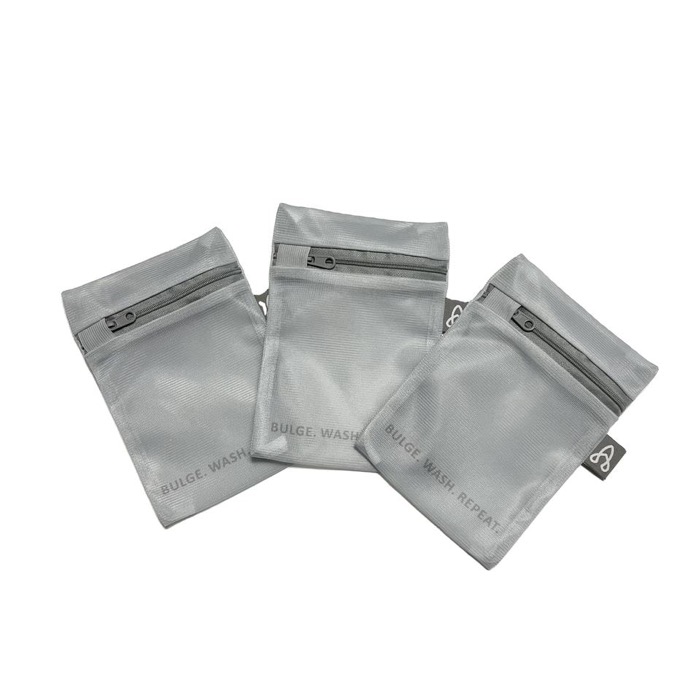
Compact 12×18 cm Custom-Logo Fine-Mesh Bag
An indexed offer describing a 12×18 cm fine-mesh bag with logo customization and a minimum order shown from 100 pieces. This size is more suited to socks, small accessories or a care-kit insert than to a full adult sweater. Do not present it as a sweater bag unless the supplied dimensions and a sample support that use.
Best for: Socks, small accessories or a care-kit insert — not a full adult sweater unless dimensions and sample say otherwise.
- 12×18 cm fine-mesh bag
- Logo customization
- Small-item or kit-insert role
- MOQ
- From 100 pieces (listing-stated)
How to Evaluate a Mesh Bag Before Adding Your Logo
Measure the largest sweater you expect customers to wash and compare its folded dimensions with the bag’s usable interior, not its external marketing size. Put one garment in the sample, close the zipper and check that the knit is not forced into a tight roll. Run the bag through the intended labelled cycle with a low-value test garment, then inspect for snagging, broken teeth, loose threads, colour transfer and trapped lint.
Ask the supplier for the material, seam construction, zipper type, finished dimensions and tolerance. Request the same information for the production sample and the bulk order. If the bag will be sold as part of a care kit, add a printed instruction card that says the bag is a protection aid, not permission to ignore the sweater’s label. Keep the product’s care claims narrow and verifiable.
For the compact option, ask for a larger sample before approving a sweater use. For the multi-size option, choose the smallest size that gives the garment room to lie flat and move gently. “More mesh” or “stronger zipper” is not a substitute for seeing the garment inside the actual bag.
A Simple Wash-and-Dry Checklist
- Read the care label and identify machine wash, hand wash or dry clean only.
- Inspect the sweater for stains, loose threads and existing pilling.
- Turn it inside out and secure fasteners.
- Choose the label-approved water temperature, cycle and detergent.
- Use a mesh bag only when it fits without compressing the knit.
- Remove the sweater with two hands and press out water without wringing.
- Lay it flat, reshape the seams and keep high heat away unless the label permits it.
- Compare the dry garment with its original measurements before storing it.
Store the sweater clean and completely dry. Fold it rather than hanging it from the shoulders, and leave room for air. If you are preparing a care kit for customers, include the same sequence in plain language and avoid promising that a product will prevent all pilling, shedding or shrinkage. The useful promise is that the kit makes the label-approved routine easier to follow.
What Not to Claim
Do not promise that hair conditioner, baby shampoo or a “relaxing” soak will restore every shrunken sweater. Do not call a mesh bag a shrink-proof device. Do not say a rack prevents all stretching, and do not state that every wool item can be machine washed because one product carries a machine-wash label. These claims ignore differences in fiber treatment, knit structure, construction and prior damage.
A credible care guide gives the reader a decision rule: follow the label, reduce heat and rough movement, support the wet garment, and treat any accessory as a limited aid. That rule is more useful than a single temperature, a universal spin number or a promise that a damaged sweater can always be recovered.
References
- Flanagan, G. F. Felting and Ratchet Action of Wool Fibers. Textile Research Journal, 36(1) (1966), 55-65. DOI: 10.1177/004051756603600107
- Wei, Y., Wang, X., Su, Z., and Ding, X. Research on micro-damage behavior of wool fabrics drying in domestic dryer. Microscopy Research and Technique, 80(8) (2017), 904-916. DOI: 10.1002/jemt.22881
- Bukhonka, N. P. The Impact of Miss Stitch on the Dimensional Properties and Stability of Double Weft Knitted Fabrics after Dry and Washing Relaxations. Textile & Leather Review, 2024. DOI: 10.1177/24723444241237314
Hook this up to your favourite commenting platform — Giscus, Disqus, or your own.
Continue reading
Should You Use a Sweater Comb or Fabric Shaver on Wool and Cashmere?
A practical decision guide for removing pills without cutting away useful fibers.
Chenille Sofa Pet Hair: 6 Tool Decisions Before You Scrape the Nap
A dry-first buyer guide for removing embedded fur while protecting a textured upholstery surface.
Bouclé Sofa Discoloration: 6 Checks Before You Use Water, Foam, or a Spot Cleaner
A fabric-safe decision guide for dark seating areas, water rings, and compressed loops.