Should You Use a Sweater Comb or Fabric Shaver on Wool and Cashmere?
A practical decision guide for removing pills without cutting away useful fibers.
 Lena Schmidt
Disclosure: We may earn a commission if you purchase through links on this page, at no additional cost to you.
Quick answer. Start with the least aggressive tool that matches the garment. A manual sweater comb is easier to control on fine wool or cashmere and on a small pilled area. A guarded electric fabric shaver can be faster on a stable, flat knit, but it removes material by cutting the pills and can thin a loose or already fragile surface. A razor is an emergency option, not a default recommendation. In every case, lay the garment flat, keep it taut, test a hidden area and stop when the surface changes.
Pilling is a surface event, not a reliable quality verdict. Fibres migrate, tangle and form small balls under friction; cashmere research also links pilling behavior to fibre properties. [1] The useful question is therefore not “Which tool removes the most?” but “Which tool removes the unwanted pills while taking the least risk with the garment’s structure?”
This guide is for ordinary wool, merino, cashmere and blended knitwear. Follow the care label first. Embroidery, loose novelty yarns, open lace, brushed finishes and garments with visible thinning need a smaller test area or professional advice.
What the Pill Is Telling You
Look at where the pills appear before choosing a tool. Clusters under the arms, at the sides or beneath a shoulder bag suggest repeated friction. A soft halo across the whole garment may be loose surface fibre rather than mature pills. A snagged loop, a hole or a fuzzy patch that changes direction is a repair problem, not a depilling problem.
Knitted structures and staple-fibre yarns can respond differently to rubbing, washing and pressure. Textile research on abrasion describes how rubbing can displace or pull out fibres and, in wool, contribute to felting behavior. [2] This is why a tool that works well on a dense acrylic cardigan may be a poor choice for a loose cashmere knit. The fabric’s construction, fibre length and condition matter more than the tool’s marketing label.
| What you see | Likely decision | First move |
|---|---|---|
| A few firm pills on a dense knit | Controlled local removal | Manual comb, one direction |
| Many even pills on a stable, flat knit | Efficiency may matter | Guarded shaver after a test |
| Soft fuzz without clear balls | Loose fibre or brushed finish | Air, wash and dry gently; do not shave blindly |
| Snagged loops or thin patches | Structural damage | Repair or stop; remove only loose pills |
| Pills plus odour or visible soil | Cleaning issue as well | Treat care and stain questions separately |
Five Checks Before You Buy or Switch Tools
1. Read the fibre and care label. Confirm whether the garment is wool, cashmere, a blend or a synthetic knit, and note whether the label permits machine washing. Care instructions do not tell you which depiller to buy, but they establish how cautious the surrounding routine should be. Do not use a tool to compensate for a care label you have not read.
2. Check the knit density. Place the garment flat under good light. If you can easily see gaps between stitches, the knit is a higher-risk surface for a blade or comb snag. A compact, stable jersey gives a tool a more predictable path. Ribbing, cable knits and brushed surfaces require short tests because the height changes across the garment.
3. Separate pills from fuzz and snags. A pill is a small cluster with a connection to the surface. Fuzz may be intentional loft. A snag is a pulled loop. Cutting a snag can create a hole; shaving intentional loft can make the garment look patchy. Use a sweater comb or shaver only on a defined pill area, never as a general “make it smooth” pass.
4. Consider how much material you can afford to lose. Every depilling method removes some loose fibre. That does not mean a careful pass will ruin a sweater, but it does mean repeated aggressive passes are not free. Fine cashmere, thin merino and worn elbows deserve a lower-pressure method and fewer sessions. If the garment is already translucent or thin, repair or replacement may be more sensible than cosmetic grooming.
5. Test the tool where a mistake is cheap. Use an inside hem or a hidden side seam. Make one short pass, lift the tool and compare the area from different angles. Check for a shiny track, a bald patch, pulled loops, colour change or a new roughness. If any of these appear, do not increase pressure to finish the section.
Sweater Comb Versus Electric Fabric Shaver
| Decision factor | Manual sweater comb | Guarded electric shaver |
|---|---|---|
| Control | Slow and easy to stop | Faster but continues cutting while powered |
| Best surface | Small areas and fine or delicate knits | Stable, flatter knits with even pilling |
| Main risk | Snagging if dragged or pressed | Thinning, blade catch or uneven tracks |
| Cost of a mistake | Local and visible immediately | Can remove a strip before you react |
| Maintenance | Rinse and dry; no consumables | Clean the guard and head after each use |
Use a clean, dry, firm surface. Smooth the garment without stretching it. Do not depill a sweater while it is hanging: the weight and curved surface make the tool more likely to catch a loop or create an uneven path.
Work in short, one-way passes. Start at the edge of the pilled patch and move toward the centre. Use the garment’s surface as the guide; do not press until the comb or guard touches the knit base. Lift the tool at the end of each pass instead of scrubbing back and forth. Empty the removed pills so you can see whether the surface itself is changing.
Treat high-friction zones last. Elbows, underarms and side seams often have the most wear. They are also where a thin area can be hidden by the pill cluster. After removing a few pills, stop and inspect the base fabric. If the surface is fuzzy but intact, leave some fuzz rather than chasing a perfectly flat finish.
Wash only when the garment needs washing. Depilling is not a substitute for cleaning. If the sweater is not visibly soiled or odorous, airing it may be enough between wears. When washing is needed, use the label, a wool-safe product where appropriate, limited friction and flat drying. Washing the garment immediately after an aggressive depilling session adds another source of stress before you know how the knit responded.
When Not to Use a Razor, Stone or Aggressive Brush
A bare razor has no guard and can cut the garment if the angle changes. A sweater stone has an abrasive surface that may be useful on selected sturdy knits but is a poor default for fine cashmere. A stiff brush can raise a nap, pull a loop or turn a small pill area into a wider fuzzy patch. These tools belong in a controlled test, if at all, not in a universal routine.
Stop if you see a line of missing fibres, a hole, a snag that grows, a change in sheen or a colour difference. Take a photograph and keep the garment flat. A professional repair or cleaner can decide whether the issue is pilling, abrasion, felting or a construction defect.
Buying the Tool for One Sweater Versus Sourcing a Small Batch
For a household purchase, choose based on the garment you actually own. A manual comb is a sensible first role for fine knitwear because it is portable and does not require a motor or battery. A guarded shaver may be useful when several stable sweaters need maintenance, but the tool still needs a test and a clean guard. Do not treat a high review count or a “cashmere” label as proof that the tool is safe for every knit.
For a care-kit seller or small retailer, ask for the tool specification rather than only the product title: tooth geometry, edge finish, guard material, replacement parts, packaging, MOQ, sample lead time and logo options. Test the same tool on a dense wool swatch, a fine merino swatch and a cashmere-like sample. Record snagging, visible tracks and fibre loss. A low unit price is not useful if the sample cannot pass your target-fabric test.
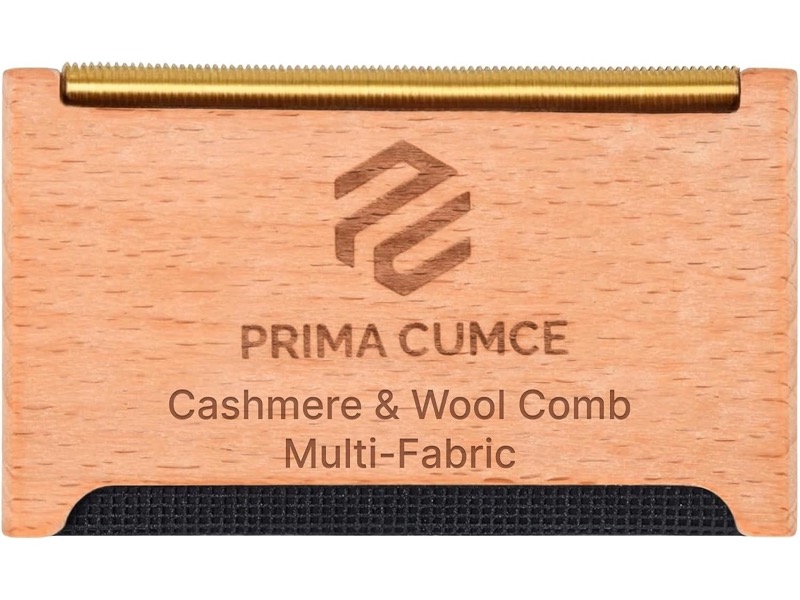
Wooden Sweater Comb for Cashmere, Wool and Knitwear (2 pcs)
A two-piece wooden sweater comb listed for de-pilling cashmere, wool and knitwear as a manual lint remover. A manual comb is the more controllable first role for fine knits; apply it to a defined pill area only and test on a hidden seam first. Confirm the live listing, tooth geometry and return terms before buying.
Best for: A household first role for fine knitwear where slow, stoppable control matters more than speed.
- Manual wooden comb (2 pcs)
- Cashmere / wool / knitwear
- Test on a hidden seam first
- MOQ
- Retail single unit
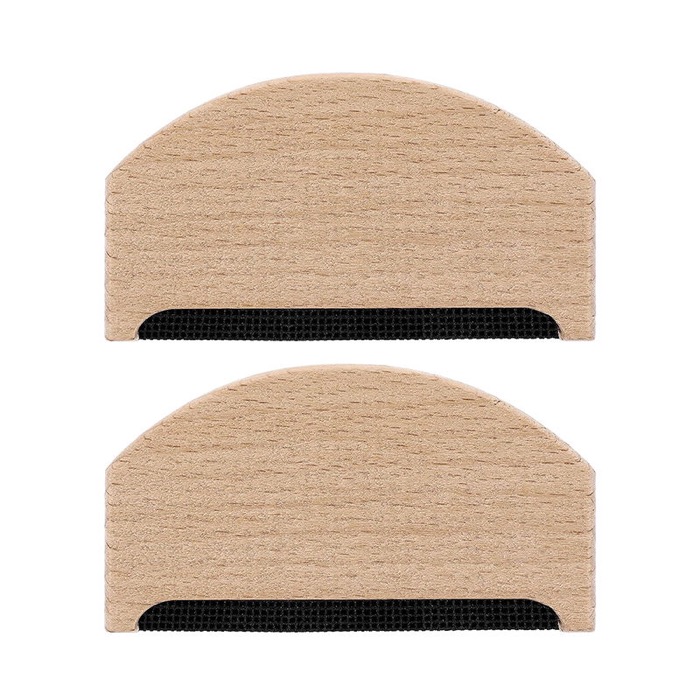
Wooden Cashmere / Wool Depilling Comb
An indexed listing describing a wooden cashmere or wool comb, with a listed MOQ of 50 and an 8-year supplier profile. Treat those marketplace fields as screening evidence, not a quality guarantee. Ask for tooth dimensions, edge finish, sample photos and a sample on the knit you intend to support.
Best for: A batch or OEM sample route for a wooden depilling comb, tested on the knits you intend to support.
- Wooden cashmere / wool comb
- MOQ 50 (listing-stated)
- Request tooth and edge specifications
- MOQ
- 50 (listing-stated)
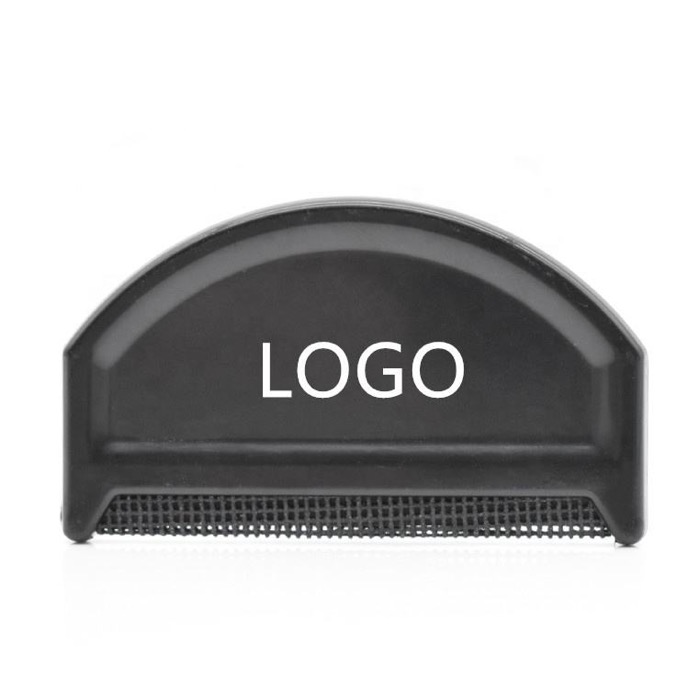
Portable Sweater / Cashmere Depilling Comb
A portable lint-removal tool listing described for sweaters and cashmere. Confirm the supplier's current years, MOQ, material and whether the listed item is manual or includes another lint-removal function. Keep the product role provisional until the supplier confirms the exact variant and you test it.
Best for: A comparison candidate for a portable depilling tool; confirm whether it is manual or adds another function.
- Portable depilling tool
- Confirm manual vs motorised
- Verify variant and material
- MOQ
- Check current listing
Questions Buyers Ask
Does pilling mean the sweater is low quality? No. Pilling reflects friction, fibre behavior and fabric construction. Cashmere and other fine knits can pill even when they are valuable. A new pill pattern can still be a useful signal to reduce rubbing, change storage or review washing, but it is not a standalone quality test.
Should I depill before washing? Remove obvious loose pills only if the garment is dry and stable. If the garment needs washing, follow the label first and let it dry flat before judging the surface. Wet handling and depilling are separate decisions; combining them makes it harder to identify what caused a change.
Can I use the same electric shaver on wool and cashmere? Do not assume so. Compare the guard, head opening, speed and fabric response. Test each fibre and knit construction. If the shaver leaves a track or catches, stop rather than choosing a higher speed or pressing harder.
How often should I remove pills? Only when they are visible and bothersome. Frequent cosmetic passes remove more fibre than a small, occasional cleanup. Address friction from bags, seat belts, rough outerwear and washing so the garment is not repeatedly being repaired after the same cause.
What if the sweater already shrank or felted? Depilling will not reverse felting or restore dimensions. Stop cosmetic work and assess the garment’s size, hand and stitch definition. Any reshaping attempt should follow a separate, cautious plan; do not stretch aggressively while trying to remove pills.
A Simple Purchase-and-Use Checklist
Before buying, identify the garment’s fibre, knit density and problem area. Choose a manual comb for control or a guarded shaver for a stable, repeatable surface. Confirm the tool has no exposed sharp edge, test it on a hidden area, use short one-way passes and inspect after each small section. Stop at the first sign of thinning, snagging or shine. For sourcing, require a sample and written material specification before approving a logo or production order.
The best depilling tool is the one that leaves the garment intact. A slower comb can be the right answer for one expensive cashmere sweater, while a guarded shaver may save time on a dense everyday knit. The decision becomes clear when the garment, the tool and the risk are evaluated together.
References
- Li, L., et al. Analysis on the pilling factors of cashmere knitted fabric. Textile Research Journal, 2006.
- Textor, T., et al. Abrasion resistance of textiles: Gaining insight into the causes and mechanisms of textile abrasion.
- Xiao, Q., et al. Enhancing anti-pilling performance of wool knitted fabrics via synergistic treatment with dopamine and silk sericin. RSC Advances, 2025.
Hook this up to your favourite commenting platform — Giscus, Disqus, or your own.
Continue reading
How to Wash a Wool Sweater Without Shrinking It
A care-label decision guide for washing, drying and buying the right support tools.

Chenille Sofa Pet Hair: 6 Tool Decisions Before You Scrape the Nap
A dry-first buyer guide for removing embedded fur while protecting a textured upholstery surface.
Bouclé Sofa Discoloration: 6 Checks Before You Use Water, Foam, or a Spot Cleaner
A fabric-safe decision guide for dark seating areas, water rings, and compressed loops.