Why Air Fryer Parchment Paper Flies Up and How to Use It Safely
A liner that lifts is catching the fan's airflow because too much paper is exposed. Check the manual, size the sheet to the basket, and always weigh it down with food.
 Lena Schmidt
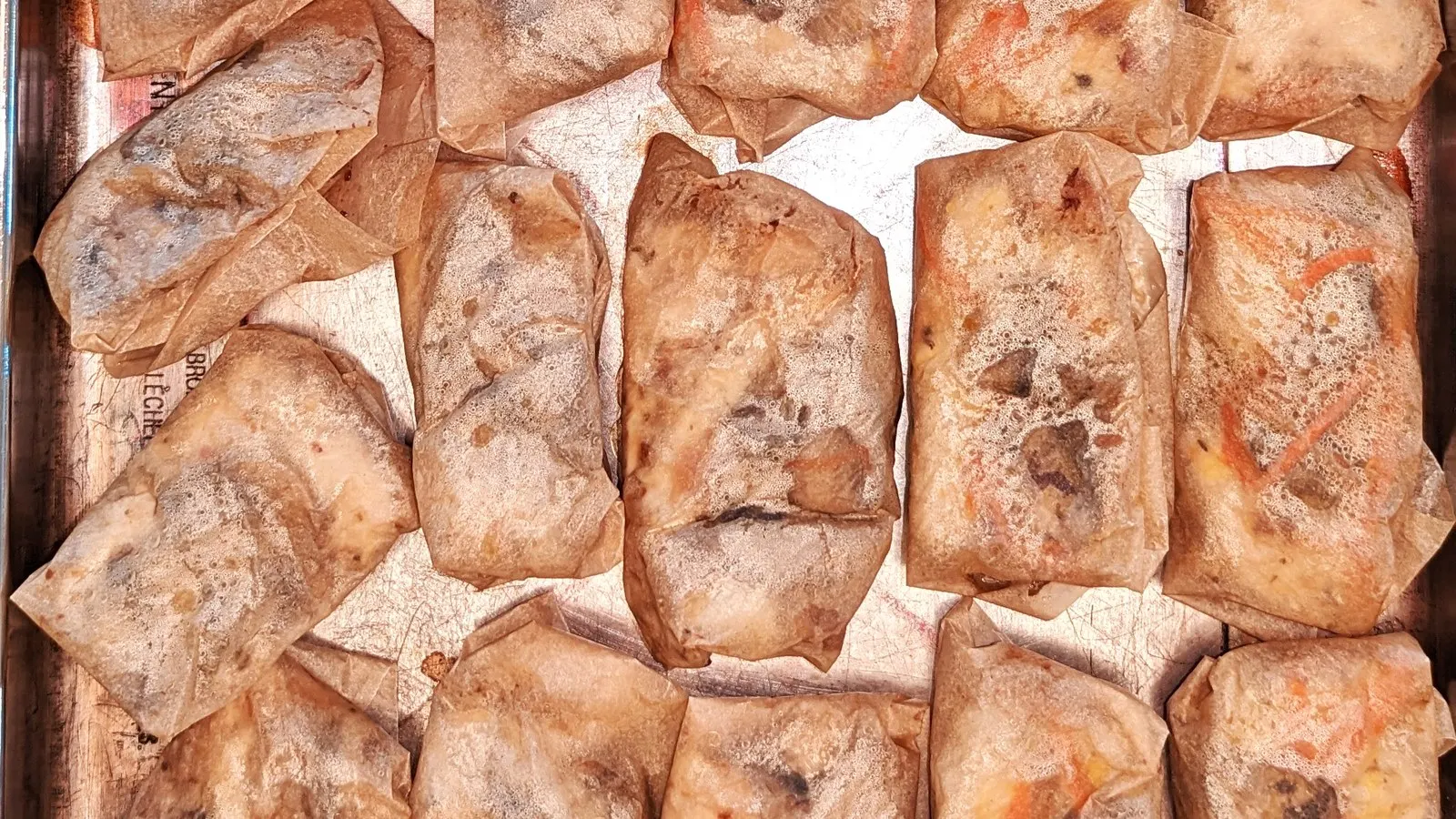
Disclosure: We may earn a commission if you purchase through links on this page, at no additional cost to you.
If parchment lifts in an air fryer, the circulating air is catching a sheet that is too exposed or not held down. Stop the cycle if paper is moving toward the heater. For the next cook, check the appliance manual first: some models permit paper when it is held by food, while others prohibit it. If permitted, use a liner cut or made for the basket, place it only when the manufacturer allows, and put food on it before the fan runs. A liner that fits and stays down can simplify cleanup; no liner is safer when the manual says not to use one or the load is too small to anchor it.
Why parchment lifts in an air fryer
An air fryer moves hot air around food with a fan. A loose sheet has a broad, light surface, so air can get underneath it and push it up. The risk is not simply that parchment is “too hot.” Paper that reaches the heating element can scorch or ignite, and a liner that covers too much of the cooking surface can also interfere with the airflow the appliance needs.
That is why a liner can behave well in one cook and lift in another. A sheet may stay down under a broad, heavy piece of food but flap when the load is a few nuggets, a slice of toast, or vegetables arranged with bare corners. A basket with a strong air path may expose more paper than a different design. The fan setting, food shape, liner shape, and placement all matter. The appliance’s instructions decide whether paper is allowed in the first place.
If the paper starts to move while cooking, pause or switch off the appliance using its controls. Do not reach into a hot basket or touch the liner while the fan or heating element is running. Let the appliance cool, then check whether the paper touched the heater, browned, melted onto a surface, or left smoke or odor. If it did, follow the appliance maker’s cleaning and service instructions before using it again.
Check your exact air fryer manual before buying liners
“Air fryer safe” on a liner package does not override the instructions for your appliance. Find the model number on the unit’s label, then search that exact model on the manufacturer’s support page. Check the manual’s sections on permitted materials, basket loading, accessories, and preheating. A countertop basket fryer and a toaster-oven-style air fryer may have different directions even when both use hot air.
The instructions can differ. Reynolds says its disposable liners are intended for most round and square baskets, gives a maximum use temperature of 400°F, and says not to use them in rectangular or toaster-oven-style air fryers. Its directions also say to preheat first when the recipe requires it, then add the liner and food. A Philips manual for one model family warns against baking paper, while instructions for another Philips Airfryer describe using parchment only with food on top and with part of the basket bottom left open. Those are model-specific directions, not a universal rule for every Philips or every air fryer. [1][2][3]
Use this order when the guidance seems to conflict:
-
Follow the manual for the air fryer’s exact model and configuration.
-
Follow the liner manufacturer’s temperature, placement, and reuse instructions.
-
If either source prohibits the combination, skip parchment. Do not try to solve a prohibition with a different sheet shape or a heavier food load.
For a combination oven, oven-style air fryer, or appliance with a broad rack rather than a deep basket, look for instructions that specifically cover that configuration. If the manual is silent, ask the appliance maker before using a disposable liner. Do not treat instructions for a different model in the same brand family as approval.
How to stop an approved liner from lifting
If your manual allows parchment, the liner should lie flat on the cooking surface and be held down by the food. Never run the fryer with an empty sheet inside. This includes preheating: if the recipe calls for preheating, do it without parchment, then add the permitted liner and food as directed. Reynolds gives that sequence for its own paper liners; another appliance or liner may give different instructions, so confirm both. [1]
Use enough food to hold the sheet down across its exposed area. A few small pieces gathered in the middle may not anchor all four corners. Spread the food so it covers the loose edges without stacking it so densely that the air cannot circulate around the food. If the portion is too small to cover a liner securely, cook directly on the crisper plate or basket instead.
Fit matters too. Measure the usable flat cooking area, not the outside width of the drawer. A square liner in a round basket can leave corners that rise up the sides. A round liner in a square basket can leave strips of the base covered unevenly. Use a shape that sits flat, with no tall folded edges and no overhang toward the heater. Do not fold a large sheet into a deeper cup unless the appliance and liner makers say that shape is suitable.
Perforations can help retain air paths, but holes do not make an oversized sheet safe. Reynolds’ air-fryer paper has ¼-inch holes and is rated up to 400°F by that manufacturer. These are product-specific claims, not evidence that a perforated liner can be used in a model that forbids paper or at temperatures above its own rating. [1]
Keep the liner on the food-supporting basket or crisper plate only where the manual permits. Do not place paper underneath a removable crisper tray, in the drip pan, or between components to catch grease unless the appliance instructions explicitly direct that setup. Paper in the wrong layer can block drainage or airflow and may contact hot surfaces.
Diagnose what you see during a test cook
A short, low-risk first use can show whether the liner and food behave as expected, but it is not a substitute for the manual. Use a food that covers the sheet adequately, stay nearby, and watch for movement through the appliance window if it has one. Do not open or handle a hot drawer just to check the paper while the fan is operating.
| What happens | Likely issue | What to change |
|---|---|---|
| The liner moves before food is added | The sheet is loose in the fan airflow | Remove it; do not preheat with an empty liner |
| One corner lifts during cooking | Too much paper is exposed, or the shape does not sit flat | Use a smaller, compatible shape and distribute food over the edges |
| The paper folds up the basket wall | The liner is too large or cup-shaped for that model | Use a flatter sheet that stays within the approved cooking area |
| Paper darkens, smokes, or sticks near the heater | It may have touched a hot element or exceeded its stated limit | Stop use, cool the appliance, and follow its cleaning guidance |
| Food becomes pale or less crisp | The liner may be blocking too much airflow or draining | Reduce the covered area, use an approved perforated design, or cook without paper |
| Smoke appears but the sheet is not visibly scorched | Grease or food residue may be smoking elsewhere | Stop, cool, and inspect the basket, pan, and heater as the manual directs |
A single test cannot establish a safe temperature for every batch. The food, oil, cook time, and liner instructions change the conditions. Never increase a paper liner beyond its printed temperature limit because another brand’s sheet has a higher rating.
When paper helps, and when to leave the basket bare
Parchment is most useful when sticky glaze, cheese, or crumbs would otherwise cling to the basket and the food is heavy or broad enough to hold the sheet down. It can make cleanup easier, but it also adds a layer between the food and the perforated basket. That can change browning, grease drainage, and crispness. If maximum browning is the goal, use the basket bare when its coating and the recipe allow it.
A reusable silicone liner is not an automatic fix for flying paper. Check the air fryer manual for accessory approval, then check that the liner’s base fits the basket and its side walls do not obstruct the hot-air path. Silicone is heavier than parchment, but a high-walled or poorly fitted insert can still reduce circulation, collect grease, or sit too close to the heater. Avoid improvised weights, metal clips, or magnets inside the cooking chamber; do not add hardware that the appliance maker has not approved for that location.
For foods too small to anchor paper, or when the manual prohibits liners, use the basket as designed and clean it after cooking. If food sticks, adjust the recipe or use an accessory that the appliance maker approves. A tidy drawer is not worth a liner moving toward the heating element.
Choosing a disposable liner that fits
Choose by the shape and usable area of the cooking surface, not only by the fryer’s quart rating. “Fits 5–8 qt” is a seller’s broad sizing label; it does not confirm that a particular liner stays flat in your basket. Compare the liner’s stated dimensions with the flat base inside the basket, then check whether corners, raised ridges, or a removable crisper plate change the usable area.
A current example is Reynolds Kitchens’ unbleached air-fryer liner, model G70001. Its product page lists 50 sheets at 9 × 9 inches, and the maker says the sheets are pre-cut, perforated, rated to 400°F, and intended for most round and square baskets but not rectangular/toaster-oven-style units.Amazon displayed 4.5 out of 5 stars from 4,979 ratings. Those figures describe one listing snapshot, not a controlled safety or cooking test; the stated basket exclusions still matter. [1][4]
If that shape and size suit your basket and both manuals permit paper, view the Reynolds 50-count liner on Amazon. Check the current pack, listing, and price before ordering. Do not buy it for an oven-style appliance just because the product has many ratings.
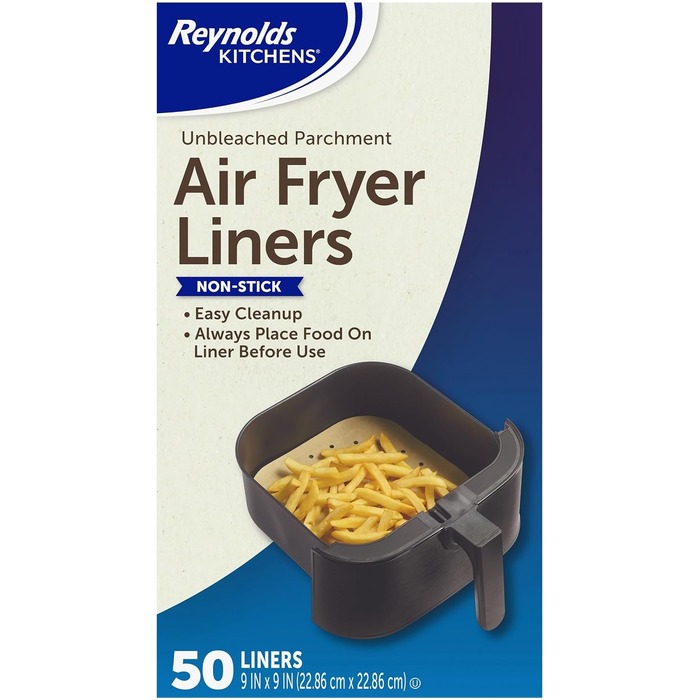
Reynolds Kitchens air fryer liners, 50 count
Unbleached 9 x 9 inch sheets with 1/4-inch perforations, made for air fryer baskets. They still need food on top to hold them down, and your appliance manual decides whether paper is allowed at all.
- Role: Amazon consumer option
- 50 sheets
- 9 x 9 inches
- Perforated for airflow
- MOQ: Check current listing
A quick pre-cook check
-
The air fryer manual permits parchment in this exact model.
-
The liner is within its own temperature limit and intended for this appliance style.
-
The sheet lies flat on an approved cooking surface without rising sides or excess overhang.
-
Food is already on the liner before the fan runs, and it holds the exposed paper down.
-
Air can circulate through the basket, and the paper cannot reach the heating element.
-
You know the stop condition: if the liner lifts, stop the cook and remove it only after the appliance is safe to handle.
Common questions
Can I put parchment paper in an air fryer while it preheats?
Do not preheat with a loose sheet. Reynolds instructs users to preheat first when needed, then add its liner and food; other devices may prohibit paper entirely. Check both sets of instructions and never place an empty liner in a running fryer. [1]
Are perforated air-fryer liners safer than regular parchment?
Perforations can leave paths for air and grease, but they do not anchor paper or make it compatible with every model. Fit, food coverage, and the appliance manual still control the decision.
Why does my air fryer food turn out less crisp with a liner?
Paper adds a barrier and may cover part of the basket’s openings. Use less coverage or cook without a liner if the manual allows it and crispness matters more than cleanup.
Can I reuse a disposable parchment liner?
Follow the liner maker’s instructions. Reynolds says to discard its liners after use. Another brand may have different directions, but do not reuse a sheet that is greasy, torn, scorched, or contaminated. [1]
What if the air-fryer manual and liner package disagree?
Do not use that combination until the appliance maker confirms it is allowed. A liner label cannot approve use in an appliance whose manual forbids paper.
Sources
-
Reynolds Brands, “Can I Put Parchment Paper in the Air Fryer?” Source
-
Philips, Airfryer user manual example warning against baking paper:
-
Philips, Airfryer user manual example allowing baking paper only with food on top:
-
Amazon listing for Reynolds Kitchens Air Fryer Liners, :
-
Ninja Foodi XL Pro Air Oven manual, accessory and airflow instructions: Source
-
Consumer Reports, “Can You Put Parchment Paper in Your Air Fryer?” Source
-
Country Living test article, parchment alone vs weighted with food: Source
-
YouTube, “Why does my Air Fryer Paper burn in the Air Fryer”: Source
-
Google Search Central, “Creating Helpful, Reliable, People-First Content”: Source
Hook this up to your favourite commenting platform — Giscus, Disqus, or your own.
Continue reading
Garbage Disposal Splash Guard Replacement: Check Fit First
Two guards can look identical in a photo and fit different disposers. Confirm the model, check whether the old guard lifts out at all, and treat universal as a seller's scope claim.
Dog Poop Bag Refills: Check Roll Fit Before You Buy
Bag width and length do not tell you whether a refill fits the dispenser. Compare roll diameter, usable width and the core before you buy a multipack.

Toilet Brush Refills: Check the Connection Before You Buy
A refill that will not fit is usually the wrong coupling, not a badly made brush. Identify the handle, compare the connector, and dry-fit before you trust the word universal.