Are Shrink Bands Recyclable? PVC, PETG and What to Tell Customers
A band is a small piece of film, but it can contaminate a PET bale if it stays on the bottle. What the resin decides, what to print, and how to test removal in ten minutes.
 Lena Schmidt
In this guide
- Why a band is a different question from a label
- What goes wrong with PVC and PETG in PET recycling
- The container decides
- Make the band easy to remove completely
- What you can honestly print
- A ten-minute removal test
- Questions to put to a supplier
- Alternatives that avoid the question
- A short decision guide
- FAQ
- References
Quick answer. Mostly, a shrink band is something the customer should remove and discard, and whether it causes harm depends on the container it came from. Recyclers describe PVC and PETG films as denser than water, so they sink with PET bottle flake and contaminate it; the Association of Plastic Recyclers (APR) also states that very small amounts of PVC can severely contaminate PET, and discourages tamper-evident sleeves and seals on PET bottles unless they detach completely. APR’s PVC guidance prefers sleeves designed to be completely removed before opening. For a small seller the practical rules are to use a perforated band that tears off whole, tell customers to remove and discard it, and avoid printing “recyclable” on a PVC band, because the FTC’s Green Guides require qualification unless recycling facilities reach at least 60 percent of consumers.
Why a band is a different question from a label
Most recycling debate about shrink film is about full-body sleeves, the printed labels that wrap an entire bottle. A neck band is a small strip around the closure, and in normal use the customer tears it off and throws it away when the jar is first opened. That is the sensible disposal route, and nothing about recycling makes it worse.
The problems start only if the band stays on the container when it reaches a recycling facility, because the recycler then has to deal with the film as well as the jar. That is why the industry guidance focuses on whether a sleeve or seal separates completely and how easily. APR’s PET bottle design guidance, in an excerpt reproduced in an APR brochure, says that if tamper resistance is needed it should be an integral feature of the bottle, and discourages tamper-evident sleeves or seals because they can act as contaminants if they don’t detach completely or can’t be removed easily in conventional separation systems.
So a small seller’s question is not “is this film recyclable?” in the abstract. It is “what happens to this film if the customer’s bottle ends up in a PET or PVC stream with the band still attached, and have I done what I can to make that unlikely?” The rest of this page works through that.
What goes wrong with PVC and PETG in PET recycling
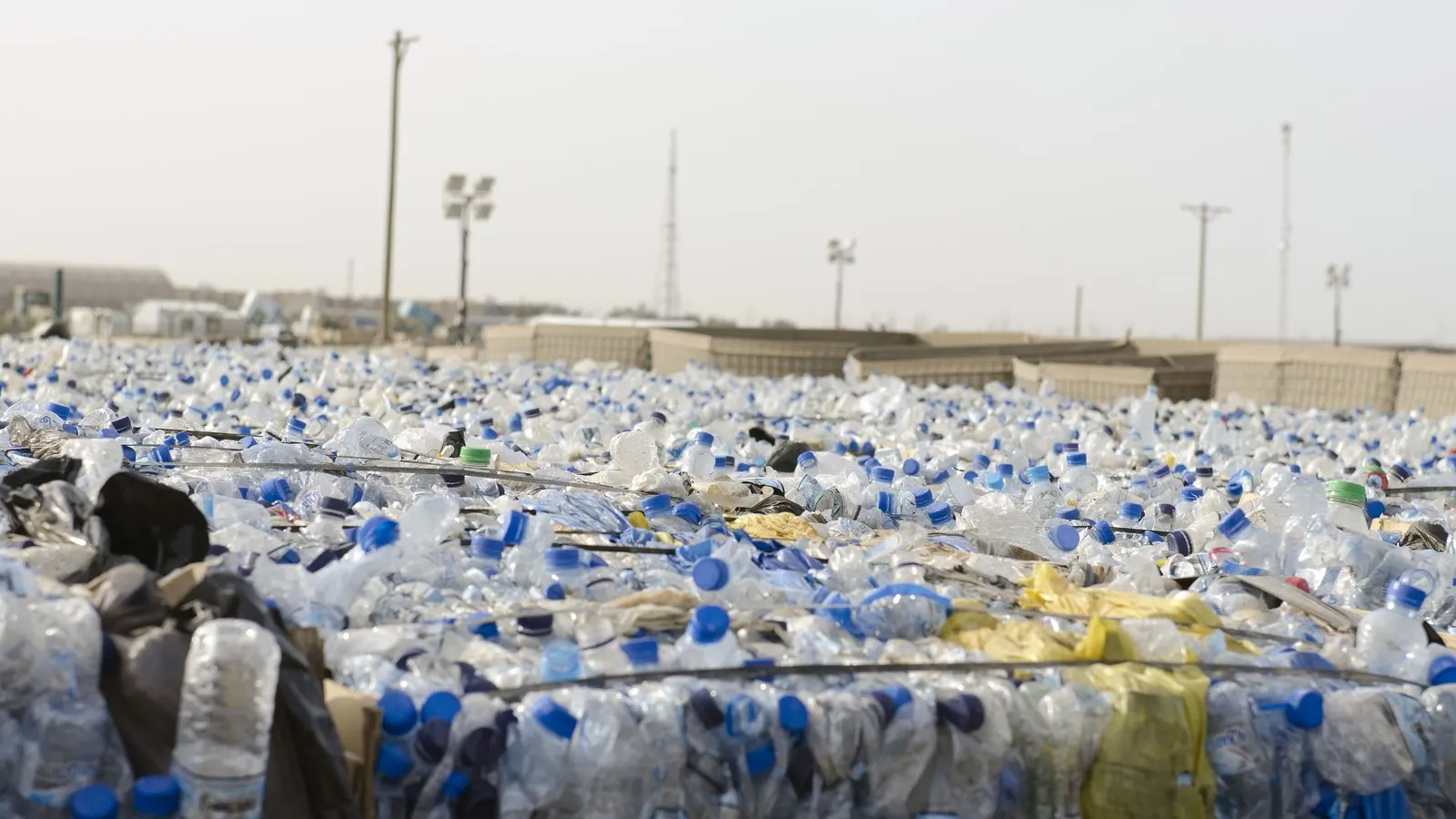
PET bottles are commonly recycled by shredding them and putting the flakes in a water tank. The PET sinks, while lighter closures and labels, such as polyethylene and polypropylene, float off. That separation is why density matters so much.
PVC and PETG are both denser than water. A patent filing on floatable shrink labels states this plainly: PVC labels and PET containers both have densities above 1 g/cm³, so the flotation process can’t separate them, and PETG has a similar density to PET. A trade-press report on full-wrap sleeves says the same, noting that PVC and PETG sleeves follow PET grinds to the bottom of the float-sink tank and contaminate the stream. A manufacturer of low-density sleeves, UPM Raflatac, describes a polyolefin film at 0.935 g/cm³ designed to float even with ink on it.
The consequences are stated more bluntly by APR. Its PET guidance says very small amounts of PVC, in the parts-per-million range, can severely contaminate and render large amounts of PET useless for most recycling uses. Its PVC page adds that PVC sinks in water, is hard to remove in conventional PET recycling systems, and that APR finds PVC bottles undesirable in PET or HDPE bales. These statements are about PVC generally and bottles specifically; they don’t quantify what a single small band does. They explain why recyclers and brand owners treat the material cautiously.
Industry marketing goes further. A sponsored feature from a printing-ink company quotes its technology director saying there is no good reason to use PVC shrink sleeves today. That is a seller’s view, not a regulation, and it concerns full sleeves rather than neck bands.
The container decides
The same band can be a problem on one container and irrelevant on another, because each container travels a different recycling route. The table sets out what the sources I found say, and where they say nothing.
| Container | What sources say about the band | Take-away |
|---|---|---|
| PET bottle | PVC and PETG films sink with PET flake; APR says very small amounts of PVC can contaminate PET and discourages tamper-evident sleeves unless they detach completely | Prefer a band that tears off whole; avoid PVC; tell customers to remove it |
| PVC container | APR prefers sleeves designed to be completely removed, or sleeves of floating polymers; it says PET or PETG sleeves and labels render PVC packaging non-recyclable | A PETG band is the wrong answer here, even though it is right for a PET bottle |
| HDPE or PP bottle | Not covered in the sources I read; the APR PVC page and the PET excerpt do not address these directly | Ask your supplier for APR test results; do not assume |
| Glass jar or metal tin | I found no source on how a band affects glass or metal recycling | The usual instruction is to remove the band first; do not claim more |
Sources: APR PET bottle design guidance (excerpt), APR PVC guidance page (undated, work in progress), patent and trade-press reports on floatable shrink films.
The second row is the surprising one. Our PVC versus PETG guide treats PETG as the more recycling-friendly film, and for PET bottles it can be. But APR’s PVC page says that PET and PETG sleeves on a PVC container make the package non-recyclable under its guidance, because PET sinks with PVC and PVC is intolerant of even small amounts of PET. Neither film is simply “the recyclable one”; the container sets the answer. And a trade source reports that PETG can’t be recycled with PET bottles either, because both sink. For a PET bottle, the film that avoids the sinking problem is a polyolefin with density below 1, which is the type used in the floating labels above.
Most small sellers use glass jars, tins and HDPE or PET bottles. If you use glass or metal, the sources I found don’t raise a stream-contamination issue for the band, but they also don’t address it, so I would say nothing more than “remove before recycling”.
Make the band easy to remove completely
APR’s PVC page lists, among preferred designs, sleeves intended to be completely removed by the consumer before the package can be opened, whatever the material. That is the one lever a small seller fully controls. A band that tears cleanly along a perforation and comes off in one piece is a better candidate than one that splits into fragments or leaves a ring stuck to the neck.
The practical steps follow from that. Choose a perforated band, and test that the tear runs the full height of the band and that the film comes off whole. Check that the band doesn’t leave adhesive or residue on the container, since APR’s PET guidance warns that adhesives not removed efficiently can embed contaminants. Our perforation guide covers the tear designs.
Then tell the customer. A short instruction such as “Remove and discard band before recycling” on the label or insert tells them what you expect. It costs nothing, and it speaks to the main risk in the guidance, a band that stays on.
What you can honestly print
There are two traps. The first is a supplier’s product page. Container and Packaging’s listings for its PVC bands, for example, show “Recyclable: Yes” in the specification table and mention the resin identification code 3. A spec line like that is a statement about the material in general, not evidence that the band is accepted by the recyclers who handle your customer’s container. APR’s guidance points the other way for PET bottles. Don’t copy such a line into your own marketing.
The second trap is the claim itself. The FTC’s Green Guides, at 16 CFR 260.12, say it is deceptive to misrepresent that a product or package is recyclable. An unqualified claim is acceptable when recycling facilities are available to a substantial majority of consumers where the item is sold, which the guides define as at least 60 percent. Otherwise the claim should be qualified, and a package that is only partly recyclable needs prominent qualification, with minor incidental components excepted. I am not a lawyer, and state laws and other countries differ, so check the rules where you sell.
The safest wording describes what the customer should do, not what the band is. “Remove and discard band before recycling” is an instruction. “Recyclable shrink band” is a claim that needs support. For reference, the How2Recycle label program uses a special-instruction line, “Discard Seal”, for seals that should be thrown away first, which shows the instruction approach is a recognized one. You don’t need to join a label program to adopt the idea, but if you do print a program’s label, follow its rules.
A ten-minute removal test
You do not need a laboratory to learn whether your band comes off the way the guidance prefers. Order a small sample pack, apply the bands to five finished containers with your normal heat method, and let them cool. Then hand the containers to someone who has never seen them and ask them to open one. Watch what they do, because customers do not read instructions first.
Note whether the band tears at the perforation on the first pull, whether it comes away as one strip or several, and whether any ring stays on the neck. A band that leaves fragments is the case recyclers worry about, since small pieces are the hardest to catch. Write the result down against the supplier, film type and perforation style, so that a reorder with a different film does not quietly change the outcome.
Repeat the test after a week of shelf time and a shipping cycle if you sell online. Heat and humidity during transit can make some films cling harder or tear less cleanly. If a band passes only when fresh, it is a weaker candidate than one that passes both times.
Questions to put to a supplier
Supplier answers are the weakest link in this topic, so ask specific questions and keep the replies. Which film is it: PVC, PETG, PET, or polyolefin, and what is its density? Has it been tested against any APR protocol, and can you see the report rather than a statement? Does the perforation tear fully on a finished container, and do they have a video or sample showing it? What does the spec line “recyclable” mean in their listing: a resin code, a test result, or a marketing default?
A good supplier will answer the first and last questions in a sentence. A listing that cannot state the film type is a problem for more than recycling, since the film also decides shrink temperature and clarity. If the answers are vague, treat any environmental wording from that supplier as unverified and do not pass it on to your customers.
Keep one more thing in mind: the band is a small part of your package by weight. Spending a day agonizing over it is reasonable if you print environmental claims, but if you make none, a perforated band plus a plain removal instruction covers most of what a careful small seller can do.
Alternatives that avoid the question
If the band is the problem, there are three ways around it. All have trade-offs, and none is a free pass.
A different seal. A paper lid-seal sticker avoids plastic film altogether, though its tamper evidence is different, as our band versus sticker guide explains. An induction liner stays inside the cap, so there is nothing on the outside to remove; see our comparison with induction seals.
An integral tamper feature. APR’s guidance says tamper resistance should be an integral design feature of the bottle where it is required. For small sellers that means a closure with a built-in tamper ring, which you buy as a stock item rather than design yourself.
A floating film. A polyolefin band that floats should avoid the sink-with-PET problem, but I did not find stock neck bands marketed with APR test results. Ask a supplier for them if you need the claim. Without test results, treat a floating-film claim as unproven.
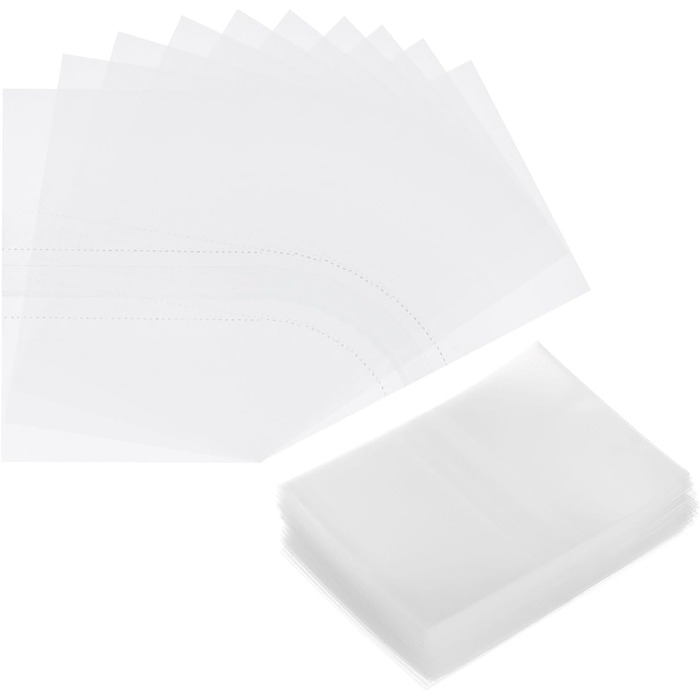
55 x 40 mm clear perforated PET shrink band
A clear perforated band cut from PET rather than PVC, sized 55 x 40 mm for caps around 25 mm.
- Role: Amazon consumer option
- PET film
- 55 x 40 mm
- Perforated
- MOQ: Check current listing
A short decision guide
| If you… | Then |
|---|---|
| Use glass jars or metal tins | Use a perforated band, tell customers to remove it, and make no recyclability claim |
| Use PET bottles | Avoid PVC if you can; ask suppliers about floating films and APR test results; tell customers to remove the band whole |
| Use PVC bottles | Do not use PET or PETG bands; ask your supplier what APR guidance says for your container |
| Want to print an environmental claim | Prefer an instruction over a claim; check 16 CFR 260.12 and local rules before using “recyclable” |
| Need to avoid plastic film altogether | Consider a paper lid seal or an inside-the-cap seal, with the trade-offs noted above |
FAQ
Are PVC shrink bands recyclable? The film can be recycled in a PVC-specific stream in principle, but it contaminates PET if it ends up there. A band is also usually removed and thrown away. Whether any local program accepts it is a question for that program.
Is PETG better than PVC? For recycling compatibility with PET bottles it is often described that way, but sources report that PETG also sinks with PET, and APR’s PVC guidance rules out PET and PETG sleeves on PVC packaging. See our PVC versus PETG guide for performance.
Should customers remove the band before recycling? That is the simplest instruction, and it matches the industry guidance that favors sleeves designed to be completely removed.
Can I call my band “eco-friendly” or “recyclable”? Only if you can substantiate it. The FTC’s Green Guides require qualification in many cases, and a supplier spec line isn’t enough. An instruction such as “Remove and discard band before recycling” is lower risk.
Does a band affect glass recycling? I did not find a source that says so either way. Treat it as removable and don’t claim more.
References
-
Guides for the Use of Environmental Marketing Claims, 16 C.F.R. § 260.12 (Recyclable claims). Source
-
Association of Plastic Recyclers. (n.d.). PVC (polyvinyl chloride, resin identification code #3), APR design guidance. Source
-
Association of Postconsumer Plastics Recyclers. (n.d.). PET bottles brochure (excerpt of The APR Design Guide for Plastics Recyclability). Source
Continue reading
Supplement Bottle Shrink Band Size: Match the Band to Cap and Neck Bead
A child-resistant cap is wider than its thread size suggests, so the band has to be sized to the closure. Measure the cap, confirm the neck bead, and test on filled bottles.
Stand-Up Pouches: Fill Weight, Gusset and Usable Height
A pouch is listed by three numbers and none of them is the fill volume. Width, height and gusset describe a flat sheet of film, not the space left after the seal.
Spice Shaker Caps: Hole Size, Fit and Product Match
A shaker cap is three parts that are usually sold separately: the base, the rotating or flapping lid, and the liner. Buy them apart and the hole size is the last thing you check.