Shrink Bands for Candle Tins: Sizes for 8 oz and 16 oz Slip-Lid Tins
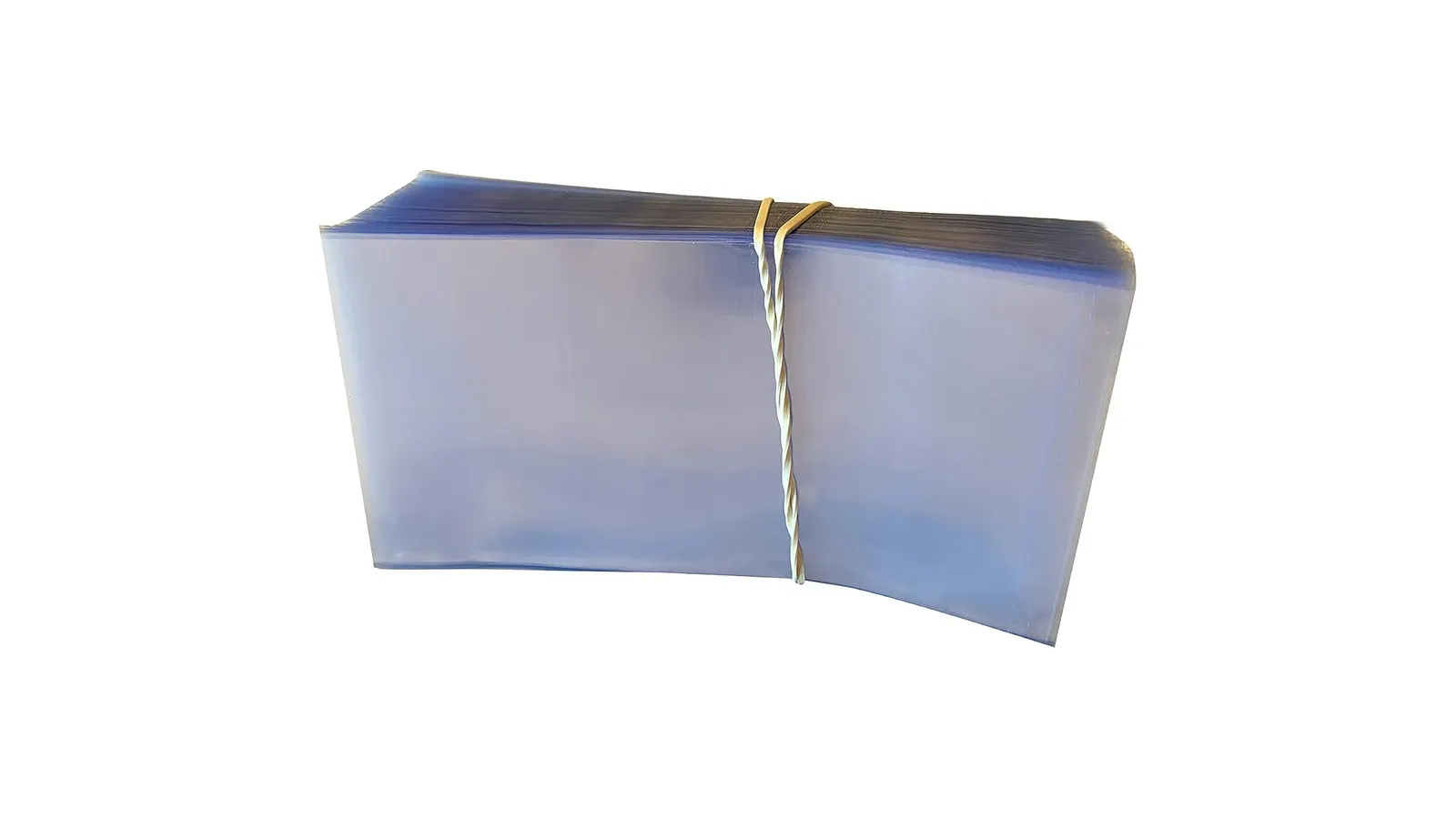
On a slip-lid tin the band bridges the lid and the body, so the maths starts from the tin’s diameter rather than a bottle cap. Here are the bands two suppliers pair with their own tins, the two-line check you can do yourself, and why their suggested bands are taller than the tin.
 Lena Schmidt
In this guide
- Why a candle tin is a different sizing problem
- What two suppliers actually pair with their tins
- The two-line check you can do yourself
- Why the suggested bands are taller than the tins
- When the candle is in a glass jar with a metal lid
- Do you need a band at all?
- Heat, wax and a metal tin
- A five-tin trial before you buy a case
- What a band costs per tin
- Questions to ask a supplier before ordering
- Reorders: keeping the fit consistent
- Common mistakes with tin bands
- Measure the tin before you order
- FAQ
- References
Quick answer. For a round slip-lid candle tin, the band’s lay-flat width should be at least half the tin’s circumference, which is pi times the diameter divided by two. Voyageur Soap & Candle pairs its 8 oz deep tin (3.15 inches across, 2 inches tall) with a 130 x 65 mm band, which works out to about 3 percent spare width. Specialty Bottle pairs its 16 oz deep tin (3.7 inches wide, 2.4 inches tall) with a 165 x 75 mm band, about 12 percent spare. Both bands are roughly 14 mm taller than the tin, so they are meant to cover the whole side, not just the seam. Measure your own tin at its widest point, test five empties first, and keep the heat gun moving, because a tin full of wax is not a bare bottle.
Why a candle tin is a different sizing problem
Most of this series has dealt with bottles, where a band sits on a cap and neck and shrinks down onto a bead. A slip-lid candle tin has no neck. The lid is a shallow cover that pushes over the rim of the body with a friction fit, and the only thing keeping it shut in a box or a tote bag is that friction. Voyageur describes its 8 oz deep tin as having a slip cover lid with a friction fit seal. That is the whole closure.
So the band has a different job. On a bottle it bridges a cap and a neck. On a tin it bridges the lid’s edge and the body wall, and it has to do that on a surface that is straight and smooth. Natures Garden notes that its tin surface is smooth enough to take labels, and that the lid has a small lip on its edge. That lip is the nearest thing the tin has to a neck bead, and it is one more reason to test on your own tins instead of trusting a chart.
What two suppliers actually pair with their tins
Two suppliers publish a matching band on the product page of a candle tin. The table shows what they say and what the arithmetic gives. The spare-width column uses the rule from earlier articles: the band lies flat at a width W, so when open it forms a tube of circumference 2W, and for the band to go on at all, 2W must be at least the container’s circumference, which means W must be at least pi times D divided by two.
| Container (supplier) | Stated size | Suggested band | Min. lay-flat | Spare | Unshrunk dia. |
|---|---|---|---|---|---|
| 8 oz deep tin, slip lid (Voyageur) | 3.15 in (80 mm) dia., 2 in tall | 130 x 65 mm | 126 mm | 3.4% | 83 mm |
| 16 oz deep slip-cover tin (Specialty Bottle) | 3.7 in (94 mm) wide, 2.4 in tall | 165 x 75 mm | 148 mm | 11.8% | 105 mm |
| 8 oz mason jar, 70 mm lid (Specialty Bottle) | 2.9 in wide, 3.8 in tall | 120 x 27 mm | 110 mm | 9.1% | 76 mm |
Minimum lay-flat, spare width and unshrunk diameter are calculated from the lay-flat figures. For the mason jar, the 70 mm figure is the lid.
The spread is wide. The 8 oz tin has only a few percent of slack, while the 16 oz tin has a good deal more. the pages do not say whether the stated diameters are the body or the lid, and on a slip-lid tin the lid is usually the widest part. If the 3.15 inch figure is the body, the real fit on the lid is tighter than the table shows. If it is the lid, the fit is as shown. That is why you should measure the widest point of your own tin with a caliper or a strip of paper.
The two-line check you can do yourself
Wrap a strip of paper round the widest part of the closed tin and mark where it overlaps. That length is the circumference. Divide by two for the smallest lay-flat width that can go on, then add some spare. If your measure comes out at 252 mm, the band must be at least 126 mm wide lying flat, and a 130 mm band leaves about 3 percent. Divide the circumference by pi to get the diameter, which you can check against the supplier’s stated size.
A small amount of spare width is not automatically a fault. Less slack means the band has less far to shrink, which should reduce wrinkling, and the 8 oz pairing above is built that way. The risk is the other direction: with too little slack, a band can be hard to slide over a lid that is slightly out of round or has a rolled edge. If you cannot get it on without tearing the perforation, go up a size before you go to a stronger heat gun.
Why the suggested bands are taller than the tins
Here is something the product pages do not explain. The Voyageur 8 oz tin is 2 inches tall, about 51 mm, and the suggested band is 65 mm high. The Specialty Bottle 16 oz tin is 2.4 inches tall, about 61 mm, and the suggested band is 75 mm high. In both cases the band is roughly 14 mm taller than the tin.
That reads as a design choice, not an error, though neither supplier says so. A band that tall will cover the whole side of the tin and have some film left over to fold over the top and bottom edges as it shrinks. That would hide the lid seam completely and give a wrapped look, which is a different product from the narrow band on a bottle. It is also a reasoning-based reading, so test it. Put a 65 mm band on an empty 8 oz tin and see where the film ends up before you decide the tall band is what you want.
The practical consequence is for labels. A full-height band covers the side wall, so a label either goes on top of the band or goes on the lid. Natures Garden notes that the lid can take stickers, and for a tin wrapped like this that is the safer place. Test any label adhesive on a banded tin, since the film surface behaves differently from bare metal.
When the candle is in a glass jar with a metal lid
Candle makers also use mason-style jars with continuous-thread lids. Specialty Bottle lists its 8 oz mason jar as a candle jar option, with a 70 mm silver lid, and pairs it with a 120 x 27 mm band. That is the conventional bottle case: a short band that covers the lid-to-glass seam, with about 9 percent spare width by the calculation above. The earlier jar articles in this series cover the details for lug lids and cosmetic jars, and the same logic applies.
The two shapes need different bands, and a supplier that sells both will show them as different part numbers. Do not assume that a band sold for your tin fits a jar of the same ounce size. The ounces tell you the volume, and the band depends on diameter and height.
Do you need a band at all?
A slip-lid tin has no tamper evidence on its own. Anyone can lift the lid, sniff the candle and put it back. A band closes that gap and also stops the lid from lifting in transit. Wholesale Supplies Plus makes the point on its small bands that they are for tamper evidence only and do not cover the whole container, which is the narrow-band approach. For a tin, you have a choice between that approach and the full wrap discussed above.
If your concern is only that the lid stays on in the post, a strip of tape or a tamper sticker across the seam may be enough, and our comparison of bands and tamper stickers covers that choice. If you sell at markets where customers pick up and smell candles, a band tells them the tin is untouched, and it is hard to fake that with a sticker that can be peeled and reapplied.
Heat, wax and a metal tin
None of the supplier pages reviewed says anything about heating a tin that already holds a candle, so what follows is reasoning, not sourced guidance. A metal tin conducts heat, and wax softens when it warms. A gun held for too long on one side could warm the wall enough to soften the wax at the edge, mark the surface or dull the finish. TricorBraun, in its general instructions, warns that too much heat can melt or deform plastic bottles, jars and closures, and the same caution applies to anything inside.
The sensible approach is the one from the troubleshooting guide: start far away, keep the gun moving, rotate the tin, and finish in a few seconds. Try it first on empty tins, then on a tin filled with cooled wax, and check afterwards by touch and by eye that the surface of the candle is unchanged. If your candles are poured with a soft wax or a high fragrance load, give the test more time. Do not band candles that are still warm from the pour.
A five-tin trial before you buy a case
Order a small pack of the suggested band and a second size one step up. Take five empty closed tins and five filled ones. Band each with the same heat setting and distance. Check for four things: does the band slide on without tearing, does it end up flat and tight, can the lid still be lifted without tearing the band first, and does the perforation tear in a straight line. Record the result for each size.
Then ship one banded tin to yourself in the same box you use for orders. Shaking in a cardboard box is a harsher test than the bench. If the band holds and the lid stays seated, you have a size.
What a band costs per tin
Specialty Bottle lists its 120 x 27 mm band at 10.85 dollars for a bundle of 250, which is about 4.3 cents each. Wholesale Supplies Plus lists its 48 x 27 mm band at 2.28 dollars per 100, which it states as 2 cents each; that band is for small tubes and tins, not the 8 oz sizes here. The taller 130 x 65 and 165 x 75 bands are larger pieces of film and will cost more per piece, but No source was found a stated price for them to quote.
The band is a small fraction of the cost of a tin and the candle in it, and one lost sale from a returned or leaking tin costs far more. The sensible comparison is not band against no band but the band against the time you spend applying it. A hand-applied band takes a few seconds per tin with practice, and the first batch will be slower.
Questions to ask a supplier before ordering
Ask for the lay-flat width and height in millimetres, the film type and thickness, and the diameter range the supplier says it fits. Ask whether the band was designed to cover the whole side of a tin or only the seam. Ask for a sample, not a quote. And ask whether the film is designed for a heat gun, because as the troubleshooting guide notes, sellers disagree on whether a hair dryer will do.
Reorders: keeping the fit consistent
Tins from different production runs can differ by a millimetre or two in lid diameter, and a band that fitted last season’s batch may be tight on this one. When you reorder tins, measure a few from the new case before you reorder bands, and keep one banded tin from the old batch as a reference. Write the tin supplier, the band size and the heat setting on the same card so that the next batch starts from a known point instead of a guess.
The same discipline helps when a supplier changes a film. If the new bands shrink differently, wrinkle more or tear less cleanly than the last case, the troubleshooting guide in this series lists what to change, in order: distance, then time, then size, then supplier.
Common mistakes with tin bands
The usual error is copying a bottle band size onto a tin because the ounces match. The second is measuring the body when the lid is wider. The third is banding a candle that has not fully set, which risks marking the surface while the wax is still soft. The fourth is putting a label on the side wall first and the band second, then finding the film will not sit flat over the label edge. Decide the order before you start: band first, then label the lid, or label the wall and choose a band that leaves it visible.
A fifth, quieter mistake is skipping the pull test. Hold the banded tin and try to lift the lid without tearing the film. If the lid lifts, the band is not gripping both parts, and no tamper-evident claim should be made for it.
Measure the tin before you order
The advice in this guide depends on a real measurement rather than a catalogue figure, so the tool it assumes is a caliper.
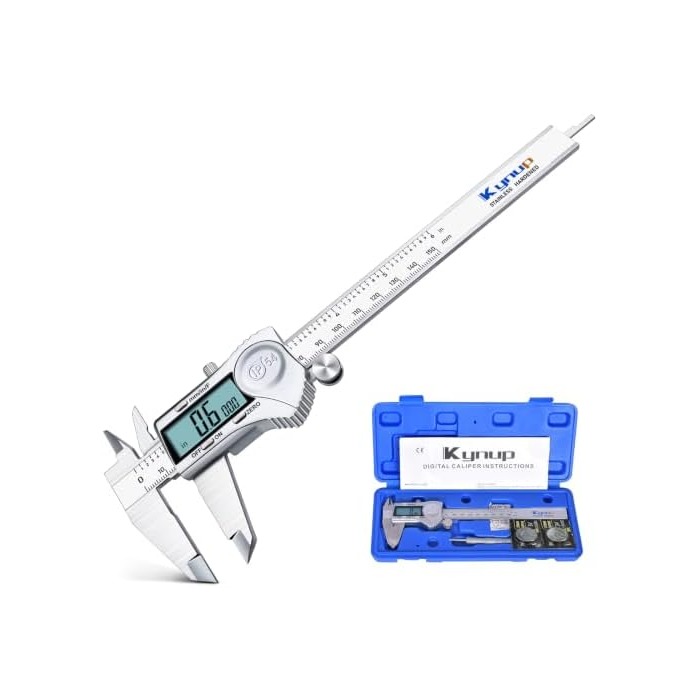
Digital caliper for measuring tin and lid diameter
A stainless digital caliper that reads to 0.01 mm, which is finer than the millimetre or two that decides whether a tin band fits.
- Role: Amazon consumer option
- 0.01 mm resolution
- Stainless steel
- Digital readout
- MOQ: Check current listing
FAQ
What size shrink band fits an 8 oz candle tin? One supplier pairs its 3.15 inch, 2 inch tall tin with a 130 x 65 mm band. Measure your own tin before you copy it.
How do I work out the band width? Wrap paper round the widest point, measure the circumference, and divide by two for the minimum lay-flat width.
Should the band cover the whole tin? Two suppliers suggest bands taller than the tin, which implies a full wrap. A narrow seam band is the other option; test both.
Can I heat a filled candle tin? No supplier source covers it. Test on a tin filled with cooled wax and check the surface afterwards.
References
Continue reading
Shrink Bands for Handmade Soap and Bath Bombs: How to Size the Wrap
A soap band is an open-ended sleeve, so the sizing starts from the bar’s perimeter rather than from a cap diameter. Here is the halving rule, why cured bars measure differently from fresh ones, and how loose the published soap band sizes really are.
Shrink Band Problems and Fixes: Wrinkles, Holes, Loose Bands and Crooked Tears
A symptom-by-symptom guide for people shrinking bands by hand: what each fault looks like, which cause the supplier instructions actually name, and which fixes are reasoning rather than a sourced rule.

Shrink Bands for Juice and Cold Brew Bottles: Do 38 mm Caps Need One?
Most 12 oz juice and cold brew bottles ship with a tamper-evident cap that already carries a breakaway ring. Here is how to tell whether you need a band at all, which 38 mm sizes suppliers stock, and what the cold chain changes.