Why Your Area Rug Bunches on Carpet and How to Choose a Pad That Holds
Why a rug wrinkles on wall-to-wall carpet, and how to choose, size and install a pad that holds it flat.
 Lena Schmidt
Disclosure: We may earn a commission if you purchase through links on this page, at no additional cost to you.
If an area rug keeps wrinkling on wall-to-wall carpet, first stop treating it like a rug sliding across hardwood. Carpet compresses and catches underfoot, so the top rug can shift in one place while another part resists. That uneven movement feeds a wave into the rug. The most useful first fix is a low-profile pad made specifically for rug-on-carpet use, installed with the correct side facing each surface. A generic hard-floor gripper, extra tape, or a thicker cushion may make the stack less stable.
Before buying anything, check three things: whether the wall-to-wall carpet itself is flat and secure, whether the rug is thin or plush, and whether furniture can anchor any edges. If the carpet is already rippled, repair that first. If the rug is loose over a sound carpet, choose a carpet-to-carpet pad rather than a pad marketed only for wood, tile, or laminate.
Why a rug bunches on carpet even when neither layer feels slippery
On a hard floor, a rug usually slides as one piece. On carpet, the lower surface gives under a step and the rug’s backing interacts with the carpet pile. One part may creep while another part catches or sits under furniture. Repeated foot traffic pushes the rug into compression; the extra length has to go somewhere, so it rises into a fold or ripple. Vacuuming can add a tug in the same direction.
That fold is a small version of a mechanical wrinkle called a ruck. Research on model rugs shows how lateral compression can create a raised ridge, and later work examines how the rug’s stretchability affects the onset of that ridge [1][2]. Those studies explain the shape, not the performance of any household pad or a specific carpet-and-rug combination. In a room, pile, backing, rug weight, traffic, furniture, and the direction of walking all affect the result.
The direction of movement is useful evidence. Smooth the rug and watch which edge creeps after normal use. If the same side advances repeatedly, the pad or anchor needs to resist that movement. If the entire rug buckles because the wall-to-wall carpet is loose, a pad under the top rug will not repair the lower carpet.
Check the carpet and rug before choosing a fix
Lift one rug corner and inspect both layers. The wall-to-wall carpet should lie flat without a wave, soft spot, lifted seam, or moving edge. A rug that is visibly stretched, rolled at the corners, or badly curled may need to relax or be replaced before a pad can hold it flat. Do not try to hide a loose carpet installation by sticking a rug to it.
Read the rug label or care sheet. Note the backing material, whether it is woven or latex-backed, and whether the rug maker permits a pad or adhesive. A delicate, antique, hand-knotted, natural-fiber, or recently refinished rug deserves extra caution: a tacky surface or chemical adhesive can interact with a backing in ways that are hard to reverse. If the rug is valuable, ask the rug dealer or conservator before applying anything sticky.
Then identify the carpet pile. A dense, low pile gives a pad more stable contact than a deep, plush pile that compresses and rebounds with each step. A shag rug over plush carpet creates an especially soft stack; it may still move even with a suitable pad. In that case, repositioning the rug under furniture or using a flatter rug may work better than adding another thick layer.
Also check clearance at doors, thresholds, and furniture legs. A pad adds height even when it feels thin in your hand. A raised edge can catch a toe or a vacuum head, and a door that used to clear the rug may start dragging. Measure the complete stack, not just the rug.
Choose a pad that is designed for carpet-to-carpet contact
Look for wording that explicitly says the pad is for area rugs on wall-to-wall carpet, carpet-to-carpet use, or rugs over carpet. A general non-slip pad may be designed to grip a hard floor. That product can be the wrong mechanism for this job, even if its package says it keeps rugs from moving.
A carpet-to-carpet pad is meant to manage two interfaces: the pad must stay with the lower carpet, and the rug must stay with the pad. Manufacturers use different surfaces to do that. Some products use a textured or fibrous face against carpet and a grippy face against the rug. Others use a tacky or adhesive layer. There is no universal orientation; follow the instructions for the exact pad you buy.
For a thin flat-weave rug, a low-profile pad is usually a sensible starting point because it adds less bulk and keeps the edge transition modest. For a heavier rug with some body, a slightly more substantial pad may be suitable if its maker identifies it for carpet. Avoid assuming that extra thickness equals extra grip. A soft cushion can compress under footsteps and let the layers shear against each other.
Treat dimensions as part of fit. Measure the rug, not the area you wish it covered, and check whether the pad comes in a close size or must be trimmed. Many pad makers ask buyers to keep the pad just inside the rug perimeter so it does not show; use the exact maker’s trim allowance rather than copying a number from a different product. An exposed corner can curl or catch, while a pad cut much too small leaves unsupported edges.
Check the product’s floor-compatibility statement and material information before ordering. If the listing is vague about carpet, ask the seller whether the pad is suitable for your carpet pile and the rug’s backing. “All floors” is not a meaningful compatibility answer unless the maker explains which side faces which surface and what material contacts the rug.
Pad, furniture, tape, or a different rug: which approach fits
A carpet-specific pad is the best first product to evaluate when the rug stands mostly free and the carpet beneath it is sound. It treats the whole contact area, not just four corners. It is especially useful for a runner in a hallway or a small rug that cannot reach under a sofa or bed.
Furniture can provide a simpler anchor if the room layout allows it. Let the rug extend under stable furniture legs or a sofa base so the load holds part of the rug in place. This may reduce movement at the anchored edges, but it does not guarantee that an unsupported middle will stay flat. Do not put furniture on an unstable rug fold and call the problem solved.
Double-sided carpet tape is a more permanent-feeling option, not a universal shortcut. Tape may adhere differently to a woven rug backing and to a carpet pile; removal can leave residue, pull fibers, or make later repositioning difficult. Use only tape labeled for the exact surfaces involved, and follow its removal directions. Test a small hidden area first, if the rug and carpet makers permit testing. Skip tape on valuable rugs, delicate backing, or a rental surface where the property owner has not approved it.
Corner tabs and small sticky grippers are often sold for rugs on hard floors. They can flatten a corner on tile or wood without addressing the broad movement of a rug over carpet. If the package does not specifically include carpet-to-carpet use, do not assume the product will grip carpet pile. A popular rating or a large sales badge cannot replace a floor-compatibility statement.
Install the pad without creating a new ridge
Start with a dry, clean carpet and rug. Dirt trapped between two textile layers can abrade the backing and make a pad sit unevenly. Vacuum the carpet, then the rug underside if its care label permits. Let any damp-cleaned surface dry fully before placing the pad.
Lay the rug flat and let shipping curls relax according to the rug maker’s care instructions. Do not apply steam or an iron to the rug or carpet just because a general online tip recommends heat. Materials and backings vary, and heat can damage fibers, adhesives, or finishes. Correct the rug’s curl separately from the movement problem.
Measure and trim the pad on a clear surface. Use the pad maker’s stated orientation: mark which face goes against the carpet and which against the rug. Keep the cut edges smooth and the pad inside the rug outline. If the pad is adhesive, do not peel and reposition it repeatedly unless its instructions allow that.
Set the pad down without stretching it. Align the rug over it, then smooth from the center toward the edges to release trapped folds. Check that the corners and edges lie naturally rather than pulling them tight. If the rug has a directional pile or pattern, keep its intended orientation; rotating it to counter a walking path can change how it looks and feels.
Test the installation with a few normal passes across the rug. Look for a pad that migrates, a rug that advances, an exposed pad, or a new lip at a doorway. If a vacuum used to pull the rug, test it gently with the normal setting. Make one adjustment at a time so you can tell what changed.
What to do when the rug still creeps or wrinkles
If the rug moves but the pad stays put, check whether the pad’s rug-facing surface is compatible with that backing and whether it is installed in the correct direction. If the pad moves with the rug, the carpet-facing surface may be wrong for the pile, the carpet may be too plush, or the product may not be intended for this setup. Recheck the label before adding tape.
If one end creeps, inspect nearby furniture and traffic. A chair that repeatedly catches the rug, a door brushing the edge, or a vacuum that pulls from one side can create a directional push. Move the rug away from a pinch point or anchor an edge under furniture if that does not create a raised transition.
If the wall-to-wall carpet itself has a ridge or moves underfoot, have its installation checked. Carpet stretch, seams, and attachment are separate from the top rug. A loose lower layer can make the whole assembly unstable, and securing the area rug with adhesive may hide rather than fix the problem.
An Amazon option to compare, not a universal pick
The Slip-Stop Magic Stop listing is one Amazon example that names rug-on-carpet use. It is a purpose-specific category to compare against a general-purpose hard-floor pad. Listing size, construction, seller, availability and variant can change, so read the current page and verify that the selected size and instructions match both surfaces you have. The review data currently indexed for it is mixed, so this is not a blanket endorsement or a claim that the pad will work with every pile.
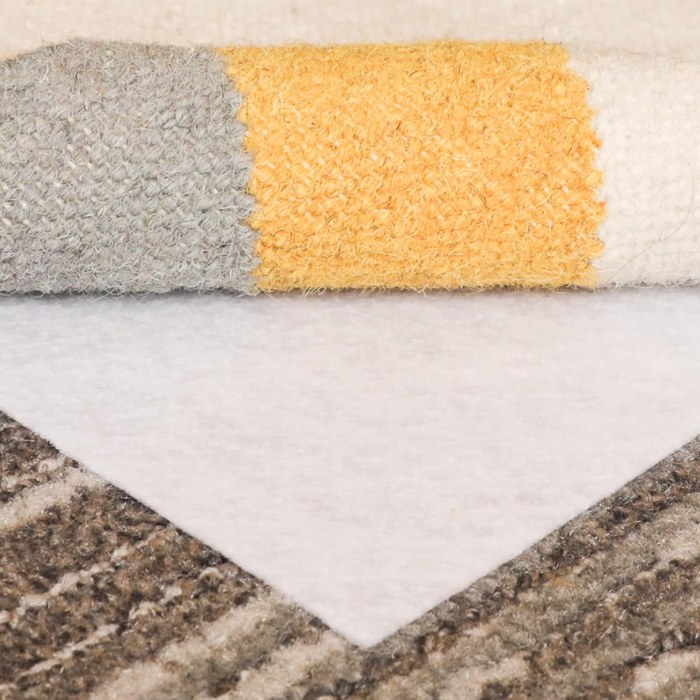
Slip-Stop Magic Stop Rug on Carpet Pad
A pad marketed specifically for area rugs over carpet. Compare it against your rug backing and total height, confirm the size you need, and follow the maker's orientation instructions: a pad installed the wrong way up grips the wrong layer. Buy only once the listing states carpet compatibility for the exact variant.
- Role: Amazon consumer option
- Carpet-to-carpet wording
- Low profile
- Verify the exact variant
- MOQ: Retail single unit
Listing size, construction, seller and availability can change, and review data for this product is mixed. Confirm the current page matches the two surfaces in your room before ordering.
Before checkout, confirm that the item is sold in your country, that the exact variant still says it is intended for carpet, and that its contact material is allowed for your rug backing. If those details are missing, contact the maker or choose a product with clearer compatibility information. The pad is a candidate, not a substitute for a fit check.
Questions people ask before putting a rug on carpet
Will a regular non-slip pad stop an area rug from bunching on carpet?
Not necessarily. Many common pads are designed to grip hard floors, while carpet-to-carpet pads are made for the two textile surfaces in this setup. Check the stated floor use and the installation orientation before buying.
Should a rug pad be the same size as the rug?
Usually the pad should sit inside the rug edge so it is hidden and does not create a lip. Follow the specific product’s trimming instructions; shapes, binding, and construction differ. Do not leave a pad corner exposed in a walking path.
Can I use rug tape instead of a pad?
Sometimes, if the tape manufacturer specifically allows both the rug backing and carpet pile. Tape can be harder to remove and may leave a residue or pull fibers, so test cautiously and get permission before using it on a rental or valuable rug. It is a poor first choice when a removable pad can solve the problem.
Can a thicker rug pad solve the problem?
Thickness alone does not establish grip. A thick, soft layer may add height and compress under traffic. For carpet, prioritize explicit carpet-to-carpet compatibility, correct orientation, low enough total profile, and fit with the rug backing.
References
Hook this up to your favourite commenting platform — Giscus, Disqus, or your own.
Continue reading
Garbage Disposal Splash Guard Replacement: Check Fit First
Two guards can look identical in a photo and fit different disposers. Confirm the model, check whether the old guard lifts out at all, and treat universal as a seller's scope claim.

Dog Poop Bag Refills: Check Roll Fit Before You Buy
Bag width and length do not tell you whether a refill fits the dispenser. Compare roll diameter, usable width and the core before you buy a multipack.
Toilet Brush Refills: Check the Connection Before You Buy
A refill that will not fit is usually the wrong coupling, not a badly made brush. Identify the handle, compare the connector, and dry-fit before you trust the word universal.