Dishwasher Pod Not Dissolving? Check These 6 Things First
A pod left in the dispenser or sitting in the tub is a clue about which part of the wash failed. Work through the checks in order, one change at a time.
 Lena Schmidt
Disclosure: We may earn a commission if you purchase through links on this page, at no additional cost to you.
An intact or gummy dishwasher pod at the end of a cycle looks like a detergent problem. Sometimes it is. But when a pod is left in the dispenser, stuck to the door, or sitting in the tub, the more useful question is what stopped water from reaching it. A blocked dispenser, a dish in the wrong place, a spray arm that cannot turn, a damp cup, or a cycle that does not suit the detergent can all leave residue behind.
Start with the location of the pod. That gives you a clue about which part of the wash failed. Then make one change at a time, using your dishwasher manual as the final word on detergent placement, cycle choice, and water temperature. The checks below are safe to do without taking the appliance apart. If the problem continues after them, the machine may need service.
First, note where the pod ended up
Before running another load, look at the dispenser and the tub.
-
Pod still inside a closed or partly open dispenser: the door may have been blocked, stuck, or unable to release the detergent.
-
Pod lodged in the dispenser cup or stuck to its wet surface: moisture, old detergent, or a pod that does not sit flat may be part of the problem.
-
Pod in the tub but still firm or partly coated: the dispenser likely opened, but water circulation, fill, temperature, or cycle length deserves a closer look.
-
No pod left, but detergent residue remains on dishes: the pod may have dissolved while the load still had a washing or rinsing problem. That is a different symptom from an intact pod.
This is a clue, not a diagnosis. Some dishwasher designs release detergent into a small collection tray rather than directly into the main tub. Bosch explains that its tablet is released into a collecting tray after the dispenser opens; if a pan handle blocks that tray, the tablet may not dissolve correctly. Other models use different layouts, so check the diagrams in your manual before drawing conclusions.
1. Make sure the dispenser door can open
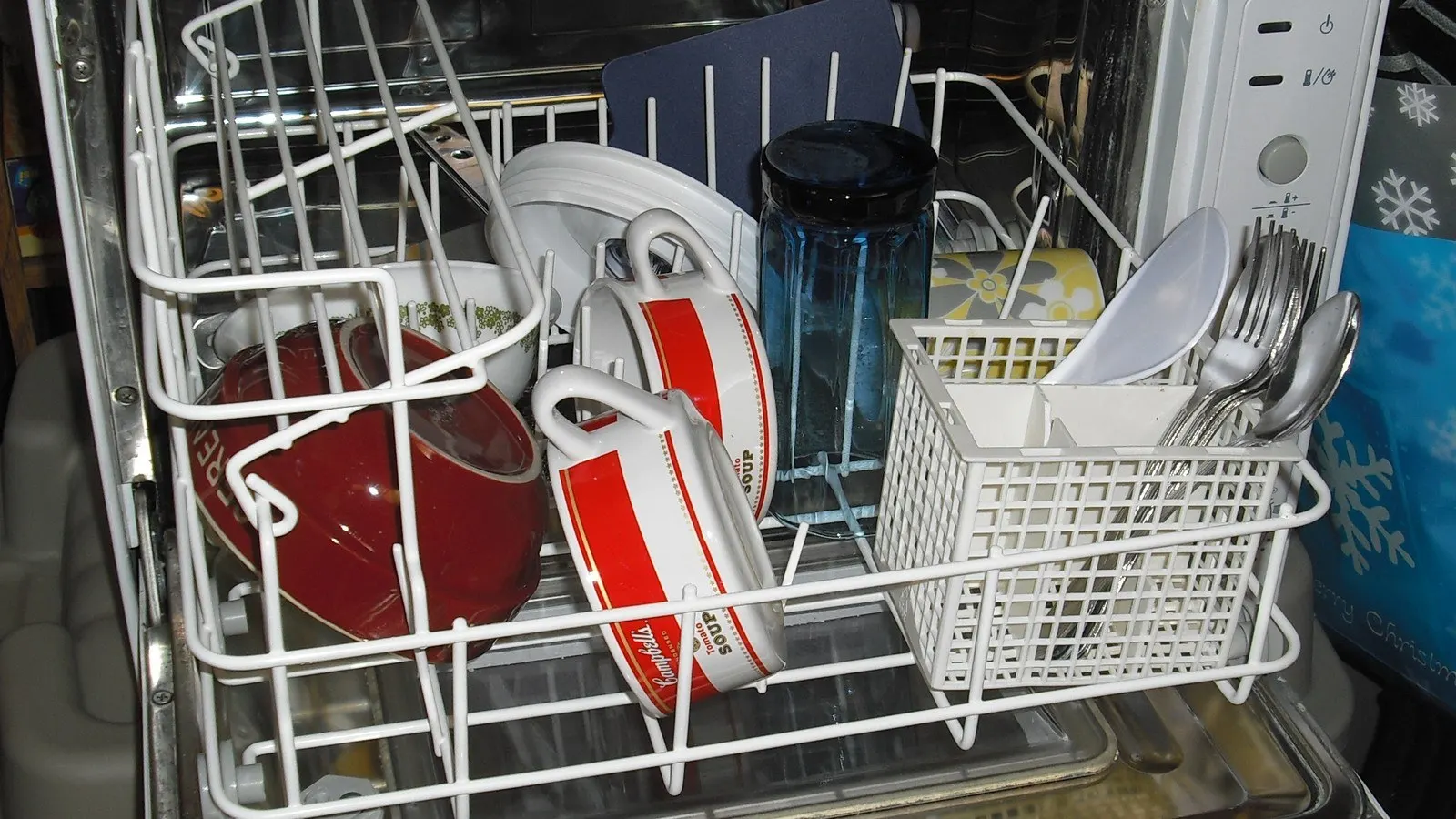
The quickest check is the load. A tall plate, cutting board, utensil, or saucepan handle can sit in front of the detergent cup. The rack may slide in normally while an item still blocks the cup door from opening fully.
Load the dishwasher as usual, then pause before closing it. Look at the detergent compartment and imagine the door swinging open. Move anything that crosses its path. On some machines the door opens against the rack; that can be normal, but a large item should not pin it shut. GE says to keep pot handles and tall dishes clear of the cup cover and to confirm that a pod is seated so it does not bind the lid.
Run one cycle with the same detergent and a rearranged load. If the door opens and the pod dissolves, the loading position was likely the cause. If it remains closed on an empty or lightly loaded test, clean away residue around the hinge and latch with a damp cloth, then dry it. Do not pry at the door or add oil unless the manual specifically recommends it.
2. Check the dispenser and pod before adding detergent
Detergent compartments can collect old powder or sticky residue. A wet dispenser can also make detergent adhere before the cycle starts. Whirlpool advises wiping the cup dry before loading detergent and cleaning caked-on residue; it also recommends storing detergent in a tightly closed container in a cool, dry place.
At the next load, use dry hands and place one fresh pod flat in a clean, dry compartment. Avoid handling it with damp fingers. Keep the container closed between uses and away from steam rising from the sink or dishwasher. If the pods are visibly soft, swollen, stuck together, or damaged, do not use them; follow the product label for disposal and storage.
Do not add a second pod because the first one remained. A second dose will not repair a blocked cup or poor circulation, and it can leave extra detergent on dishes. Likewise, do not put the pod directly in the bottom of the tub as a universal workaround. Some manuals or detergent makers give placement instructions for specific cycles; other manufacturers advise using the dispenser because a pod may dissolve too early during prewash. Follow the exact directions for your model and detergent.
3. Check that spray arms can turn and spray
Once the detergent leaves the cup, moving water must reach it. A plate or pan can block a spray arm, while food debris can clog its small outlet holes. Either problem can leave detergent sitting in a corner even when the dispenser door opened.
With the dishwasher off, spin each spray arm by hand. It should turn without hitting a dish, rack, or utensil. Reposition anything that catches it. If a nozzle looks blocked, remove and clean the arm only if your manual explains how to do so. Use warm water and a soft brush; avoid pushing a sharp pin deep into an opening or forcing a fitting that seems stuck. Reinstall the part exactly as directed.
Bosch and Maytag both identify spray-arm movement or water distribution as a relevant check when detergent remains. Maytag also notes that a low upper rack can place dishes in the path of spray from the lower arm. If residue continues across several loads, clean the filter and interior according to the manufacturer’s instructions. A blocked filter is not the same as a failed pump, and cleaning the filter is not a reason to open the machine’s base.
4. Consider the cycle, but do not assume “quick wash” is always wrong
Short or cool cycles can leave some tablets partly dissolved, depending on the model and detergent. Beko notes that a short programme may not give certain tablets enough time to dissolve, and Electrolux advises checking the detergent label and cycle instructions. Other manufacturers provide different placement or programme advice. That variation is exactly why a generic internet tip can mislead.
If the problem happened only on a rapid cycle, try a normal cycle once, with the same pod and load arrangement. Change only the cycle so you can tell whether it made a difference. If you use a delay-start feature, check that the detergent maker permits it and that the compartment stays dry until the cycle begins.
Avoid choosing the hottest or longest cycle as a permanent fix without checking the manual. The goal is not to compensate for a dispenser or circulation fault with more heat. If pods repeatedly remain after a normal programme, continue with the checks below rather than running the same test over and over.
5. Verify water supply and temperature using the model’s instructions
Water that does not enter the tub in the expected amount, or water that is not heating as the cycle requires, can interfere with detergent performance. Look for a kinked inlet hose that is visible and accessible, a closed supply valve if one is part of your setup, or a display error. Do not pull out a built-in dishwasher or disconnect a hose to investigate unless you know the safe procedure.
Temperature advice differs by manufacturer and detergent. Samsung says its dishwashing pods require hot water and gives a minimum supply temperature of 120°F for its dishwashers; Electrolux US gives similar guidance for its models. The American Cleaning Institute says dishwasher pods are designed to dissolve in water at any temperature when used as directed. These statements are not interchangeable: one concerns model-specific operating guidance, while the other describes pod film and use more generally. Check the appliance manual and the detergent package rather than treating 120°F as a universal rule.
If your manual tells you to check incoming water temperature, follow its exact method. Some manufacturers suggest running the nearest hot-water tap briefly before starting a cycle; others may not. Do not raise your water-heater setting just to test a dishwasher. If the machine repeatedly shows a fill or heating error, or the water remains cold when the manual says it should heat, stop troubleshooting and contact the manufacturer or a qualified technician.
6. Decide whether the detergent itself needs replacing
After ruling out loading, dispenser moisture, spray obstruction, and a cycle mismatch, look at the detergent. Pods can be damaged by humidity or age, and detergent makers advise keeping them sealed and dry. If a fresh pod from a newly opened container dissolves normally while older pods do not, replace the compromised product and store the new container as directed.
If you need a fresh pack for that comparison, Cascade Platinum Plus ActionPacs, 57 count is one product-page example to compare with the size and instructions for your machine. It is a detergent replacement, not a repair for a dispenser, spray-arm, or fill problem. Check the current seller, offer, and package directions before buying; Amazon availability can change.
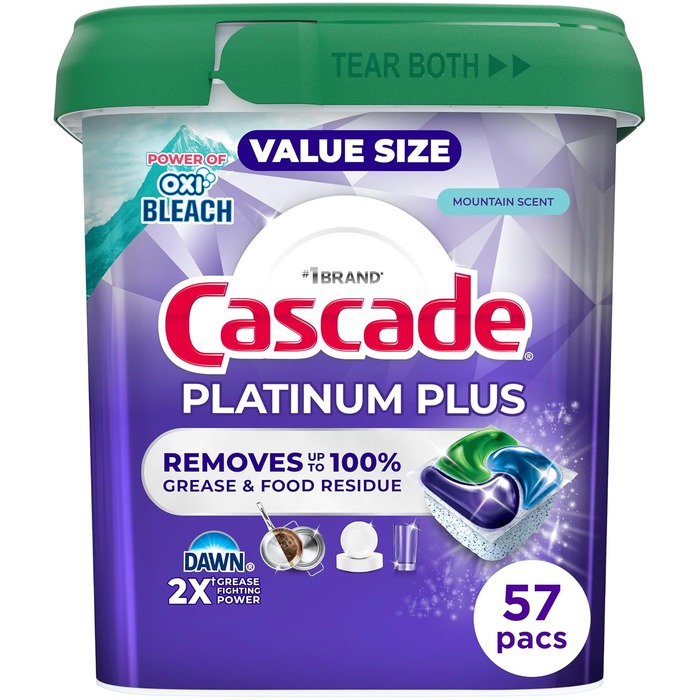
Cascade Platinum Plus ActionPacs, 57 count
A premeasured dishwasher pod in the standard format, used here as a like-for-like comparison when an older or damp supply may be the reason a pod fails to dissolve. It does not repair a blocked dispenser, a spray arm, or a fill problem.
- Role: Amazon consumer option
- 57 premeasured pacs
- Mountain scent
- Check cycle and fit in your manual
- MOQ: Check current listing
If both fresh and old pods remain, switching brands is a weak first move. It might help if the current pod is unusually large for your dispenser or its label excludes the cycle you use, but it will not fix a door that cannot open, an arm that cannot rotate, or a dishwasher that is not filling. Electrolux suggests trying another detergent where the detergent itself may be the issue; treat that as a controlled comparison, not proof that the first product was defective.
When comparing products, check the size and shape against the cup, confirm that the package says automatic dishwasher detergent, and read cycle restrictions. Do not use hand dishwashing liquid in an automatic dishwasher. If pods do not fit the cup comfortably, use another detergent format that your dishwasher manual approves. That may be powder, gel, or another pack type; dose it according to the manual and water conditions.
A simple one-load test that isolates the cause
Use this sequence rather than changing detergent, cycle, load, and temperature all at once:
-
Clean and dry the dispenser; use one fresh pod with dry hands.
-
Load dishes so the cup door and spray arms have clear paths.
-
Choose a normal cycle approved for the detergent.
-
After the cycle, note whether the cup opened, where any residue remains, and whether the dishes are clean.
-
If the pod remains, repeat only the relevant check: for example, test a normal cycle if the first was rapid, or compare one new pod if the old supply may be damp.
This is not a substitute for checking the manual. It is a way to stop guessing. A pod still trapped in the cup points first to release; a pod released but left in the tub points toward circulation, fill, temperature, or cycle conditions. If you record the cycle, load position, and residue location, you can give a technician useful details instead of saying only that “the pod did not work.”
Read the result before changing anything else
After the test cycle ends, wait until the machine has completed its normal program and open it carefully. The dispenser can be warm, and steam may escape. Check whether the cup door is open, whether detergent is still in it, and where any residue sits. Do not interrupt a running cycle just to see when the door opens; a machine can release detergent at a point that is normal for its design.
If the door is still shut, repeat the load-clearance check and inspect the cup for residue or a damaged latch. If the door is open and the pod has moved but remains in the tub, do not assume the door mechanism is at fault. Recheck the spray arms, load height, water-fill warnings, and whether the cycle matches the product label. If the pod is gone but the dishes are still dirty, switch to the dishwasher’s cleaning-performance troubleshooting page: the detergent may have dissolved, while a separate wash issue remains.
Write down the cycle, detergent age, load position, and residue location for each attempt. If you contact support, those four details help narrow the fault without asking you to repeat random tests. Change only one condition on a follow-up load, and stop once the pod dissolves normally. There is little value in continuing to test detergent brands after a clear loading fix has solved it.
When to stop and call for service
Call for help if the detergent remains after several correctly loaded normal cycles, the dispenser will not latch or release, a spray arm is cracked or will not turn after obstruction is removed, the dishwasher displays a water-inlet or heating code, or dishes remain cold and dirty despite following the manual. Do not remove panels, test wiring, or work around electrical and hot-water components as a next step.
The practical rule is simple: check release first, then water access, then detergent condition. A pod left behind is a useful clue, but it is not enough on its own to say that the detergent is bad or that a pump has failed. One careful, controlled test can save a needless detergent purchase; repeated failures are a reason to investigate the appliance rather than keep experimenting.
Sources
-
Bosch Home Appliances, “Dishwasher tablet not dissolving” Source
-
GE Appliances, “Detergent remains in the dispenser” Source
-
Whirlpool Product Help, “Detergent remains at end of cycle” Source
-
Maytag, “How to use dishwasher pods” Source
-
Beko, “Why isn’t my dishwasher tablet being dissolved?” Source
-
Electrolux, “Dishwasher tablets do not fully dissolve” Source
-
Samsung, “Dishwasher pod requirements” Source
-
Electrolux US, “Dishwasher detergent not dissolving” Source
-
American Cleaning Institute, “Laundry and dishwasher pods explained” Source
Hook this up to your favourite commenting platform — Giscus, Disqus, or your own.
Continue reading
Do Washing Machine Anti-Vibration Pads Stop Walking?
A pad that has shifted out from under the washer is a symptom, not the diagnosis. Check the machine is stable and the foot fits the cup before buying a grippier set.

When a Silicone Faucet Mat Pools Water, Check the Fit and Drain Path
A mat that holds a puddle is failing at one of three points: the counter does not drain toward the bowl, the mat is set the wrong way, or its outlet is blocked.
How to Keep a Cutting Board From Sliding on a Countertop
Most boards move because of a film of water or oil, a warped corner, or an overhang, not because the board is light. Find the cause, then pick a damp cloth or a grip pad.