How to Fix a Stretched-Out Cashmere Sweater
A targeted recovery guide for loose cuffs, necklines, shoulders and elbows
 Lena Schmidt
Disclosure: We may earn a commission if you purchase through links on this page, at no additional cost to you.
A cashmere sweater can look “stretched” for several different reasons. A wet garment may have lengthened under its own weight. A neckline may have been pulled over the head repeatedly. Cuffs can relax from being rolled up, and elbows can bag out from leaning on a desk. A sweater that is simply out of shape is not the same as one that has felted, broken yarn or permanently lost its recovery. The safest repair starts by locating the distortion and deciding whether the knit can still be supported.
This guide is for washable cashmere and wool-cashmere knits. Follow the care label first. Dry-clean-only, lined, embellished, vintage or hand-dyed garments should be assessed by a cleaner or knitwear repair specialist before you add water, steam or tension.
Start with the location of the stretch
| What you see | More likely explanation | First decision |
|---|---|---|
| Whole body is longer or wider | Wet hanging, heavy storage or uneven drying | Measure dry; consider a supported wet block if the label permits |
| Neckline is loose or rippled | Repeated pulling, hanger pressure or neckline loading | Support the body and address the rib edge gently; do not tug the opening |
| Cuffs flare after sleeves are rolled | Rib recovery has relaxed from wear | Try local damp reshaping; avoid heat-setting the cuff |
| Elbows balloon when arms are lowered | Local wear and knit-loop displacement | Ease the elbow back while damp; inspect for thinning before treatment |
| Surface is dense, matted or shiny | Felting, friction or fiber damage | Stop stretching and seek professional assessment |
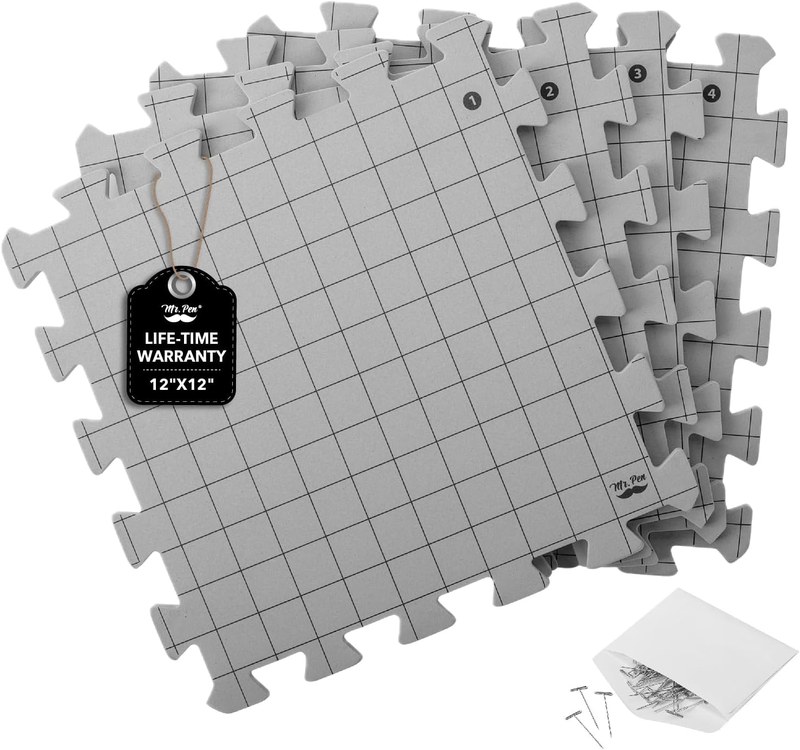
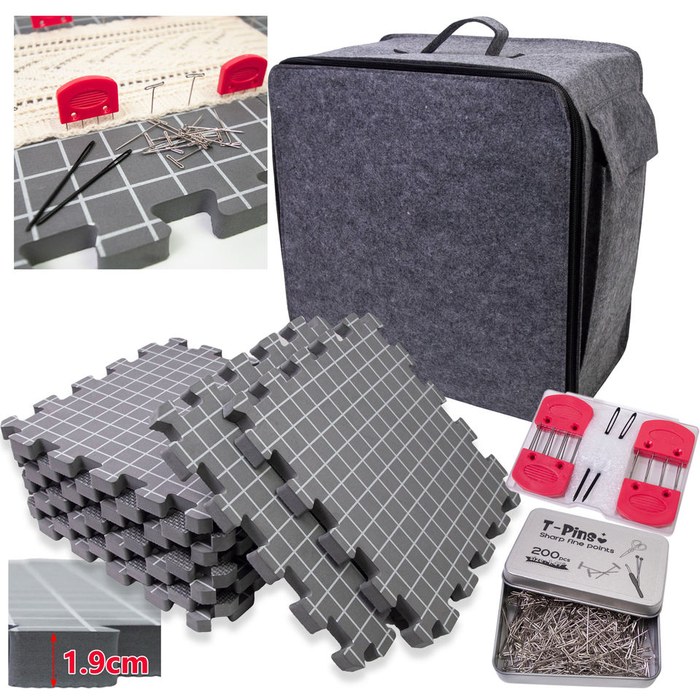
Knitting blocking mats to reshape stretched sweaters
Verify the live listing, dimensions and variant before buying. This route is a practical starting point, not a guarantee that every model suits every cashmere garment.
- Role: Amazon consumer option
- Check the current listing
- Match the product to the garment
- Confirm care and return terms
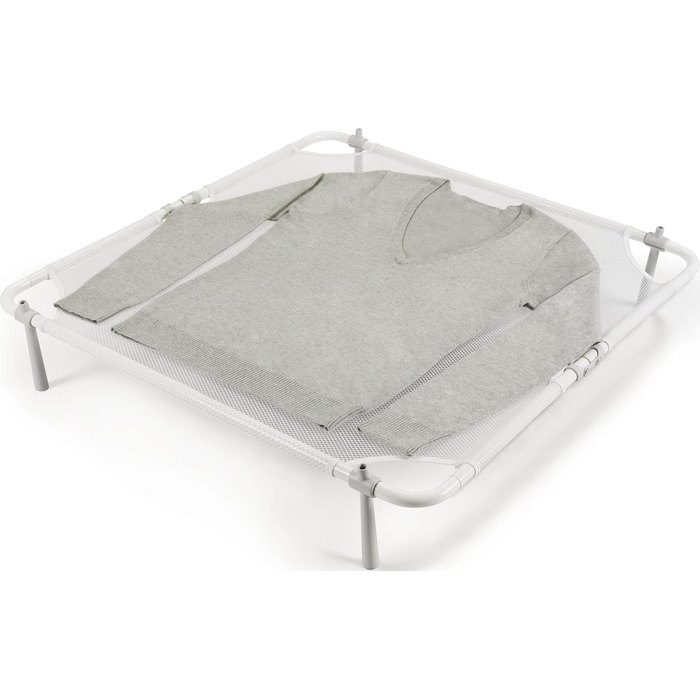
Flat drying and reshaping support
Verify the live listing, dimensions and variant before buying. This route is a practical starting point, not a guarantee that every model suits every cashmere garment.
- Role: Amazon consumer option
- Check the current listing
- Match the product to the garment
- Confirm care and return terms
A temporary change in shape can improve after rest, moisture and careful support. A structural change cannot be assumed reversible. Cashmere and wool fibers, yarn twist, knit gauge, blend content and treatment history all affect the result.
Why cashmere stretches
Wet weight and gravity
Water adds weight to a knit. If the sweater is lifted by one shoulder, hung from a narrow hanger or pulled by a sleeve while wet, the load is not distributed evenly. The result may be longer shoulders, a dropped neckline or one side that dries differently from the other. Flat support reduces this particular source of distortion.
Repeated local loading
Cuffs are stretched when sleeves are pushed up; elbows are compressed when the wearer leans on a desk; and a neckline is loaded every time the garment is pulled over the head. Ribbing can recover differently from the main body. A sweater may therefore fit correctly through the torso while the edges look loose.
Steam and heat can change the shape temporarily
Moist heat can relax a knit and make it easier to reshape, but it can also make a stretched area easier to over-pull. A hot iron can flatten the surface, create shine or set an unwanted line. Steam is not a substitute for measurement and flat support.
Stretching is not always the problem
A thin, shiny or broken area may be wear rather than a shape issue. A felted area may feel compact and resist gentle easing. If the yarn has thinned or a hole is starting, stretching the panel can enlarge the damage.
Inspect and measure before you wet the sweater
Lay the dry sweater flat on a clean surface without pulling it. Photograph the front, back, neckline, cuffs and elbows. Check the fiber label and compare the sweater with a reliable reference: an earlier photograph, a similar garment or recorded measurements. Do not use memory as the target.
Measure chest width, body length, shoulder width, sleeve length, cuff opening and neckline opening when relevant. Measure both sleeves and both shoulders if the garment is uneven. Mark the changed areas and write the target dimensions down. The target is a boundary, not an invitation to stretch further.
Run your fingertips over the problem area. A promising candidate remains supple, shows visible loops and eases a little under light, even pressure. A poor candidate feels boardy, sticky, matted or unusually shiny; loops are hard to distinguish, and the yarn may look broken. Stop at this stage if the garment releases dye, smells strongly of chemicals, has a hole or feels thinner than the surrounding fabric.
The safest recovery sequence for mild distortion
1. Prepare a full-support workspace
Use a clean basin, towels, a flat drying surface or mesh sweater rack, a tape measure and rust-resistant T-pins or knit blockers if pinning is appropriate. Make sure the surface is large enough for the body and sleeves. A blocking mat is useful because it provides a pinnable, measurable base, but clean towels on a flat bed can work for a low-tension correction.
2. Follow the label and wet evenly
If wet handling is permitted, use cool or label-approved water and a small amount of wool or cashmere cleanser. Submerge the garment without scrubbing, twisting or rubbing it against itself. Do not treat one dry patch with a strong product while leaving the rest of the knit unsupported.
3. Remove water without pulling
Lift the sweater with both hands or on a towel. Press out excess water, roll the garment in a clean towel and press. Do not wring, swing it by the shoulders or pull a sleeve to see how much it will lengthen. The garment should be damp and supported, not dripping and heavy.
4. Align seams before changing dimensions
Place the sweater flat. Line up the center front and back, shoulder seams, side seams and sleeve seams. Smooth wrinkles toward the edges. This prevents you from “fixing” a distorted body while leaving the center line twisted.
5. Correct the smallest area first
For a loose cuff, ease the ribbing inward around the wrist opening. For a neckline, work around the rib edge rather than pulling from one point. For an elbow, nudge the fabric back toward the original sleeve line while supporting the rest of the sleeve. Make small, symmetrical adjustments and recheck the tape measure.
6. Pin or support the outline, then dry flat
Pin only where the surface and yarn can tolerate it, or use knit blockers that distribute pressure. Keep edges smooth instead of creating scallops. Dry away from direct heat and strong sun. Check the garment during drying and correct a new wave or twist early, without adding force.
7. Remove support and reassess when fully dry
Measure again after the garment is completely dry. If it has returned close to the target and the handle is healthy, stop. A second gentle correction may be considered for a small remaining distortion, but repeated wetting and high tension are not a routine maintenance plan.
Blocking tools: what each one actually does
| Tool | Useful for | Limitations |
|---|---|---|
| Blocking mat or foam boards | A stable, pinnable surface with reference lines | May be too small for a full adult sweater; pieces may need staging |
| Rust-resistant T-pins or knit blockers | Holding a measured outline while it dries | Pins can snag yarn or create points if tension is too high |
| Flat mesh sweater rack | Supporting a damp garment with airflow underneath | It does not set dimensions by itself; the garment still needs alignment |
| Clean towels | Removing water and supporting low-tension reshaping | A wet towel can stop absorbing; replace it instead of pressing harder |
| Hand steamer | Releasing a small wrinkle before gentle reshaping | Heat and moisture can over-relax or shine a delicate area |
A tool is only helpful when it matches the failure mode. A blocking mat cannot repair broken yarn, and a drying rack cannot restore lost rib elasticity.
When steam is appropriate—and when it is not
For a minor wrinkle or a small elbow bag, a brief, indirect burst of steam may relax the knit enough to smooth it while it lies supported. Keep the steamer moving, avoid pressing a hot plate onto cashmere and reshape with your hands rather than pulling aggressively. Test an inconspicuous area first, especially on dark or delicate dyes.
Do not steam a matted, shiny, thinning or dye-unstable garment. If the shape changes dramatically as soon as it gets warm or damp, stop and let it cool and dry before deciding what happened.
What not to do
Do not hang a wet sweater, stretch opposite edges with force, clamp a neckline, iron a ribbed edge flat, dry it on a radiator or put it in a hot dryer. Do not use hair conditioner, fabric softener, bleach, enzyme stain remover or an unlabeled “relaxer” simply because the sweater is out of shape. Chemical coating may change handle without restoring knit recovery, and repeated wetting makes the cause harder to diagnose.
Do not cut a loose strand at an elbow or cuff. If the area is thinning or a hole is forming, a repairer can decide whether to reinforce or re-knit it.
listing shopping routes supplied for this article
Supplier route for batch sourcing
A supplier route for buyers comparing samples, specifications and commercial terms. Verify the exact listing and supplier details before placing an order.
- Role: Alibaba sourcing candidate
- Request a sample first
- Confirm MOQ and specifications
- Verify the live listing listing
- MOQ: Check current listing
The links below are included as sourcing routes, not as rankings or approvals. They are included by product role, not as proof that a particular tool can restore every cashmere garment. Verify the live product title, dimensions, pin material, current variant, shipping and return terms before purchase.
For the Alibaba candidate, confirm board dimensions, EVA density, grid accuracy, pin or comb material, packaging, MOQ, sample availability and whether the set is intended for full-size garments or smaller craft pieces. The supplier listing should be treated as a sourcing lead, not independent performance evidence.
Stop conditions and professional repair
Stop home reshaping if the surface becomes denser, the loop pattern disappears, the yarn looks shiny or broken, the color moves, the sweater requires extreme tension to reach its target, or the shape changes again as soon as support is removed. These signs point beyond simple post-wash distortion.
A knitwear specialist can distinguish a relaxed loop structure from felting, abrasion, yarn breakage and seam failure. Bring the garment, care label, original measurements if available and a short history of washing, hanging, steaming and products used. A professional may improve the garment, but severe felting or broken yarn cannot responsibly be promised back to factory condition.
Prevention after the repair
Fold cashmere rather than hanging it for long periods. When washing is permitted, remove water with support, reshape it while damp and dry it flat. Let the sweater rest and air between wears, and do not store it under a heavy stack while damp. Record the final measurements so future changes are easier to spot.
FAQ
Can I fix a stretched neckline with hot water?
No. Heat can relax the knit unpredictably and can add shrinkage, felting or dye damage. If the label permits wet handling, use cool or approved water and correct the neckline while supported.
Will blocking permanently tighten loose cuffs?
It may improve shape when the ribbing is relaxed but intact. It cannot recreate lost elastic recovery or replace a damaged rib edge. If the cuff springs back poorly or the yarn is thin, a repairer is safer.
Can I use a clothes steamer on cashmere?
A brief, indirect steam treatment may help a minor wrinkle, but it is not risk-free. Keep the steamer moving, test first and never press a hot plate onto the knit. Skip steam when the fabric is shiny, matted, thinning or unstable in color.
Is a yoga mat acceptable instead of a blocking mat?
A clean, non-shedding, pinnable surface can work for low-tension blocking if it does not transfer color or catch the yarn. Check the surface first and use rust-resistant pins. A towel or flat bed may be safer for a delicate cashmere garment than an unknown foam material.
What if only one shoulder is longer?
Measure both sides, align the seams and correct the longer side gradually while supporting the body. Do not pull the shorter side to “match” it. If the seam has shifted or the yarn is damaged, seek professional repair.
The practical decision
If a cashmere sweater is soft, clearly knitted and only locally or slightly out of shape, a single supported wet reshaping can be a reasonable test. Measure first, correct the smallest area, use flat support and stop when the target is reached. If the knit is matted, thinning, shiny, dyed unstable or dependent on extreme tension, do not keep stretching it. The right goal is controlled recovery—not forcing a damaged garment to behave like a new one.
References
-
McGregor BA, et al. “Feltability of cashmere and other rare animal fibres.” Textile Research Journal, 2013. Research on how cashmere fiber characteristics, origin and blends influence felting behavior. DOI source
-
Speakman JB. “Mechanism of Felting of Wool Fibres.” Nature, 1945. Classic explanation of directional fiber movement and scale-related felting behavior. DOI source
-
Li Y, et al. “Study on shrinkage of cashmere sweater knitted with high-count worsted yarns.” Textile Research Journal, 2014. Study of how fiber and yarn variables affect cashmere sweater shrinkage and dimensional behavior. DOI source
Hook this up to your favourite commenting platform — Giscus, Disqus, or your own.
Continue reading
How to Remove Makeup Stains from Cashmere Without Setting Them
A careful spot-treatment guide for foundation, powder, lipstick and mascara on delicate knitwear
Can a Shrunken Cashmere Sweater Be Saved?
A damage-first recovery guide for mild shrinkage, distortion and possible felting
Why Does Cashmere Feel Scratchy After Washing?
A softness-recovery and damage-diagnosis guide for stiff, itchy or rough knitwear