Can a Shrunken Cashmere Sweater Be Saved?
A damage-first recovery guide for mild shrinkage, distortion and possible felting
 Lena Schmidt
Disclosure: We may earn a commission if you purchase through links on this page, at no additional cost to you.
Sometimes a cashmere sweater comes out of the wash only slightly smaller. Sometimes it is shorter, tighter and strangely dense, with the stitch definition partly gone. Those are not the same problem. Mild dimensional relaxation may respond to a controlled soak and measured reshaping; a felted or structurally damaged knit may not return to its former size. The first job is therefore diagnosis, not pulling harder.
This guide is for a washable cashmere or wool garment whose label permits careful wet treatment. It is not a guarantee of restoration. If the piece is dry-clean-only, tailored, lined, vintage, hand-dyed or expensive enough that a failed experiment would be unacceptable, stop at inspection and use a cleaner or knitwear repair specialist.
The quick diagnosis
| What changed | What it may mean | What to do first |
|---|---|---|
| A little shorter or narrower, but still soft and open | Relaxation shrinkage or drying distortion | Measure it dry, then try one controlled soak and block |
| Dense, stiff or matted surface; loops hard to see | Possible felting from moisture, heat and friction | Do not force-stretch; ask a professional before wetting again |
| One side or sleeve is off-size | Uneven drying, twisting or handling distortion | Block against target measurements, not against visual guesswork |
| Collar or cuffs curl and body is otherwise sound | Local knit recovery problem | Support the piece flat and reshape small areas gradually |
| Color moved, nap became rough or yarn looks broken | Dye or fiber damage rather than simple shrinkage | Stop home rescue and document the treatment history |
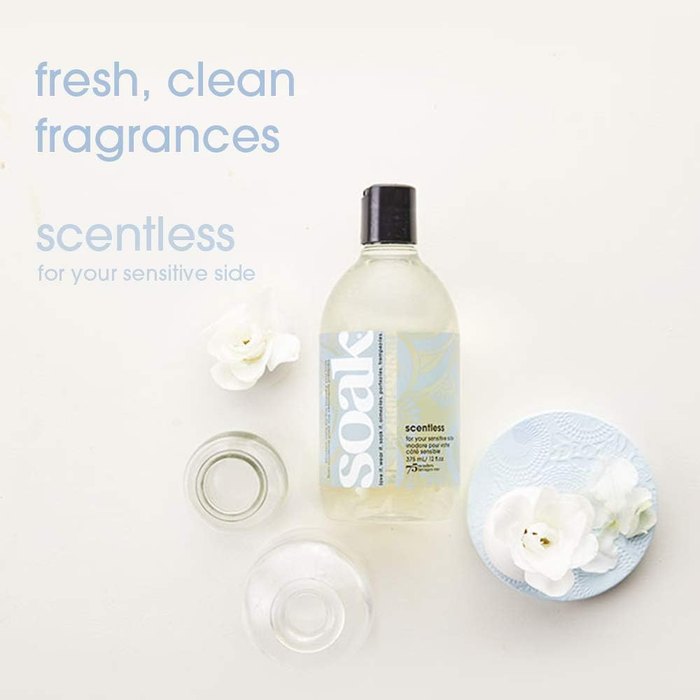
Cashmere care and reshaping aid
Verify the live listing, dimensions and variant before buying. This route is a practical starting point, not a guarantee that every model suits every cashmere garment.
- Role: Amazon consumer option
- Check the current listing
- Match the product to the garment
- Confirm care and return terms
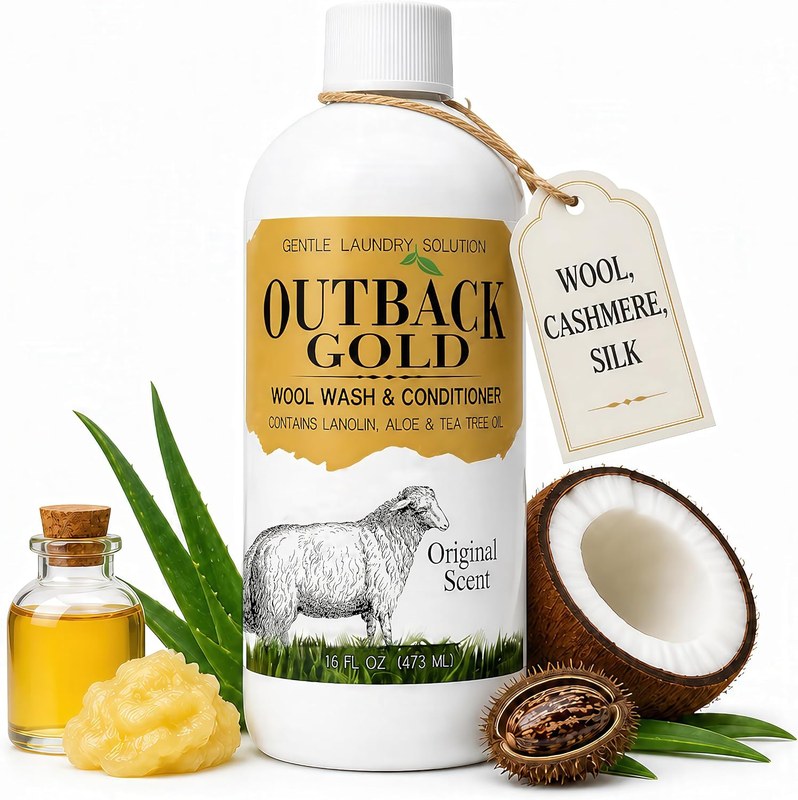
Wool and cashmere care cleanser
Verify the live listing, dimensions and variant before buying. This route is a practical starting point, not a guarantee that every model suits every cashmere garment.
- Role: Amazon consumer option
- Check the current listing
- Match the product to the garment
- Confirm care and return terms
A conditioner or fabric-softener “unshrink” trick is best treated as a cautious consumer experiment for the first row, not as proof that a garment can be returned to its original dimensions. Research on cashmere and wool shows that fiber characteristics, knit structure, blends and mechanical conditions all influence shrinkage and felting.
Shrinkage is not one mechanism
Relaxation shrinkage
Knitted loops can relax after wetting or drying, especially when the garment was previously stretched by wear or finishing. The fabric may become shorter or narrower without losing its soft handle or clear stitch structure. A measured wet block can sometimes recover part of that shape, although the original dimensions are not assured.
Felting or milling shrinkage
Wool-type fibers have surface scales. With moisture, heat, pressure and rubbing, fibers can migrate and lock together. The result is a dense, compacted fabric with reduced loop definition. Felting is a structural change, not simply a sweater that “needs more stretching.” Cashmere’s felting propensity varies with fiber characteristics, processing and blends, so a label reading “cashmere” does not predict one universal response.
Drying distortion
A wet sweater hung from the shoulders, pulled by one sleeve or dried over a hot surface can become uneven without uniform felting. This is the most promising case for blocking, provided the yarn is not damaged and the care label allows wet handling.
Inspect before adding water
Work on a clean, dry table under even light. Photograph the sweater front, back and sleeves. Check the care label and fiber content, including silk, nylon, elastane or other blends. A blended knit can respond differently from a 100% cashmere garment, and a “hand wash” label is not permission to use hot water or vigorous agitation.
Run your fingertips over the surface. A recoverable-looking piece usually remains supple, with visible knit loops and a surface that springs back when released. A doubtful piece feels boardy, dense, sticky or matted; its loops are difficult to separate and the fabric no longer drapes like a knit. Also check for broken yarn, holes, dye transfer and a strong chemical smell. These are stop signs, not invitations to repeat the soak.
Measure the garment before you try to restore it
Lay the dry sweater flat without stretching it. Record finished dimensions that matter to fit: chest width measured consistently below the armholes, body length from the shoulder or high point to hem, sleeve length, shoulder width and cuff opening. Measure each sleeve separately if the garment is uneven. Note the direction of change by comparing with an old photograph, a similar sweater or the manufacturer’s size chart; do not invent a target from memory.
Write the target dimensions on paper before wetting. During blocking, use those dimensions as boundaries. A sweater that looks “larger” while wet can still dry too short, while an overstretched edge can become wavy. Measurement turns an emotional rescue attempt into a controlled test.
A controlled recovery sequence for mild shrinkage
1. Prepare a clean, cool workspace
Use a basin or sink that is clean and large enough for the garment to lie without being crammed. Support the sweater from underneath whenever you move it. Remove rings, rough jewelry and anything that can catch a loop. Have clean towels, a blocking mat or other flat support, rust-resistant pins and a tape measure ready before the garment is wet.
2. Use cool to lukewarm water and one compatible product
Fill the basin with the temperature permitted by the care label; cool or lukewarm is the conservative choice. Add a small amount of wool or cashmere wash. If you are testing a conditioner-based method, use only a product whose label permits contact with the fiber and treat it as a one-time trial. Do not combine detergent, fabric softener, vinegar, bleach or stain removers in the same bath.
3. Soak without agitation
Lower the sweater into the water and press it down gently until saturated. Leave it still for the product’s stated contact time. Do not scrub, twist, knead or rub one panel against another. Mechanical action is one of the conditions that can worsen felting. If the sweater releases dye or develops a harsh smell, stop and rinse with the label-permitted water temperature.
4. Rinse and remove water by support, not wringing
Drain and refill with clean water as directed by the product. Lift the sweater with both hands or on a towel so its weight does not stretch one area. Press out water gently, place it on a clean towel, roll the towel and press. Repeat with a dry towel if needed. Never wring or pull a saturated sleeve to “test” it.
5. Block to measurements
Move the damp sweater to a flat blocking surface. Align the center front and back, shoulder seams, side seams and sleeve seams. Ease the fabric outward in small increments until it approaches the written target. Pin key points first, then the edges, using enough pins to hold a smooth line without creating scallops. The objective is even distribution, not maximum stretch.
6. Dry flat and recheck
Leave the sweater supported and flat, away from direct heat and strong sun. Do not hang it while damp. When fully dry, remove the pins and measure again. If the result is still slightly off but the knit remains healthy, a second gentle block may be considered; repeated chemical or high-tension cycles should not become the default.
How to block without creating a new problem
| Control point | Safer practice | Stop condition |
|---|---|---|
| Support | Move the wet sweater on a towel or with two hands | Any panel is hanging under its own weight |
| Reference | Use seam alignment and written dimensions | You are stretching until it “looks right” |
| Tension | Ease gradually and keep both sides balanced | Edges become wavy, holes open or yarn looks shiny |
| Pins | Use rust-resistant pins on a smooth support | Pinning pulls a single loop or leaves a sharp point |
| Drying | Keep it flat until completely dry | A radiator, dryer or hanger is used to speed the process |
Blocking can restore shape; it cannot recreate missing fiber length or undo every locked fiber-to-fiber bond. If the piece only reaches target size by extreme tension, it is not a successful recovery.
What not to do
Do not use hot water, a tumble dryer, an iron, a hair dryer aimed at the knit or a radiator. Do not pull opposite edges with force, stand on the sweater, brush a dense surface aggressively or repeat a strong softener bath because the first attempt was disappointing. Do not use bleach, peroxide, enzymes, alkaline kitchen pastes or an unlabelled industrial chemical. These can add chemical damage to an already stressed protein fiber.
Do not hang the sweater wet from a hanger or clothesline. Gravity can lengthen shoulders, distort the neckline and make one side longer than the other. A separate guide in this series covers prevention through flat drying; this page is specifically for recovery after the size or shape has already changed.
listing shopping routes supplied for this article
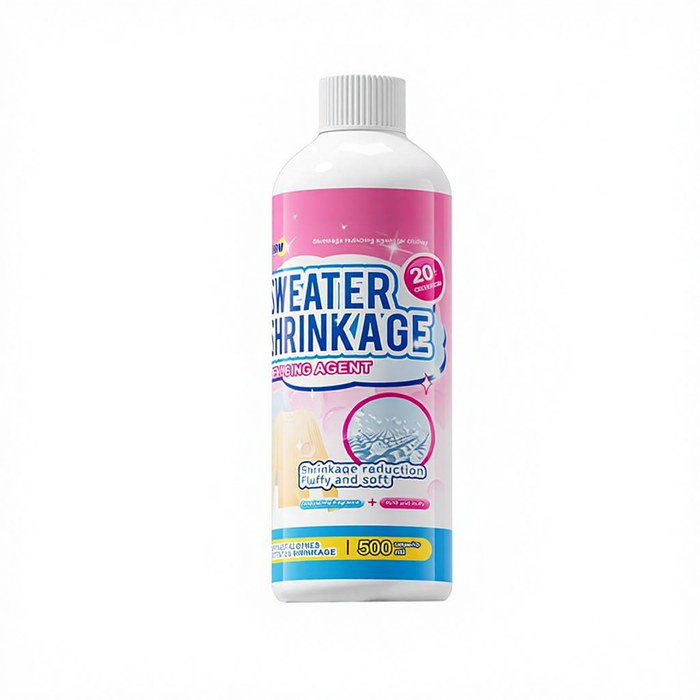
Supplier route for batch sourcing
A supplier route for buyers comparing samples, specifications and commercial terms. Verify the exact listing and supplier details before placing an order.
- Role: Alibaba sourcing candidate
- Request a sample first
- Confirm MOQ and specifications
- Verify the live listing listing
- MOQ: Check current listing
The links below are included as sourcing routes, not as rankings or approvals. Because a short link does not show a stable product title, verify the live listing, variant, ingredient information, care directions and return terms before buying. The Alibaba link is a candidate inquiry route, not an independent efficacy certification. The editorial recommendation remains to test on a low-value or hidden area first.
For the Alibaba candidate, request a sample, full directions, ingredient or SDS information, pH data, target-fiber compatibility and any evidence for knitted cashmere before discussing bulk purchase or private labeling. Do not infer that a supplier’s “restoration” wording proves that felted cashmere can be reversed.
When home rescue should stop
Stop if the surface is dense or matted, the stitch pattern has disappeared, the sweater releases dye, the nap becomes rougher, a hole opens, or the garment must be stretched far beyond its original proportions. A professional cleaner or knitwear repairer can assess whether the problem is felting, dye damage, yarn breakage or simple distortion. Give them the label, fiber content, original dimensions if known and every product used. That history is more useful than saying only that the sweater “shrunk.”
A specialist may improve handle or shape, but no responsible process can promise a complete return to factory dimensions after severe felting. Sometimes the best outcome is repurposing the garment, altering it, or preserving it rather than adding another damaging treatment.
Prevention after recovery
Once the sweater is dry, record its final measurements and take a reference photograph. Wash only when needed, follow the label, use a wool-compatible cleanser and keep agitation low. Press water out in towels, dry flat in its natural shape and store folded rather than hanging. If the garment changes after a future wash, compare measurements before trying a new product; early correction is safer than a dramatic rescue.
FAQ
Does hair conditioner always unshrink cashmere?
No. It may make a mildly relaxed knit easier to reshape, but it cannot be treated as a universal or proven reversal method. It is especially unlikely to restore a dense, felted fabric. Use one controlled trial only when the label and product directions support it.
Can I stretch a cashmere sweater while it is dripping wet?
No. A saturated knit is heavy and vulnerable to uneven loading. Remove water with towels, then move it with full support to a flat surface before measuring and blocking.
How do I know whether it is felted?
Look for compact, matted texture; reduced loop definition; a boardier handle; and a fabric that resists gentle easing. These signs are more important than the amount of size change alone. When uncertain, stop before another wet treatment.
Can a cashmere blend be rescued the same way?
Not necessarily. Silk, nylon, elastane and other fibers can change drying behavior, stretch recovery and dye response. Read the full fiber content and care label, and treat the blend as its own material rather than assuming 100% cashmere behavior.
Should I try several soaking products one after another?
No. Multiple residues and repeated wetting make it harder to identify what caused a color or handle change. Use one compatible method, dry fully, measure and decide whether professional help is safer.
The practical decision
If a cashmere sweater is only slightly smaller, still soft and clearly knitted, a single cool, low-agitation soak followed by measured flat blocking is a reasonable recovery test. If it is dense, matted, stiff, damaged or dramatically changed, stop stretching and seek a specialist. The goal is not to force the garment back into shape; it is to recover the most structure the fiber and knit can still support without creating a second failure.
References
-
McGregor BA, et al. “Feltability of cashmere and other rare animal fibres.” Textile Research Journal, 2013. Research on how fiber characteristics, origin and blends influence felting behavior in cashmere and related animal fibers. DOI source
-
Li Y, et al. “Study on shrinkage of cashmere sweater knitted with high-count worsted yarns.” Textile Research Journal, 2014. Study of how fiber and yarn variables affect cashmere sweater shrinkage. DOI source
-
Speakman JB. “Mechanism of Felting of Wool Fibres.” Nature, 1945. Classic explanation of directional fiber movement and scale-related felting behavior.
-
Speakman JB. “Mechanism of the Milling Shrinkage of Wool Fabrics.” Nature, 1945. Technical discussion of moisture, friction, scale structure and milling shrinkage.
-
van der Sluijs M, Hunter L. “An Analysis of the Felting Shrinkage of Plain Knitted Wool Fabrics.” Textile Research Journal, 2004. Analysis of fabric structure, loop length, fiber diameter and anti-felting treatment. DOI source
Hook this up to your favourite commenting platform — Giscus, Disqus, or your own.
Continue reading

How to Remove Makeup Stains from Cashmere Without Setting Them
A careful spot-treatment guide for foundation, powder, lipstick and mascara on delicate knitwear
How to Fix a Stretched-Out Cashmere Sweater
A targeted recovery guide for loose cuffs, necklines, shoulders and elbows
Why Does Cashmere Feel Scratchy After Washing?
A softness-recovery and damage-diagnosis guide for stiff, itchy or rough knitwear