How to Remove Makeup Stains from Cashmere Without Setting Them
A careful spot-treatment guide for foundation, powder, lipstick and mascara on delicate knitwear
 Lena Schmidt
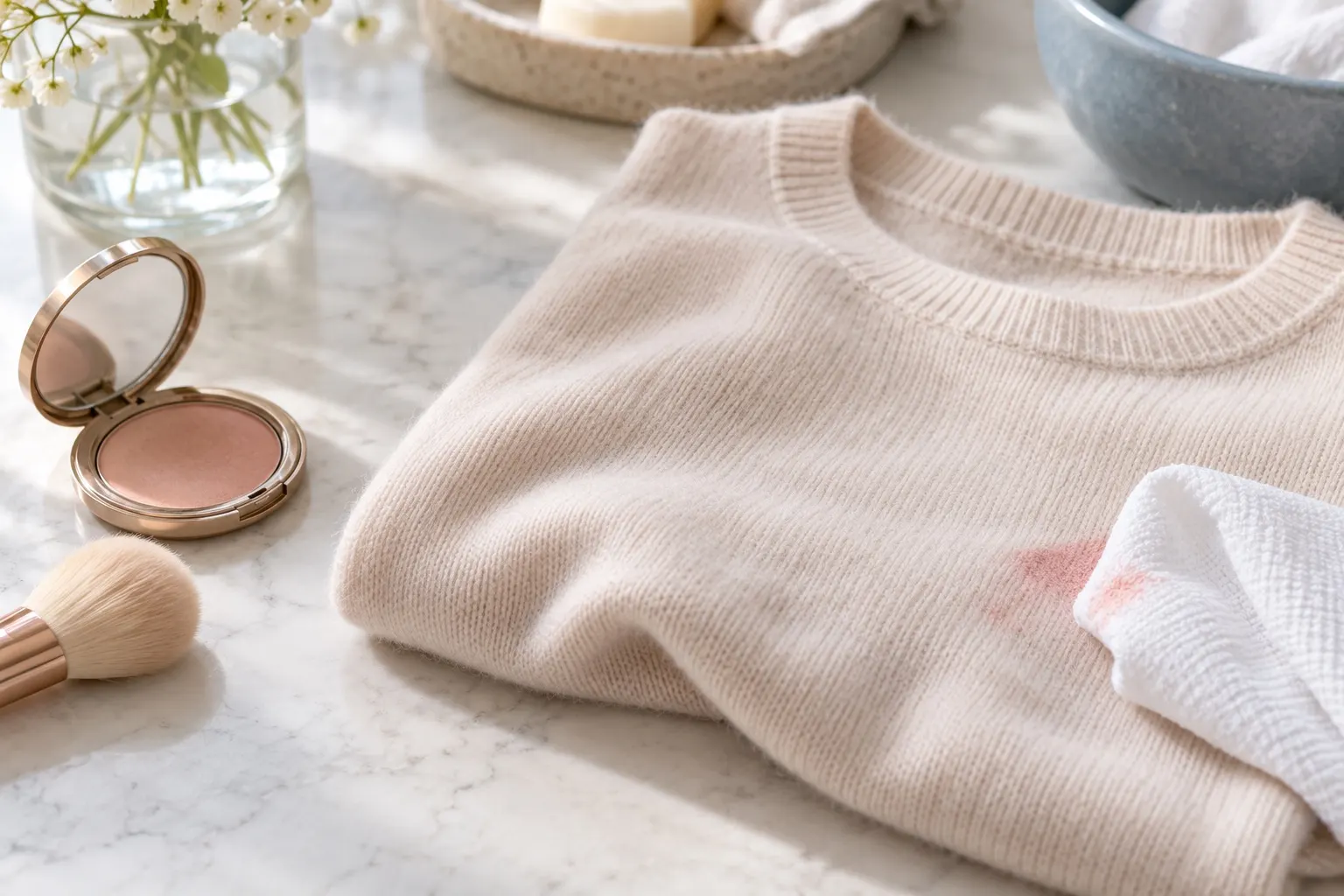
Disclosure: We may earn a commission if you purchase through links on this page, at no additional cost to you.
Makeup on a cashmere neckline is a small accident with little room for error. Foundation and lipstick contain oils, waxes and pigments; powder can lodge between the loops; waterproof mascara may carry resins. Hot water, rubbing, enzyme stain removers and dryers can spread the mark or set a color change.
The safest first response is simple: lift away what is sitting on the surface, keep the area cool, avoid friction, and identify the product before choosing a cleaner. If the label allows wet care, a small amount of a wool- or cashmere-compatible cleanser can be dabbed and rinsed from the spot. If the item is dry-clean-only, heavily dyed, embellished, vintage or already damaged, stop at surface removal and take it to a professional.
This guide is for washable cashmere and wool-cashmere garments. Always treat the care label and the product’s instructions as the controlling evidence; a stain-removal method written for cotton or polyester cannot be transferred automatically to a protein fiber.
The first five minutes matter
| Situation | Do first | Avoid |
|---|---|---|
| Dry powder, blush or bronzer | Lift or brush loose particles off without pressing them in | Wetting a thick layer and smearing it across the knit |
| Fresh liquid foundation or concealer | Blot from the outside toward the center with a clean white cloth | Rubbing, scraping with a fingernail or adding heat |
| Lipstick or lip gloss | Lift any thick excess with a dull edge; keep the mark contained | Ironing, hair-drying, acetone or aggressive solvent use |
| Waterproof mascara or long-wear tint | Blot and isolate the garment from other items | Assuming a normal wool wash will dissolve the film |
| Unknown product on dry-clean-only cashmere | Cover the spot and document the product if known | Testing household chemicals on the garment |
Do not start by scrubbing. Cashmere’s soft surface can be abraded quickly, and rubbing can turn a small collar mark into a larger halo. Work on a flat, clean towel so the sweater is supported and the stain is not pushed into another layer.
Why makeup stains behave differently
Foundation and concealer
Liquid and cream foundations commonly combine pigments with oils, emulsifiers, waxes or film-formers. The visible color is only part of the problem: the oily binder can spread when water is added, while a strong alkaline cleaner may disturb the dye or the fiber surface. A pale cashmere sweater can therefore show a ring even when most of the pigment has lifted.
Powder, blush and bronzer
Loose powder is often the least difficult type if it is still dry. The main risk is pressure. Brushing hard or wiping with a wet cloth can drive the particles into the yarn and create a muddy patch. Remove the excess first, then decide whether a faint residual mark needs a controlled spot treatment.
Lipstick and lip gloss
Lip color is usually a combination of waxes, oils and highly concentrated pigment. It can leave a greasy shadow after the red or pink color appears to be gone. Alcohol, nail-polish remover and other solvents may also affect dyes, finishes or adjacent fibers. On cashmere, the correct solvent is not simply the strongest one available.
Mascara and long-wear products
Waterproof mascara and long-wear complexion products are designed to resist moisture and transfer. Pulling at a dried film can break surface fibers. If the product has formed a hard or shiny patch, remove only what lifts freely and let a cleaner identify the remaining binder instead of escalating at home.
A controlled spot-treatment sequence
1. Check the label and the garment construction
Read the fiber content, wash symbols and any “spot clean only” instruction. Look for embroidery, sequins, leather trims, contrast panels and unstable dye. If the stain sits on a lining, seam or bonded detail, local water may create a visible edge or distortion. Photograph the garment before treatment so you can compare the result.
2. Remove dry excess without spreading it
For powder, tilt the garment and let loose particles fall away. Use the edge of a clean, soft cloth or a very soft brush only on the surface; do not grind the powder into the knit. For a dried cream, lift a raised edge with a blunt spoon or card. Stop when the remaining mark is level with the fabric.
3. Make a hidden-area compatibility check
If wet spot treatment is permitted, dilute a small amount of a cleanser explicitly intended for wool, cashmere or delicate protein fibers. Test it on an inside seam allowance or another concealed area using a white cloth. Check for dye transfer, a pale ring, roughness or a change in sheen after the test area dries. A successful wet test does not guarantee that the visible stain will disappear, but a failed test is a clear stop signal.
4. Blot, do not rub
Place a clean towel behind the stain. Touch the dampened cloth to the outside edge and work inward with short presses. Use a fresh section of cloth as color transfers. Keep the treated area as small as possible; saturating half a front panel to remove a one-centimeter mark creates a second problem.
5. Remove the cleanser completely
Rinse the cloth in clean, cool water and press the area repeatedly until no slippery or soapy feel remains. Do not pour water directly through the garment unless the label and construction make that safe. Residue can attract soil and may be the reason a “clean” area later feels stiff or looks darker.
6. Dry flat and reassess when fully dry
Press out moisture with a towel and lay the garment flat in its normal shape. Keep it away from a radiator, hair dryer, iron and direct high heat. A damp halo can look worse before it dries. Reassess the color, texture and hand only when the knit is fully dry; do not repeat the treatment just because the wet patch is temporarily visible.
What not to use automatically
| Common suggestion | Why it is risky on cashmere | Safer boundary |
|---|---|---|
| Enzyme laundry stain remover | Proteases can attack protein fibers; a product effective on the stain may also weaken wool or cashmere | Use only when the label explicitly covers the garment and the maker provides a compatible method |
| Oxygen bleach or chlorine bleach | Can alter dye and damage delicate fibers | Keep away from cashmere unless a professional specifies a controlled process |
| Hot water or an iron | Heat can spread oily color, set a mark and flatten or shine the knit | Keep the spot cool and dry flat |
| Dish soap or shaving cream | May be alkaline, fragranced or difficult to rinse from a dense knit | Do not use as a default; choose a wool/cashmere-labeled cleanser |
| Makeup remover or micellar water | May contain oils, alcohol, fragrance or surfactants that leave a ring | Only consider after label review and a hidden-area test |
The warning about enzymes is not a blanket claim that every enzyme product damages every wool garment. It is a reason to read the formula and scope carefully. Proteases are designed to break down proteins, and wool and cashmere are protein fibers; the risk is too significant for casual experimentation on an expensive knit.
When a stain has already dried or been through heat
A dried stain deserves a lower-risk plan. Do not scrape aggressively or jump to a stronger chemical because the color looks stubborn. First identify whether the remaining mark is pigment, oily binder, a dye change or a flattened surface. If the sweater has been through a dryer, iron or hair dryer, disclose that history to the cleaner; heat can make later removal more demanding.
How to decide between home treatment and a cleaner
| Choose a controlled home test when… | Use a professional cleaner when… |
|---|---|
| The label permits wet care and the garment is a plain, stable knit | The label says dry clean only or the garment has trims, lining or embellishment |
| The mark is fresh, small and clearly identified | The stain is old, widespread, waterproof or a strong red/black pigment |
| The surface is supple, not pilled, shiny or thinning | The area is matted, glossy, brittle, abraded or already discolored |
| A hidden-area test shows no dye or texture change | The test area changes color, handle or sheen |
| You can rinse the product completely and dry flat | You cannot control the amount of water or prevent a visible tide mark |
A cleaner cannot guarantee a perfect result after heat or an aggressive home product. Professional value comes from controlled chemistry, equipment and experience separating removable soil from color or fiber damage.
Selecting a stain-care product
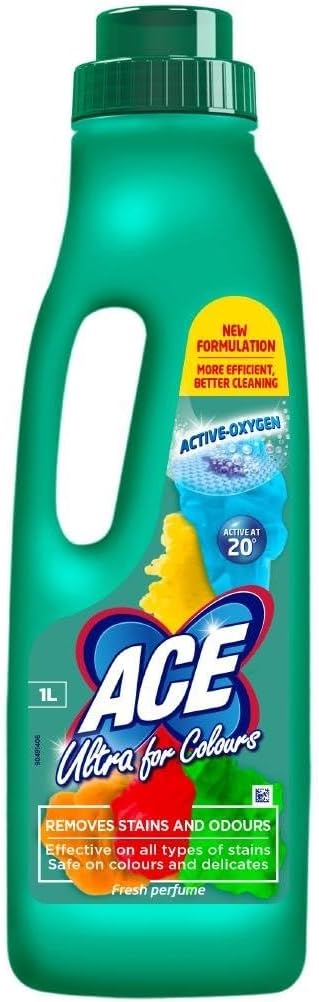
Delicate-fabric stain-care candidate
Verify the live listing, wool or cashmere scope, directions and current variant before buying. This is a role-based shopping route, not proof that every stain or garment is safe to treat.
- Role: Amazon listing option 1
- Check fiber compatibility
- Patch-test before use
- Follow the live instructions
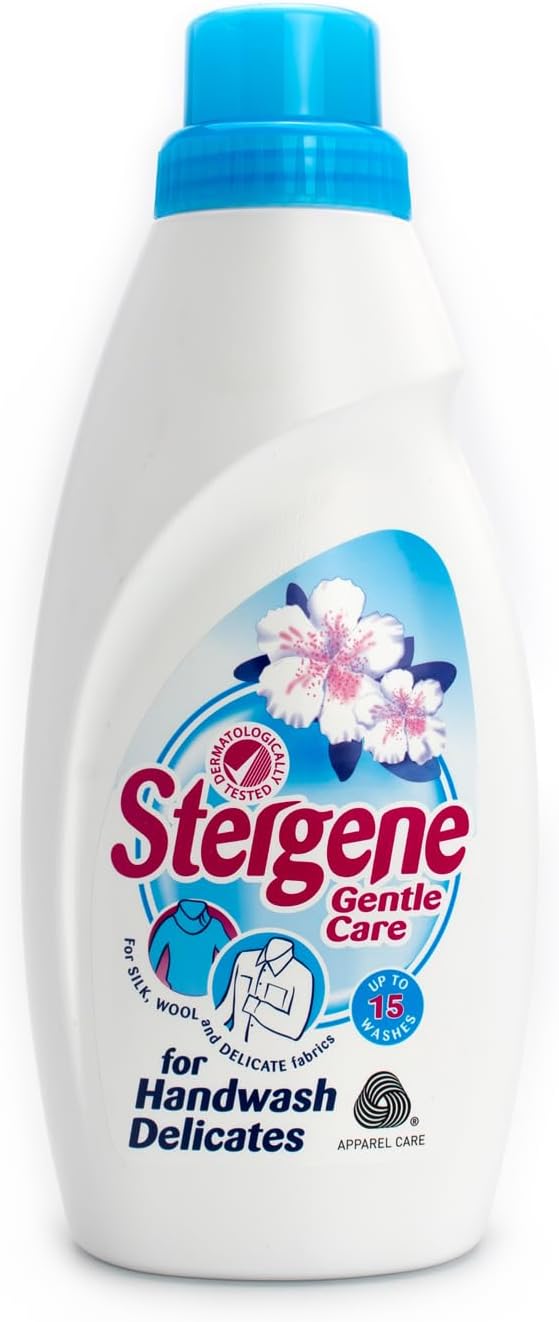
Wool and cashmere care candidate
Verify the live listing, wool or cashmere scope, directions and current variant before buying. This is a role-based shopping route, not proof that every stain or garment is safe to treat.
- Role: Amazon listing option 2
- Check fiber compatibility
- Patch-test before use
- Follow the live instructions
For a consumer purchase, choose a product whose instructions explicitly include wool, cashmere or delicate protein fibers and explain how the treated area should be rinsed. The product title alone is not enough.
For an Alibaba or private-label route, confirm the material scope, use directions, sample procedure, packaging and MOQ with the supplier. “Instant” or “deep cleaning” does not automatically mean cashmere-safe.
listing shopping routes supplied for this article
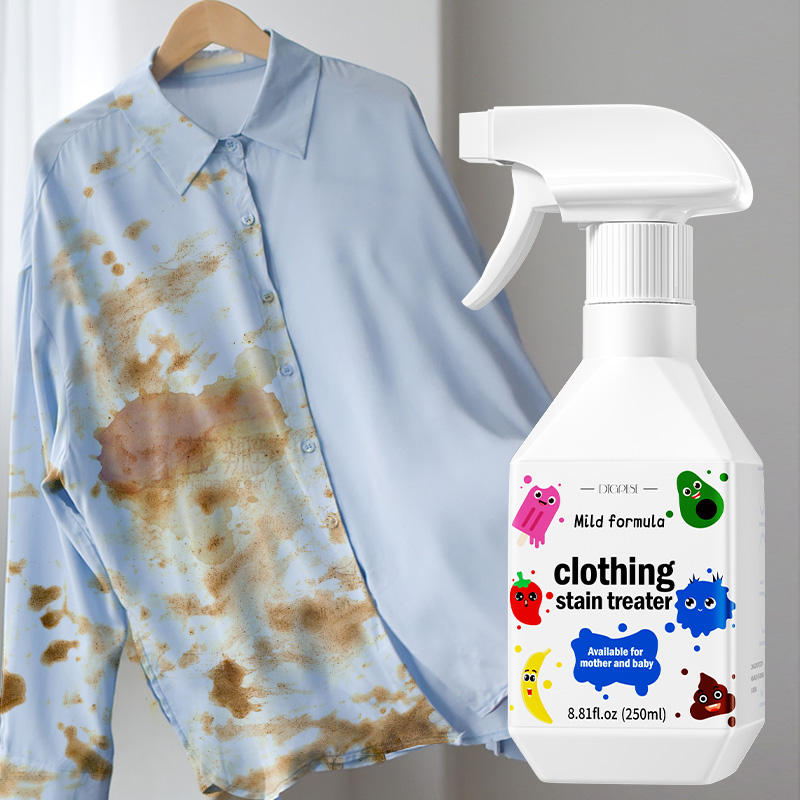
Garment stain-remover sourcing candidate
Verify the live listing, wool or cashmere scope, directions and current variant before buying. This is a role-based shopping route, not proof that every stain or garment is safe to treat.
- Role: Alibaba sourcing candidate
- Check fiber compatibility
- Patch-test before use
- Follow the live instructions
The links below are included as sourcing routes, not as rankings or approvals. They are included by product role, not as proof that any item will remove every makeup stain. Check the live title, care instructions, current variant and return terms before buying.
Treat the links as role-based shopping routes and verify the live listing, product identity and landing page before buying.
Stop conditions
Stop immediately if the dye moves, the area becomes lighter or shinier, a ring expands, the surface feels rougher, the yarn begins to fuzz, or the stain turns into a hard film. Stop if you are tempted to increase heat, pressure or chemical strength simply because the first attempt did not work. Cover the garment, note what was used and take it to a professional.
If the wearer develops itching, burning or a rash after the makeup and cleaner are gone, do not keep treating the sweater. The problem may be a cosmetic or textile sensitivity rather than a visible stain.
Preventing makeup transfer next time
Let foundation, sunscreen and setting products dry before pulling a cashmere layer over the face. A scarf, tissue barrier or removable collar guard can protect a light neckline. Keep a clean white cloth in a travel kit for blotting, but do not improvise with an unlabelled solvent.
FAQ
Can I use makeup remover on a cashmere sweater?
Not by default. Makeup removers can contain oil, alcohol, fragrance or surfactants that leave a ring or affect dye. Check the garment label, test a hidden area and use only a method compatible with wool or cashmere.
Will foundation come out of white cashmere?
A fresh, small mark has a better chance than a heat-set one, but no result is guaranteed. Lift excess, blot without rubbing, use a compatible cleanser only if the label permits it, and dry flat. Persistent pigment or a color halo needs professional assessment.
Can I use dish soap for lipstick?
General dish soap is a common clothing tip, but it is not a universal cashmere solution. It may be alkaline, fragranced or difficult to rinse completely. A wool- or cashmere-labeled product is a more controlled starting point.
Why did the stain spread after I used water?
Water can mobilize the oily binder or pigment and create a tide mark, especially when the cloth is rubbed. Stop adding water, let the area dry flat and have a cleaner assess whether the mark is residue or dye/finish change.
Can a dry cleaner remove waterproof mascara?
A cleaner may be able to improve it, but disclose the product and any home treatment. Waterproof formulas can leave a film, and the final result depends on the dye, finish, time and heat exposure.
The practical decision
Makeup stains on cashmere reward restraint. Remove loose powder before it is pressed in, blot liquid or oily products from the edge inward, keep the garment cool, and use only a cleanser whose instructions include delicate protein fibers. A single controlled test is more informative than five household hacks. When dye, texture or construction begins to change, the correct next step is not a stronger recipe—it is professional evaluation.
References
- Shen J, et al. “Restricting detergent protease action to surface of protein fibres by chemical modification.” Applied Microbiology and Biotechnology, 2006. The study explains why protease activity can damage natural protein fibers such as wool and silk and explores ways to limit that action. DOI source
- Ezeronye OU, et al. “Detergent formulations for wool domestic washings containing immobilized enzymes.” Biotechnology Letters, 2006. Research on stain-removal performance and the need to formulate enzyme systems for wool washing. DOI source
- El-Sayed H, et al. “Immobilization of lipase on woolen fabrics: enhanced effectiveness in stain removal.” Biotechnology Progress, 2014. Study of oily-stain removal from wool and the relationship between cleaning performance and fiber-safe treatment design. DOI source
Hook this up to your favourite commenting platform — Giscus, Disqus, or your own.
Continue reading
Can a Shrunken Cashmere Sweater Be Saved?
A damage-first recovery guide for mild shrinkage, distortion and possible felting

How to Fix a Stretched-Out Cashmere Sweater
A targeted recovery guide for loose cuffs, necklines, shoulders and elbows

Why Does Cashmere Feel Scratchy After Washing?
A softness-recovery and damage-diagnosis guide for stiff, itchy or rough knitwear