How to Identify a Hidden Faucet Aerator
Tell a Cache insert from other concealed outlets, remove it without damaging the spout, and match the right replacement.
 Lena Schmidt
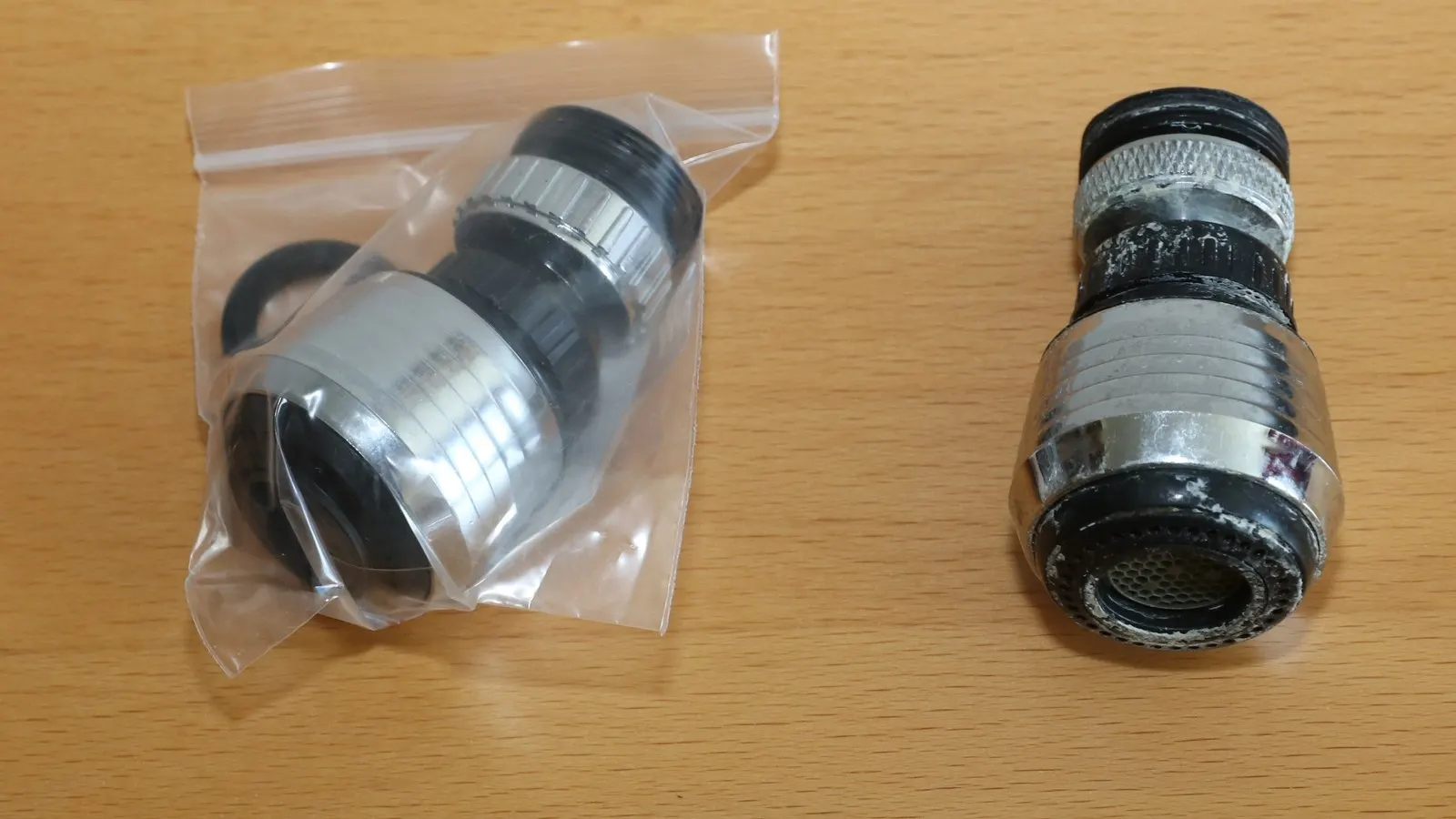
Disclosure: We may earn a commission if you purchase through links on this page, at no additional cost to you.
A faucet tip can look like a plain metal opening even when a small aerator is recessed inside it. If the screen sits flush with the spout and there is no removable outer ring to grip, you may have a hidden, or Cache-style, aerator. That appearance is a clue, not proof: some faucets use a different concealed insert, a proprietary key, or no removable outlet aerator at all.
The reliable way to identify one is to work in this order: find the faucet make and model, inspect the outlet face, remove the insert with a key that seats fully in its notches, then record the markings, thread size, and flow rating from the part itself. Do not buy a replacement from the faucet’s outside diameter or a generic “universal” label alone. A key that fits only confirms that you can turn the insert; it does not confirm a replacement will fit or produce the intended flow.
First check whether the aerator is actually removable
Look directly at the underside of the spout with a flashlight. A conventional aerator usually sits in a visible metal housing that projects slightly below the spout. The housing may have flats or knurling that can be turned by hand. A Cache aerator is different: its threaded plastic body installs directly into the faucet spout, so the outlet can appear nearly flush and the housing is hidden. Neoperl describes Cache as an integrated-thread aerator installed directly in the faucet, without a separate housing.
Do not assume every concealed outlet is a round Cache insert. Moen’s own service guide distinguishes several concealed designs: round inserts with different notch patterns, oval inserts secured with hex screws, a press-fit design, and faucets that use in-line filters instead of an outlet aerator. Some pull-down kitchen faucets place a screen in the spray head or use a flow control elsewhere. If your outlet is oval, has a central screw, appears to be a removable throat, or has no screen at all, pause and use the faucet maker’s instructions rather than trying a four-size Cache key.
Before touching the tip, search the faucet brand’s site for the model number. It may be printed on the installation guide, purchase receipt, underside of the spout, or a label on the supply lines beneath the sink. A faucet model number is more useful than a brand name alone because one brand can use several outlet designs. Delta’s parts pages, for example, list replacement aerator and wrench combinations by specific faucet model; the correct wrench for one model may not fit another that looks similar.
Find the correct removal key without forcing it
If the outlet is round and has small internal notches, a service key is usually the least damaging removal tool. Check the faucet box, manual, or parts page first; the original key may be clipped to a supply line or included with a replacement aerator. Insert the key gently and feel whether its teeth drop into the aerator’s slots. It should sit squarely and engage without rocking. If it does not seat, remove it and inspect the shape again. Do not twist a loose-fitting key with pliers or lean on it to make it catch.
A four-color Cache key ring is useful when the faucet uses one of the common Cache patterns and the size is not yet known. NEOPERL’s four-key ring (Amazon rating snapshot: 4.3 stars from 1,503 ratings, 400+ bought in the past month when checked) is labeled for CACHÉ Standard, Junior, Tiny Junior, and Tom Thumb sizes. The package explicitly says it does not work with Slim Air aerators. Check the current listing and the tool’s exact shape before buying: similar-looking generic kits may use different tooth geometry. See the NEOPERL Cache key ring on Amazon
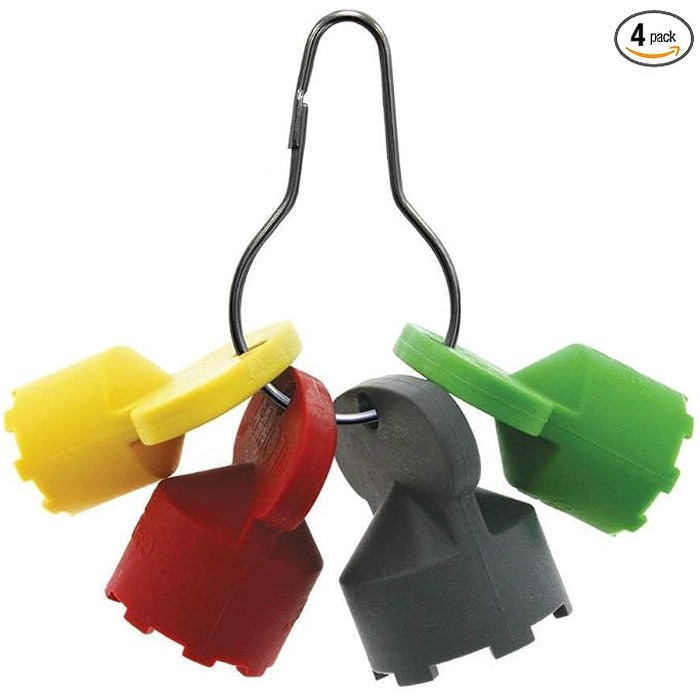
Neoperl 1191705 Cache aerator key set, 4 keys
Four colour-coded keys on a ring, labelled for the CACHÉ Standard, Junior, Tiny Junior and Tom Thumb patterns. It suits a faucet whose insert is already known to be one of those shapes. The listing states the keys do not fit Slim Air aerators, so confirm your outlet type and the tooth shape before ordering.
- Role: Amazon consumer option
- Four colour-coded keys on a ring
- CACHÉ STD, JR, TJ and Tom Thumb
- Do not fit Slim Air aerators
- MOQ: Check current listing
A key should turn the insert, not the faucet finish. Once it is fully engaged, turn counterclockwise with steady hand pressure. Stop if the key slips, twists, or begins to deform the notches. Mineral deposits can make an old aerator stiff, but more force is not a diagnosis. Recheck the key, look up the model, and ask the faucet maker if the supplied parts diagram calls for a different tool. Avoid gripping the inner insert with bare metal pliers; scratched plating and crushed plastic can turn a simple cleaning job into a replacement problem.
Remove the insert and keep every part in order
Close the drain or cover it with a cloth so the small parts cannot fall into the sink. Put a towel under the spout, then remove the aerator over a tray or a folded cloth. Keep the insert, any separate washer, flow regulator, and the key together. Photograph the outlet before removal and the part as it comes out. A phone photo of the face and side often helps the manufacturer identify a hard-to-find part.
If the insert will not move, do not start with a long lever. Confirm that the key is the right style, fully engaged, and turning in the correct direction. If the faucet maker recommends a different method, follow that product-specific instruction. A concealed aerator can have plastic threads; twisting at an angle or levering against the spout can damage the insert or the faucet’s internal threads. Stop if the key begins to chew the slots or if the visible faucet body moves with it.
After removal, rinse loose debris from the insert and look for a printed flow value, part number, color code, or logo. Check whether there is a washer, a screen, a flow-control component, or a separate housing. If the insert is intact and the problem is only low flow, cleaning may be enough. The faucet maker’s instructions should control what can be soaked and for how long; avoid using a sharp pick that could enlarge the screen openings or damage a sealing surface.
Identify the size from the removed part, not the faucet opening
Neoperl lists four common Cache sizes: M24×1 Standard (STD), M21.5×1 Junior (JR), M18.5×1 Tiny Junior (TJ), and M16.5×1 Tom Thumb (TT). Those labels refer to specific Cache aerator sizes; they are not a universal chart for every hidden aerator. Some brands have proprietary inserts, and a key’s color code is not always interchangeable across brands or product families.
Measure the removed insert across its threaded body with a caliper if you have one. A ruler can help distinguish obviously different diameters, but it is not precise enough to establish thread pitch or the notch pattern. Record the diameter, thread form if marked, total length, seal location, and the exact part number. Photograph the side and bottom beside a ruler. If the insert has no markings, give those measurements and the faucet model to the manufacturer or a plumbing supplier and ask them to confirm the replacement number.
Do not confuse a U.S. exposed-thread aerator with a metric Cache insert just because the diameters look close. Common exposed styles may be described by inch thread sizes such as 15/16-27 male or 55/64-27 female; Cache models use their own integrated metric threads. M22 and 55/64 inch can look numerically similar when rounded, but the label alone does not prove that the thread type, pitch, gender, sealing face, and housing style match. If the old part is exposed-thread, use an exposed-thread sizing guide. If it is a Cache insert, compare it to Cache specifications and the faucet maker’s parts list.
Match flow rate and stream type as well as the thread
A replacement can screw in and still be the wrong part. Flow rate is usually expressed in gallons per minute (GPM) and may be stamped on the aerator, shown in the parts diagram, or listed by the faucet maker. Keep the original rating unless you have a reason and permission to change it. A higher-flow insert can use more water and may conflict with local requirements or the faucet’s intended performance. A lower-flow insert may feel too weak for the task or behave differently in a basin.
Also check the stream style. Aerators can produce an aerated stream, a laminar stream, a spray pattern, or an adjustable angle, depending on the model. Neoperl’s Cache range spans different flow rates and stream patterns, so “M16.5” alone is not a complete product specification. Compare any color or part number against the manufacturer’s catalogue; do not assume the color has a universal meaning across all brands.
The most useful replacement checklist is: faucet model; removed-part number; Cache or other outlet type; measured diameter and thread; notch/key pattern; flow rate; stream type; and whether the washer or other pieces are included. If any of those fields are unknown, find the faucet’s parts diagram before ordering. If you can no longer find the old insert, give the faucet maker the model number and a clear photo of the outlet. Do not choose a replacement based solely on the hole’s outside diameter.
When a replacement kit makes sense
A replacement bundle is convenient when the removed part matches the bundle’s size and flow specification. For example, the NEOPERL Tom Thumb two-pack currently lists M16.5×1 and 1.5 GPM, includes a key, and displayed 4.7 stars from 116 ratings with 200+ monthly purchases when checked. This is not a recommendation for every Cache faucet: it is a conditional option only if your old insert is the Tom Thumb M16.5×1 model and the original flow rating is 1.5 GPM. Confirm the seller, pack size, and product details before ordering. Check the NEOPERL M16.5×1, 1.5 GPM replacement pair on Amazon
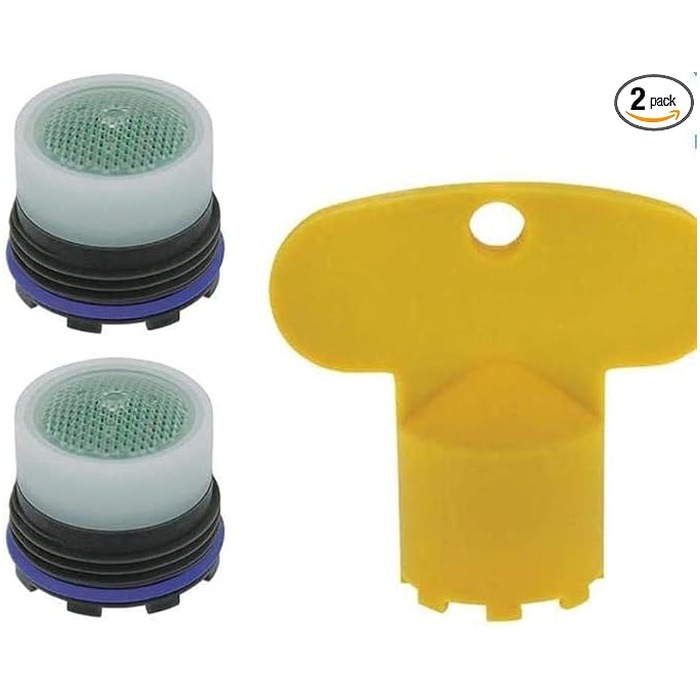
Neoperl Tom Thumb aerator, M16.5 x 1, two-pack
A two-pack of M16.5 x 1 inserts rated 1.5 GPM, supplied with a fitting key. It only matches a faucet whose removed insert is the Tom Thumb M16.5 x 1 size at that flow rating. Check the pack size, gasket arrangement and seller before ordering.
- Role: Amazon consumer option
- Two inserts, M16.5 x 1, 1.5 GPM
- Includes a fitting key
- Only for the matching insert size
- MOQ: Check current listing
If your removed aerator is M18.5, M21.5, or M24, choose that exact size and the right flow/stream specification instead. A multi-size kit that bundles several inserts may look like a better deal, but it can introduce parts you do not need and may still not match a proprietary faucet. Read the listing’s fit notes, compare a labeled drawing with your old insert, and check whether a service key is included. For brand-specific faucets, the manufacturer’s replacement part is usually the first candidate to verify; an aftermarket part is a second option only after the dimensions and function match.
If the key fits but the new aerator will not thread
Remove the replacement immediately. Do not keep turning it to “cut” the threads. Recheck whether the new insert has the same diameter and pitch, whether its threads begin at the same point, and whether the washer or seal sits in the same place as the old one. Check that the faucet outlet is not damaged and that you are not comparing a key size with a replacement thread size; they describe different parts of the fit.
A key may remove one aerator but not the replacement sold alongside it. A multi-tool set may include heads for several types of aerator, while the replacement insert uses only one size. Delta’s parts support directs customers to the faucet’s model-specific parts diagram to identify the correct wrench and aerator combination. This is a useful fallback for any brand: ask the manufacturer for the part number instead of guessing from a picture or brand name.
Start the replacement by hand, square to the opening. It should catch cleanly and turn without binding. If it feels cross-threaded, stop, back it out, and inspect the threads and seal. Tighten only as directed by the manufacturer; overtightening can make the next service harder or damage a plastic insert. Once installed, run water briefly and check for a distorted stream, leakage around the insert, or a change in flow that suggests the part does not match.
A quick decision rule
If the aerator sits flush inside a round spout and has notches, look up the faucet model and test a matching Cache key gently. If the outlet is oval, screw-fastened, press-fit, part of a pull-down spray head, or appears to have no removable screen, use the brand’s service guide instead. After removal, identify the insert itself; do not infer the replacement from the opening alone. Match size, thread, seal, flow rate, and stream pattern before ordering.
That sequence takes a little longer than buying the first “universal faucet aerator” result, but it prevents the most common mistake: getting a tool that turns something, then discovering the replacement still does not fit. When the model or insert remains uncertain, send the faucet maker a photo and model number. A confirmed part number is more useful than a guess based on color, a coin comparison, or a generic listing title.
Sources and further reading
-
NEOPERL, CACHÉ aerator sizes and design Source
-
NEOPERL, service keys and tool compatibility Source
-
Moen Solutions, Faucet aerator cleaning and concealed designs Source
-
Delta Faucet, aerator wrench model questions and parts-diagram guidance Source
-
Pfister, aerator type, size, and replacement guidance Source
Hook this up to your favourite commenting platform — Giscus, Disqus, or your own.
Continue reading
Do Washing Machine Anti-Vibration Pads Stop Walking?
A pad that has shifted out from under the washer is a symptom, not the diagnosis. Check the machine is stable and the foot fits the cup before buying a grippier set.

When a Silicone Faucet Mat Pools Water, Check the Fit and Drain Path
A mat that holds a puddle is failing at one of three points: the counter does not drain toward the bowl, the mat is set the wrong way, or its outlet is blocked.
How to Keep a Cutting Board From Sliding on a Countertop
Most boards move because of a film of water or oil, a warped corner, or an overhang, not because the board is light. Find the cause, then pick a damp cloth or a grip pad.