Shrink Bands for Jam and Salsa Jars with Safety-Button Lug Lids
A lug lid with a safety button already tells your customer whether the jar sealed. Here is when a band still earns its place, which 63, 70 and 82 mm lug sizes sellers publish, and why the band has to go on after processing.
 Lena Schmidt
In this guide
- What the safety button already does
- When a band still earns its place
- Apply the band last, and keep the button visible
- The sizes sellers publish
- Height and the lug jar neck
- Film and heat source
- What the rules say about selling jam and salsa
- A full-sleeve label as the alternative
- What a band costs
- Mistakes that cost a batch
- A twelve-jar trial
- Where to source these bands
- FAQ
- References
Quick answer. A safety-button lug lid already signals a broken seal, because the centre button pops up when the jar is opened, so a band is optional on those jars. It earns its place on plain lug lids without a button, or as a second visible signal. For 63, 70 and 82 mm lids, sellers publish lay-flat widths of roughly 105 to 115 mm, 115 to 123 mm and 140 to 145 mm. Apply the band only after the jar has been processed, cooled and dried and the button is down, because one seller says button lids are not meant for a water-bath, and a band should never hide a button that has popped. Check your state’s cottage food rules separately.
What the safety button already does
A metal lug lid with a safety button carries a built-in signal. When hot product is filled and the jar cools, the liner draws a vacuum and the centre button is pulled down. Berlin Packaging describes its 82 mm gold lug cap this way: the liner draws a vacuum on a lug-finish jar, and the button is released when the jar is opened, which offers tamper evidence. Its 70 mm lug cap listing says the button pops up if the seal is broken and gives a visual indication of tampering or loss of seal integrity.
SKS Bottle and Packaging describes the same arrangement for preserves: the button depresses once the hermetic seal is activated and pops up when the jar is first opened. A UK retailer of 82 mm button lids makes the customer-facing point, saying that as long as the button stays down you can be sure the seal is effective. It also advises leaving about 10 mm, roughly 5 percent, of headspace below the rim so the jar forms a good vacuum.
So a jam jar with a button lid is not an unprotected jar. A customer who presses the button, or who finds it raised, learns something a shrink band cannot tell them: whether the vacuum is intact. A band tells them whether the lid has been turned. The two signals are different, which is why some makers use both and others rely on the button alone.
When a band still earns its place
Lug lids come with and without buttons. Paramount Global lists 13 metal lug closures, in 43, 58, 63, 70 and 82 mm, some with a safety button and some with none, and with or without a plastisol liner. If you buy the cheaper no-button version, nothing on the lid shows that it has been opened, and a band is the simplest way to add that signal.
The second case is shelf appeal. A packaging trade article on jellies quoted a canning company owner saying that jellies are one of the food products that still do not have tamper evidence beyond the vacuum button. That article is undated in the copy I could read, so take it as an industry view rather than current practice. The third case is a lid that stays on the shelf a long time, where a band also keeps dust off the lid rim.
If you sell at a farmers market, where customers talk to you and pick the jar up, the button is probably enough. If you ship, or sell through shops where nobody explains the button, a band is a visible cue that needs no explanation. That is a judgment, not a rule.
Apply the band last, and keep the button visible
Berlin Packaging says safety button lug caps are not intended to be used with a water bath, which it describes as home canning. Processing methods for your product are a food safety matter, and I am not covering them here. What matters for a band is the order of steps: the band goes on after processing, after the jar has cooled, and after you have confirmed that the button is down.
There are three reasons. A band applied to a wet or hot jar shrinks unevenly. A band applied before the vacuum has formed can hide a jar that did not seal. And a tall band that covers the lid top can hide the button, so the customer cannot see it pop. If you use a 50 mm band, check where its top edge sits relative to the button. A short band of about 25 mm that stays on the lid skirt and seam leaves the lid top clear.
Wipe the lid and jar rim dry, since jam and salsa leave a sticky film that makes the shrink patchy. This is common practice rather than a sourced rule, but it is cheap to do.
The sizes sellers publish
Three sellers publish band sizes for lug lids. US Plastic’s sizing chart lists a 115 mm band for 63 mm lids in 400, 405 and 2030 continuous-thread or lug finishes, the same 115 mm for 70 mm lids in 400, 405, 2030, 450 and 2035 finishes, and 145 mm for 82 mm lug finishes 2020 and 2040. WebstaurantStore sells a 105 mm clear perforated band for 63 mm caps in 25 mm and 50 mm heights, with a stated maximum diameter of 2 1/2 inches. Aaron Packaging lists a 110 x 55 mm band for 63 mm caps, a 123 x 37 mm band for 70 mm caps, and a 140 x 35 mm preformed round band for 82 to 83 mm caps.
| Lid | Band (lay-flat width) | Seller | Min. width for nominal lid (πD/2) | Spare width |
|---|---|---|---|---|
| 63 mm | 105 mm | WebstaurantStore | 99.0 mm | about 6% |
| 63 mm | 110 mm | Aaron Packaging | 99.0 mm | about 11% |
| 63 mm | 115 mm | US Plastic chart | 99.0 mm | about 16% |
| 70 mm | 115 mm | US Plastic chart | 110.0 mm | about 5% |
| 70 mm | 123 mm | Aaron Packaging | 110.0 mm | about 12% |
| 82 mm | 140 mm (fits 82–83 mm) | Aaron Packaging | 128.8 mm | about 9% |
| 82 mm | 145 mm | US Plastic chart | 128.8 mm | about 13% |
Spare width is calculated from the lay-flat figures against the nominal finish number. A real lug cap is wider than its nominal size because of its skirt and lugs, so the true spare is smaller. Sizes seen via search results on 9 November 2026;
The pattern is the same as in other categories: the published widths leave roughly 5 to 16 percent over the nominal size, and the narrow end of that range is the one to worry about. A 115 mm band on a 70 mm lid leaves about 5 percent before you account for the lid’s real width. One bulk listing sells a 115 x 28 mm band for caps of 63 to 70 mm, so a band rated across that whole range will be tight at the top and loose at the bottom.
Measure the actual lid with a caliper, including the lug edge, and use the lay-flat rule from our sizing guide. Cap makers differ by a millimetre or two, and a lug lid from one supplier may not be the width of the same nominal lid from another.
Height and the lug jar neck
Published heights for these lids run from about 25 mm to 55 mm. A 25 mm band covers the lid skirt and the seam; a 50 to 55 mm band runs further down the jar neck or over the top edge. On a lug jar the glass finish has thread lugs and usually a bead below them, and a band grips by shrinking under that bead. TricorBraun’s band pages warn that the container must have a neck bead to hold a band in place. No source was found that measures the bead on specific jam jars, so test.
Try the band on one jar, let it cool, and slide it upward without tearing it. If it holds, try twisting the lid inside it. A lid that turns freely inside the band means the band is only decoration. Then check the button: it should be visible and should still pop when you open the jar.
Film and heat source
Sellers disagree about hair dryers. Lappe’s Bee Supply says its 63 mm safety bands can be applied with a standard heat gun or a hair dryer, and Dadant says a hot-air hair dryer works for its honey container bands. A bulk-pack listing for a 127 x 105 mm PETG band, 0.04 mm thick, says heat guns shrink the band fast and hair dryers barely work. Both can be true, because the film is different. Check the film type in the listing, and test your heat source on a sample before you commit to a case.
The same PETG listing claims the band is 100 percent recyclable. As the earlier recyclability article explains, that is a seller’s claim and not a verified statement about your customer’s recycling stream, so do not repeat it on your label.
What the rules say about selling jam and salsa
Cottage food law is made state by state. A labeling guide from the Sustainable Agriculture Research and Education program says the laws differ between states and that most allow some home-canned products, typically high-acid items. A cottage food article says most states allow the safer high-acid canned products with an equilibrium pH of 4.6 or lower, which typically includes jams, jellies, pickles and salsa. Minnesota’s health department points sellers to its Cottage Food Producer Registration and a food safety training for home-canned pickles, salsa, jam and jellies.
No state rule was found that requires a shrink band on a jam jar, and This guide did not research every state. Whether your product qualifies, what label content is mandatory and whether a band is required or merely allowed are questions for your state’s agriculture or health department. This page is not legal or food safety advice.
A full-sleeve label as the alternative
Instead of a neck band, some producers use a full-body sleeve label. A trade article on jelly packaging described a sleeve label with a horizontal perforation that releases a band from the cap while the label stays on the jar. That design combines branding and tamper evidence in one film, but it needs a printer, minimum quantities and a heat tunnel. For a small producer starting out, a neck band on a lug lid is usually the lighter option.
What a band costs
Lappe’s Bee Supply lists a 100-pack of 63 mm safety bands at $5.49 to $6.24, or about 5.5 to 6.2 cents each. Uline lists a 66 x 28 mm safety band for caps of 1 1/4 to 1 1/2 inches at $18 to $20 per 1,000, which is under 2 cents, though that size is for smaller caps. These are retailer prices from search results, not quotes.
At around 6 cents and a 10 percent scrap rate while you learn the heat step, a band costs about 6.7 cents before labour. For a jar of jam that sells for several dollars, that is small. What costs more is a batch where the bands fit badly, so spend on samples.
Mistakes that cost a batch
The first is banding before the seal is confirmed. If a jar has not pulled its button down, a band over it only hides the problem. Check every button before a band goes on. The second is buying by nominal size. A “63 mm lid” is a finish, and the cap on your jar is wider because of its skirt and lugs.
The third is using a tall band that sits over the button, which stops the customer from seeing it. The fourth is trusting a wide stated range, such as a band sold for 63 to 70 mm caps, which is tight at one end and loose at the other. The fifth is forgetting the label: a full-wrap jam label often ends close to the lid, and a band that overlaps its top edge will lift it when the customer tears the perforation. Hold a finished, labelled jar and read every required line before you order a case.
A twelve-jar trial
Take twelve filled, processed and cooled jars from your normal batch. Measure three lids with a caliper. Band six with the narrowest band that clears the widest lid and six with the next size up, using the heat method you plan to use at volume.
Check four things on each jar: the band is flat and tight, it holds when you try to slide it off, the lid cannot turn inside it, and the button is still visible and down. Open one the way a customer would. Record the lid measurement, band size, height and heat method, and measure three lids from each new lot before you reorder.
Where to source these bands
The listings below run from the 63 mm lug lid to the wide end, and each one is a perforated band so the customer can open the jar without a knife.
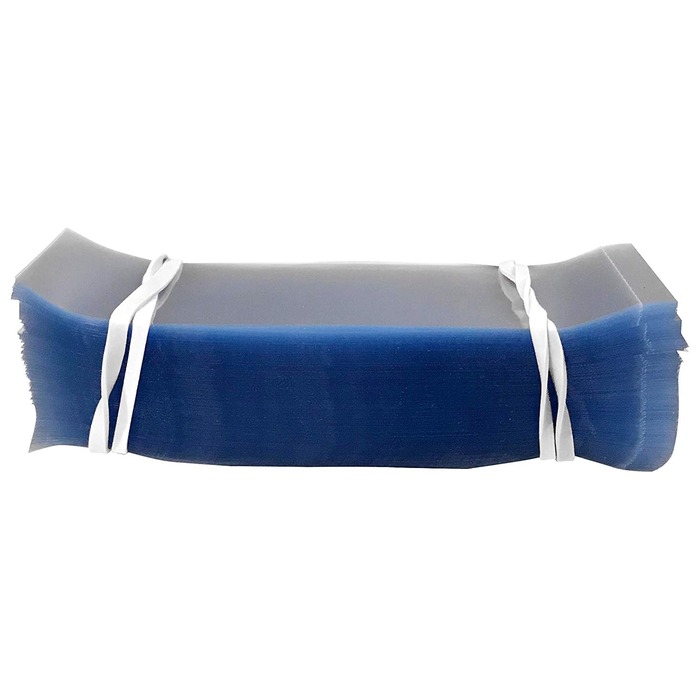
105 x 28 mm perforated band for 63 mm lug lids
A 105 mm band, which is the width published for 63 mm lug lids.
- Role: Amazon consumer option
- 105 x 28 mm
- Perforated
- For 63 mm lug lids
- MOQ: Check current listing
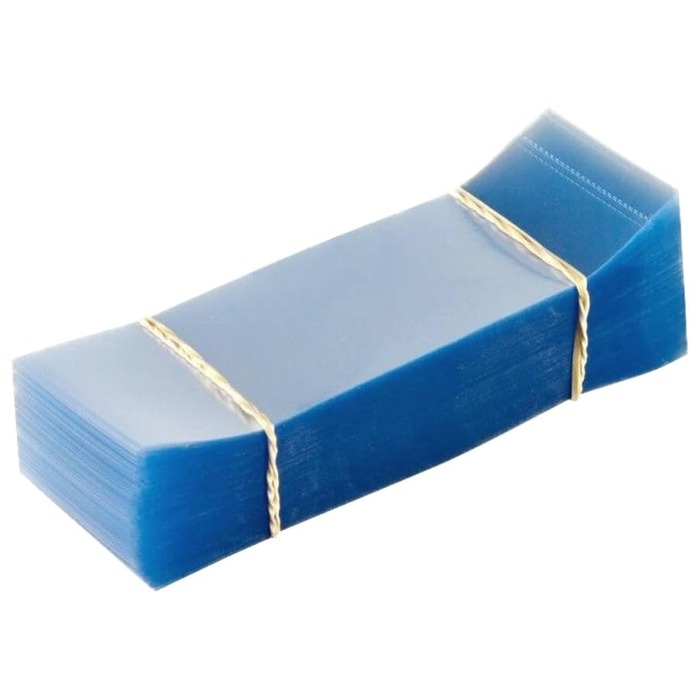
120 x 50 mm perforated band for 70 mm lids
A 120 mm band rated for caps around 70 mm, the middle lug size in this range.
- Role: Amazon consumer option
- 120 x 50 mm
- Perforated
- Fits 70 mm caps
- MOQ: Check current listing
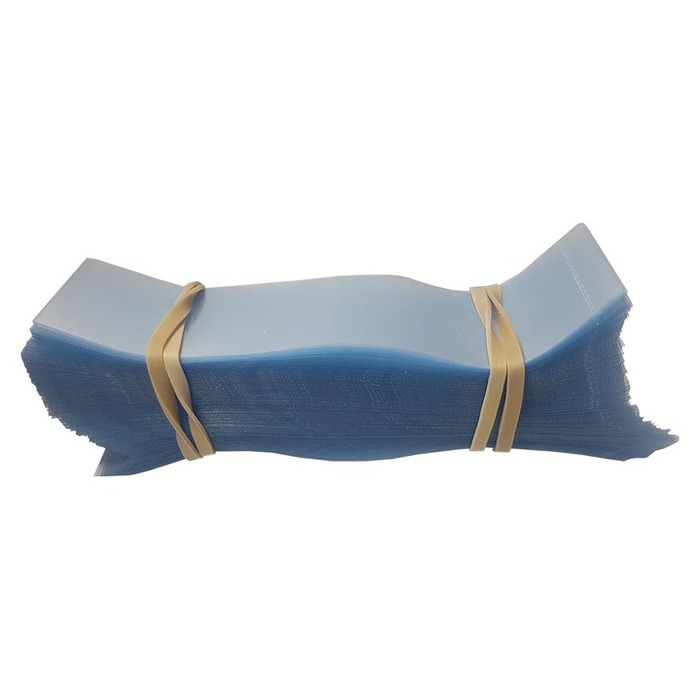
135 x 28 mm perforated band for wide jar lids
The wide end, for 82 mm lug lids and wide-mouth jars.
- Role: Amazon consumer option
- 135 x 28 mm
- Perforated
- For wide lids
- MOQ: Check current listing
FAQ
Do jam jars with a safety button need a shrink band? Not necessarily. The button signals a broken seal. A band adds a visible signal that a lid has been turned, and it is the option for lids without a button.
What size band fits a 63 mm lug lid? Sellers publish about 105 to 115 mm lay-flat width. Measure your lid and check the stated range.
Can I put a band on before water-bath processing? Not recommended. One seller says button lug caps are not intended for water bath use, and a band applied before processing can shrink unevenly and hide a failed seal. Apply it after cooling.
Will a hair dryer shrink the band? It depends on the film. Some sellers say yes, and a PETG listing says it barely works. Test your film.
Does my state require a band? No such rule was found, but not every state was checked. Ask your state’s agriculture or health department.
References
Continue reading
Shrink Bands for Handmade Soap and Bath Bombs: How to Size the Wrap
A soap band is an open-ended sleeve, so the sizing starts from the bar’s perimeter rather than from a cap diameter. Here is the halving rule, why cured bars measure differently from fresh ones, and how loose the published soap band sizes really are.
Shrink Bands for Candle Tins: Sizes for 8 oz and 16 oz Slip-Lid Tins
On a slip-lid tin the band bridges the lid and the body, so the maths starts from the tin’s diameter rather than a bottle cap. Here are the bands two suppliers pair with their own tins, the two-line check you can do yourself, and why their suggested bands are taller than the tin.
Shrink Band Problems and Fixes: Wrinkles, Holes, Loose Bands and Crooked Tears
A symptom-by-symptom guide for people shrinking bands by hand: what each fault looks like, which cause the supplier instructions actually name, and which fixes are reasoning rather than a sourced rule.