Shrink Bands for Maple Syrup Bottles: Which Closures Need One
Syrup bottles are sold with four different closures, and only some of them need a band at all. Start with the cap, then size: a 28/400 cap pairs with a 52 x 27 mm band, and a drop-lock cap already carries its own ring.
 Lena Schmidt
In this guide
- Start with the closure, not the band
- The common pairing: a 52 x 27 mm band on a 28/400 cap
- Height: a seam band, or one that reaches the shoulder
- Does the neck have something for the band to grip?
- Hot filling and the order of steps
- What a band costs against the bottle
- Plastic jugs and the other options
- Mistakes that waste a batch
- A twelve-bottle trial
- Where to source these bands
- FAQ
- References
Quick answer. A plain 28/400 screw cap on an 8 oz or 12 oz glass syrup bottle needs a tamper band, and Specialty Bottle pairs its syrup bottles with a 52 x 27 mm band. Using TricorBraun’s rule of thumb, which is cap circumference divided by two plus 2 mm, that band suits a cap up to about 32 mm wide, so measure your own. If your bottle has a 28 mm tamper-evident finish with a drop-lock style cap, the cap already carries a breakaway ring, and one supplier says that eliminates the need for a band. Hot-filled syrup comes off the line at 180 to 190 °F in the sources reviewed, so seal and cool the bottle before banding, and test the order on a few bottles first.
Start with the closure, not the band
Maple syrup is sold in more closure styles than most small-batch products, and the closure decides whether you need a band at all. The supplier listings reviewed here show four common arrangements.
The first is a plain screw cap. Specialty Bottle sells its 8 oz and 12 oz glass syrup bottles with a 28/400 black plastic cap or, for the 8 oz, a silver aluminium cap, and lists the same matching shrink band for all of them. These caps have no breakaway ring, so a band is the usual way to show the bottle has been opened.
The second is a tamper-evident finish. Premium Vials sells a clear glass syrup bottle with a 28 mm tamper-evident finish and the classic finger-hook handle. A cap made for that finish has a ring that breaks when the cap is first turned.
The third is a ready-made tamper-evident cap on a different bottle. Smoky Lake Maple sells an 8 oz handled bottle with a Loc Cap, white with a tamper-resistant band, and states that the Loc Cap eliminates the need for a shrink wrap band around the cap. A plastic 16 oz maple jug sold under the Tap My Trees brand includes a tamper-evident cap as well.
The fourth is a flip-top. Berlin Packaging sells a 12 oz PET syrup bottle with a red polypropylene flip-top cap. A flip-top is a different shape from a screw cap, and no source was found on bands for it, so treat it as untested.
The point is simple. Before you buy a single band, check which of these four you have. If you already have a breakaway ring on the cap, a band is optional and mainly a branding or dust-cover choice. If you have a plain screw cap, a band is the cheapest tamper-evident option.
The common pairing: a 52 x 27 mm band on a 28/400 cap
Specialty Bottle lists the same matching band, SB52X27, for its 8 oz syrup bottle in black, white and silver cap versions and for its 12 oz bottle. The code reads as 52 x 27 mm, like its other part numbers, and the 250-pack is listed at $6.70. The bottles are described as 3.5 inches wide and 6.7 inches tall for the 8 oz, and 4 inches wide and 7.25 inches tall for the 12 oz.
What cap width does a 52 mm band suit? TricorBraun’s sizing guide gives a rule for caps that are not on its chart: measure the circumference of the neck finish in millimetres, divide by two, and add 2 mm to get the lay-flat width. Working that backwards, 52 mm less 2 mm is 50 mm, doubled is 100 mm of circumference, which is a diameter of about 31.8 mm. So the pairing implies a cap up to about 32 mm wide.
The arithmetic below, from the lay-flat method used in the other sizing guides, gives a similar answer. A 52 mm band opens to about 33.1 mm. For a 32 mm cap the minimum width is about 50.3 mm, leaving roughly 3 percent spare. For a 31 mm cap it is about 48.7 mm and 7 percent spare. The supplier does not publish the cap width, and no source was found that does, so measure.
| Cap diameter (measured) | Minimum width (πD/2) | TricorBraun rule (πD/2 + 2) | 52 mm band spare vs minimum |
|---|---|---|---|
| 30 mm | 47.1 mm | 49.1 mm | about 10% |
| 31 mm | 48.7 mm | 50.7 mm | about 7% |
| 32 mm | 50.3 mm | 52.3 mm | about 3% |
| 33 mm | 51.8 mm | 53.8 mm | under 1% |
Calculated from the lay-flat figures. The TricorBraun rule is from its published sizing guide; the cap diameters in the first column are examples to show the pattern, not measurements of any listed cap.
Read the table as a caution. The TricorBraun rule asks for 2 mm more than the bare minimum, and at 32 mm the 52 mm band is right at that limit. A cap that measures 33 mm would need a wider band. Cap makers differ by a millimetre or more, so a bottle bought from one supplier and a cap from another may not match the pairing that supplier published.
Height: a seam band, or one that reaches the shoulder
The 27 mm height of the matching band is about an inch. It covers the cap skirt and a short strip of the neck, which is what a tamper band needs to do. A taller band would reach the shoulder, but on a syrup bottle with a pinched neck and a handle, that adds film without adding evidence. TricorBraun’s listing for an 8 oz clear glass oval syrup bottle with a 28-400 finish describes a pinch at the base of the neck and a one-finger handle, which gives the bottle its distinctive shape and its grip points.
If you use a taller band, check that it does not collide with the handle loop and that it does not catch the label edge when the customer tears the perforation. Premium Vials describes the oval body as wide, with plenty of space for a large label, so most of the branding sits well below the neck anyway.
Does the neck have something for the band to grip?
A band stays on because it shrinks under a bead or lip on the neck. TricorBraun’s page for a perforated cap band says the bottle must have a neck bead to hold the band in place. Syrup bottles are moulded in many shapes, and a pinched neck, a tamper-evident finish and a plain 28/400 finish each have different geometry under the cap. No source was found that states the bead dimensions for a specific syrup bottle, so feel the neck under the cap of the bottle you actually buy.
The practical check takes a minute. Apply a band to one bottle, let it cool, then try to slide it off upward without tearing it. If it slips off, the neck is too smooth or the band is too wide. If it holds, then try to unscrew the cap with the band still on. A band that lets the cap turn freely is only decoration.
Hot filling and the order of steps
Many producers bottle syrup hot. A glass packaging blog says to heat syrup to 180 °F for plastic bottles and 190 °F for glass. One producer’s bottling guide, whose author is not identified, recommends filling at a minimum of 94 °C (201 °F) and filling to about half an inch below the top of the neck. Berlin Packaging lists the maximum fill temperature of its 12 oz PET syrup bottle as 140 °F, and TricorBraun’s FAQ notes that HDPE should not be used for products filled over 180 °F. The numbers disagree because they describe different containers, so check the limit for yours.
None of these sources says when to apply a shrink band relative to filling. That is a gap, and this guide will not invent a rule. What can be said from how the parts work is that the band is applied to a sealed, capped bottle, and it needs a dry surface to shrink evenly. Syrup bottles often sweat or carry a sticky film when they are handled hot, so a sensible order is to cap, let the bottle cool and dry, wipe the neck, and then band. Treat that as a starting point to test on a few bottles, not as a standard.
The band itself is not the problem at those temperatures, because it goes on after the syrup has cooled. The risk is applying heat to a bottle that is still hot, which can leave the band overheated and distorted. Use a heat gun at a distance and keep it moving. Dadant, a beekeeping supplier, notes that a hot-air hair dryer works as a heat source for its honey container bands, which suggests a gentler tool can be enough for thin film on a small cap.
What a band costs against the bottle
The band is the cheapest part. Specialty Bottle’s 250-pack at $6.70 works out to about 2.7 cents per band, and its 12 oz glass syrup bottle is listed at $2.37 at single-unit pricing. WebstaurantStore sells perforated bands for 38 mm caps at roughly 3 to 5 cents each in 250-bags. These are the prices those retailers publish, not quotes.
The earlier cost article gives the formula: cost per sealed unit is the band price divided by one minus the scrap rate, plus tool cost over units, plus labour. At 3 cents and a 5 percent scrap rate the band is about 3.2 cents before labour, which is little against a bottle that costs over two dollars. The bigger saving comes from avoiding a failed batch, so spend the money on samples and not on the cheapest bulk pack.
Plastic jugs and the other options
If you sell in plastic, the closure often comes with its own seal. The Tap My Trees 16 oz plastic jug is listed with a tamper-evident cap included.
For a glass bottle, a drop-lock or Loc Cap with a built-in ring is the alternative to a band, and for an unbanded plain cap you may add a band later without changing the bottle. Choose the closure first, then check whether you still want a band for branding or dust protection.
Mistakes that waste a batch
The first is ordering by bottle volume. “8 oz” and “12 oz” describe the bottle, and the pairing in the listings is for a 28/400 cap, so a producer with a different closure on the same bottle gets a different answer. The second is trusting the thread number as a cap width, which the TricorBraun rule and every other supplier guide reviewed here treats as a measurement you take yourself.
The third is buying the band before the cap. Cap makers vary by a millimetre or two, and at 32 mm the 52 mm pairing is already at the limit of the rule. Order the caps you will really use, measure ten of them with a caliper, and order the band after. The fourth is applying heat to a bottle that is still hot or wet. A syrup film under the band causes uneven shrink and leaves a sticky ring that customers notice.
The fifth is forgetting what the customer does next. Syrup is opened, poured and resealed for weeks. A cap with a breakaway ring or a torn band is normal after first use, so the band only needs to be easy to remove and not to survive the whole life of the bottle. A perforation that tears cleanly matters more than a band that clings, and our perforation guide covers the designs.
A twelve-bottle trial
Before your first full run, set aside twelve bottles from the actual lot you will use. Cap them the way you cap on the day, let them cool, wipe the necks, and band six with the standard height and six with a taller one if you are considering it. Shrink each with the method you will use at volume.
Check three things on every bottle: the band sits flat without ripples, it holds when you try to slide it off, and the cap cannot be turned inside it. Then open one the way a customer would, with a thumbnail at the perforation. Record the cap measurement, the band size, the height and the heat method. That record is what lets a reorder go smoothly when the glass or cap supplier changes.
Where to source these bands
A 52 mm band for the plain 28/400 cap is the common size, and the listings below also cover the next width up and a small pack for the first trial.
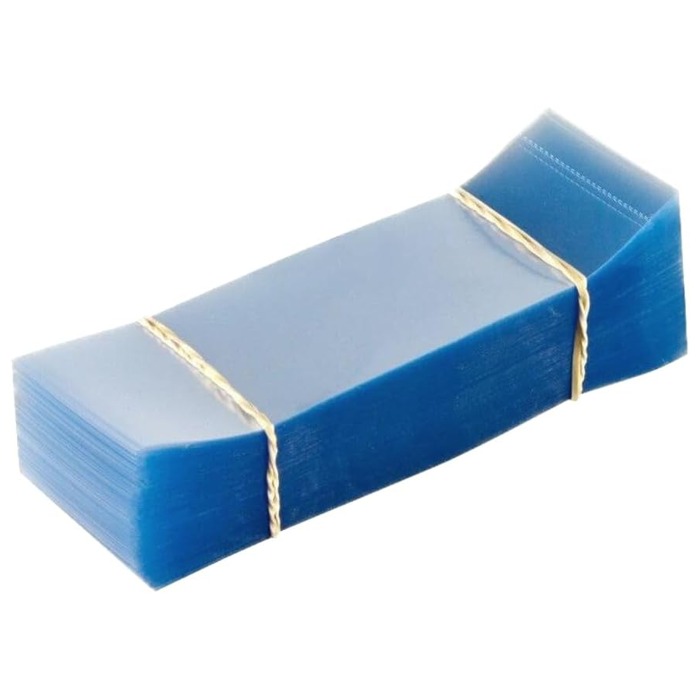
52 x 25 mm flat-cut perforated band for 28 mm caps
A flat-cut band in the 52 mm width that packaging suppliers pair with 28 mm caps, which is the finish on most 8 oz and 12 oz glass syrup bottles.
- Role: Amazon consumer option
- 52 x 25 mm
- Perforated
- For 28 mm caps
- MOQ: Check current listing
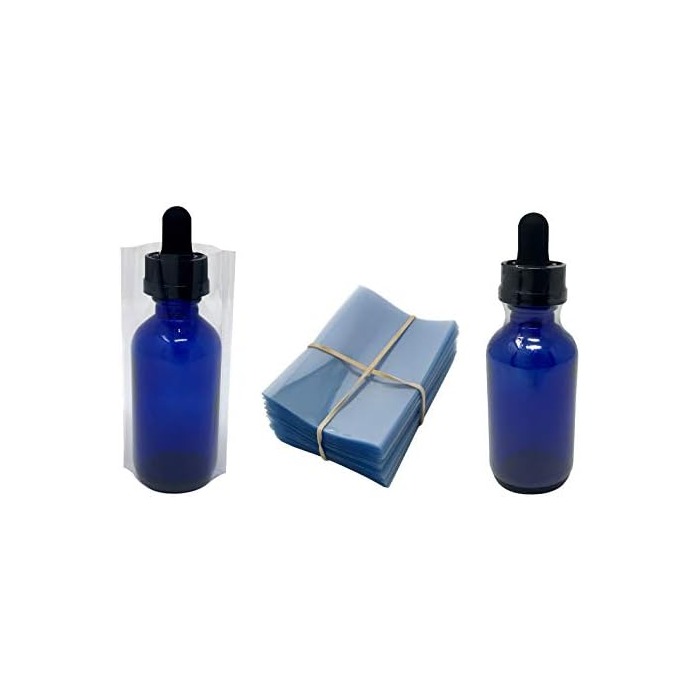
55 x 28 mm clear perforated band for syrup and Boston round bottles
A slightly wider 55 x 28 mm band that suppliers list for large Boston round, dropper and syrup bottles.
- Role: Amazon consumer option
- 55 x 28 mm
- Perforated
- Clear
- MOQ: Check current listing

50-count pack of bands for 28 mm bottle finishes
A 50-count pack rather than a case, which is what the first trial needs: enough bands to run a twelve-bottle check on the actual lot, few enough that…
- Role: Amazon consumer option
- 50-count pack
- For 28 mm finish
- Clear film
- MOQ: Check current listing
FAQ
What size shrink band fits a 28/400 syrup bottle cap? Specialty Bottle pairs a 52 x 27 mm band with its 28/400 syrup bottles. TricorBraun’s rule implies a cap up to about 32 mm, so measure your cap.
Do I need a band if the cap has a tamper ring? Not necessarily. One supplier says its tamper-evident Loc Cap eliminates the need for a band, so a band becomes optional.
Should I apply the band before or after the syrup cools? No source was found. Apply it to a capped, cooled and dry bottle, and test on a few first.
Will a band fit a flip-top cap? No source was found. Ask the supplier for a cap-width range and test.
Does the band affect shelf life? no source was found linking a band to shelf life. Syrup keeping qualities come from filling temperature and the seal under the cap.
References
Continue reading
Shrink Bands for Handmade Soap and Bath Bombs: How to Size the Wrap
A soap band is an open-ended sleeve, so the sizing starts from the bar’s perimeter rather than from a cap diameter. Here is the halving rule, why cured bars measure differently from fresh ones, and how loose the published soap band sizes really are.
Shrink Bands for Candle Tins: Sizes for 8 oz and 16 oz Slip-Lid Tins
On a slip-lid tin the band bridges the lid and the body, so the maths starts from the tin’s diameter rather than a bottle cap. Here are the bands two suppliers pair with their own tins, the two-line check you can do yourself, and why their suggested bands are taller than the tin.
Shrink Band Problems and Fixes: Wrinkles, Holes, Loose Bands and Crooked Tears
A symptom-by-symptom guide for people shrinking bands by hand: what each fault looks like, which cause the supplier instructions actually name, and which fixes are reasoning rather than a sourced rule.