Shrink Bands for Mason Jars: Size, Fit & Tamper-Evident Setup
How to size a band for regular-mouth and wide-mouth Mason jars, decide whether it goes over the screw band, and test the setup before you buy in volume.
 Lena Schmidt
Disclosure: We may earn a commission if you purchase through links on this page, at no additional cost to you.
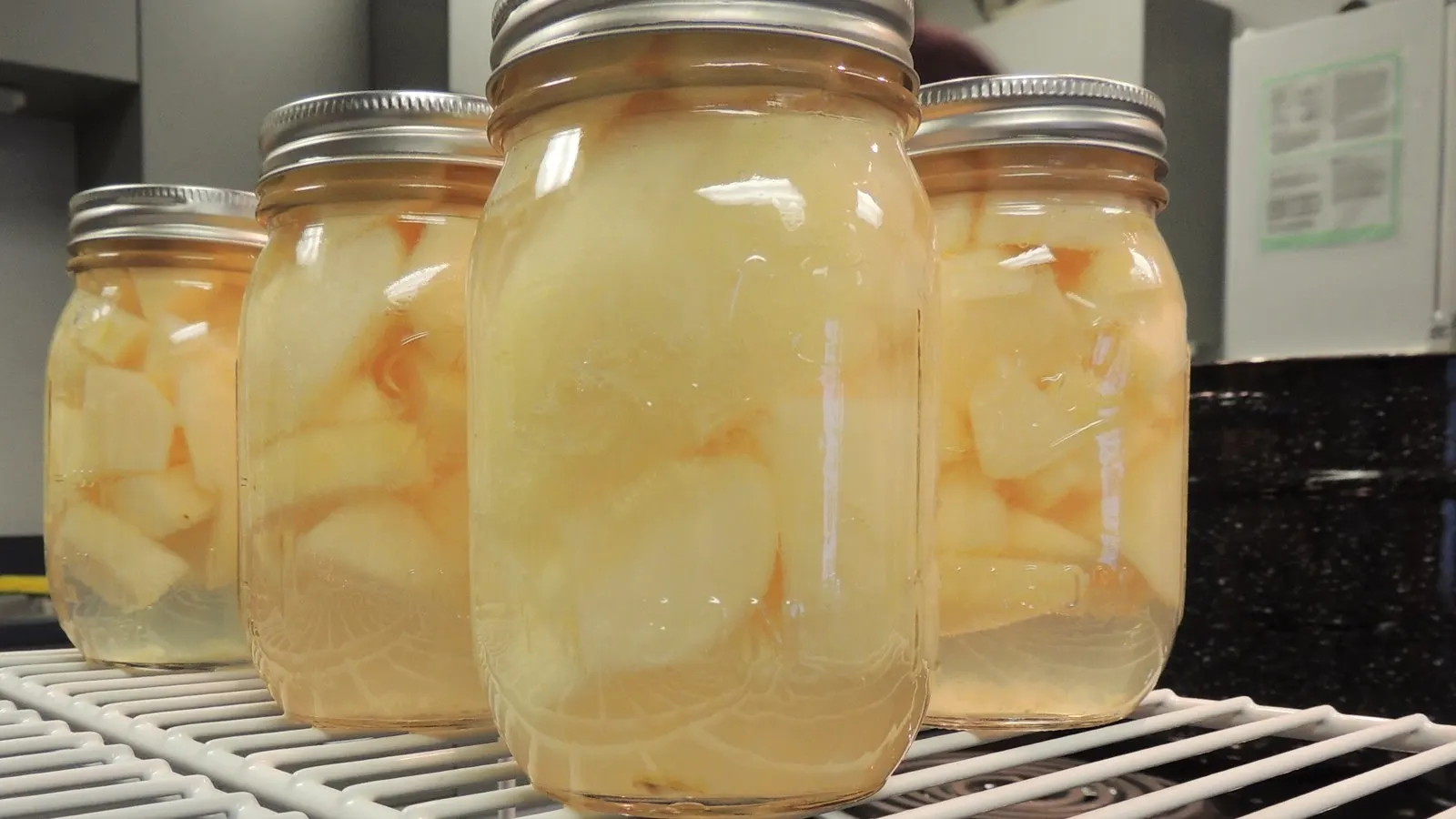
Quick answer. Size the band from the assembled closure, not from the jar’s label. “70 mm” and “86 mm” name the glass thread finish; the band has to clear the widest point of the lid or ring you actually fit. Measure that point with calipers, compare it with the supplier’s stated fit range, and confirm on five filled, sealed jars before buying a production pack. Height matters as much as width, because the band must cover the lid edge and reach down onto the neck. One decision comes before any sizing: for home-canned jars, extension guidance says to remove the screw band for storage, so a band over the ring works against it. Jars with one-piece lids, such as honey or dry goods, don’t carry that conflict.
Why 70 mm and 86 mm are not band sizes
They are thread-finish labels, and the band has to fit something else. Mason jar listings use “70” and “86” to say which closure threads on. One US jar distributor sells regular-mouth jars as 70-450 and wide-mouth as 86-450: the first number is the outside diameter of the glass threads in millimeters, and the second describes thread style and height. That settles which lid fits the glass. It says nothing about how wide the closure is once it is on, and a shrink band passes over that outer edge, not over the thread.
The published numbers don’t line up at the second decimal. One national-brand regular-mouth pack lists its lid and band as 2.75 in and 2.7 in wide; another retailer gives the same size of lid as 2⅝ in across; generic rings sold as “70 mm” appear at 2.67 in with one seller and 2.76 in with another. A one-piece 70 mm metal lid shows up on marketplace listings with both a -400 and a -450 suffix. A few hundredths of an inch mean nothing to a lid. They matter to a band with only a few percent of slack.
Treat 70 and 86 as the category and nothing more. Two closures that thread onto the same neck can have different outside diameters, depending on whether they are a one-piece lug lid, a flat lid inside a ring, or a decorative cap. Size to the closure you will actually ship. The general measuring method is a separate decision; this page covers what is specific to Mason-style jars.
What the band grips on a Mason-style jar
A shrink band works only when it bridges two things: the removable closure and a fixed part of the jar. That is what makes the first opening visible, because the film has to tear before the lid can turn. Packaging suppliers state the same requirement plainly: cover both the cap and the neck, or the band proves nothing. Check three points before choosing a size.
Closure type. A one-piece lid has a single outer edge. A two-piece closure has a flat lid inside a screw band, and the widest point can be either part. Measure both and use the larger reading.
Neck geometry. The film needs something to settle against. One container supplier notes that a band can slip off when neither the container nor the lid has a lip. Look at the glass just below the threads: a bead or shoulder gives the shrunk film a place to land, while a smooth, tapered neck gives it very little.
Band height. Heights quoted for 70 mm jars run from 28 mm to 70 mm. The shortest bands mostly wrap the closure edge; the tallest continue down the neck. Which one is right depends on how far your neck sits below the lid, and a sample jar shows it faster than a spec sheet.
What suppliers quote for 70 mm and 86 mm jars
There is no standard band size for a 70 mm jar. Listings aimed at the same category use three lay-flat widths and three heights:
| Listing | Lay-flat × height (mm) | Stated fit | Unshrunk diameter equivalent* |
|---|---|---|---|
| US container distributor | 120 × 40 | Mason jars, 70 mm finish | 76.4 mm |
| US container supplier | 118 × 70 | 70 mm neck finish | 75.1 mm |
| Marketplace seller A | 115 × 28 | Regular-mouth lids, 2½–2¾ in (63–70 mm) | 73.2 mm |
| Marketplace seller B | 118 × 40 | Caps 2.76–2.91 in (70–74 mm) | 75.1 mm |
| Marketplace seller A, wide-mouth line | 153 × 28 | Wide-mouth Mason, caps 3½–3¾ in (89–95 mm) | 97.4 mm |
*Arithmetic only: 2 × lay-flat width ÷ π. It is the diameter of the circle the unshrunk tube would make, not a supplier specification. Marketplace data changes.
Lay-flat width is the tube pressed flat, so the circumference is roughly twice that figure. A 70 mm circle needs about 110 mm of lay-flat width (π × D ÷ 2), and the 115 to 120 mm bands above leave 5 to 10 mm ahead of shrinking, roughly 5 to 9 percent. Treat that as a first check. The supplier’s fit range and a physical sample make the final call.
Wide mouth shifts the arithmetic. An 86 mm circle already needs about 135 mm flat, so a 135 mm band quoted for 3¼ in caps is too narrow for an 86 mm closure. The 153 mm line above is the more plausible neighbor, though its range starts only 3 mm above the nominal 86 mm, so measure first. Category labels deserve the same caution: a 120 × 40 mm band appears under “70 mm finish” at one distributor and under “wide mouth candle and food storage jars” at another. Same film size, two guesses about the customer’s jar.
Should the band go over the screw band?
For home-canned, shelf-stable jars, generally no, and that changes what you should buy. The National Center for Home Food Preservation and the USDA guidance it hosts say screw bands are not needed on stored jars and should come off once the jars have cooled and sealed. Two reasons are given: bands left on tend to rust and stick, and spoilage or a failed vacuum seal is easier to spot on a jar stored without one. The routine is to cool for 12 to 24 hours, test the seal, remove the ring, wash, rinse and dry the jar. A shrink band that locks the ring in place works against that guidance.
What you do instead depends on what is in the jar.
One-piece lid, no canning claim. Honey, salts, spice blends, dry mixes and bath products have no vacuum dome to monitor and no ring to remove. Band the lid and neck. This is the plainest case for a shrink band, and the sizing sections above apply directly.
Two-piece closure on home-canned food. The guidance points to storing and selling jars without rings. Whether a band over the bare flat lid is acceptable is a separate question. No extension or standards source reviewed for this page treats it as standard practice, so run it as an experiment on sample jars and clear it with your local food-safety regulator or extension office. If you test it, confirm the band leaves the lid’s center visible and that you can still see whether the lid is drawn down.
Refrigerated, frozen or fermented products. The canning guidance doesn’t apply in the same way, but a cold, wet jar is a poor surface for heat-shrink film. Let the glass reach room temperature and dry before banding.
Rules for selling jarred food differ by state and country, and a band satisfies none of them on its own. Check what your jurisdiction requires before treating the band as part of compliance.
How to measure and test before you order
Measure the finished closure at three points, shortlist two sizes, and test both on filled, sealed jars. In order:
- Close and measure. Fit the actual lid, and ring if you use one, on a filled jar. Take the widest outside diameter with calipers at three positions, turning the closure between readings. Stamped lids are rarely perfectly round.
- Measure height. From the top of the lid down to the point on the neck where you want the band to end.
- Run the first check. Multiply the largest diameter by π and divide by 2. A 72 mm closure gives about 113 mm. The supplier’s lay-flat width should sit above that figure and the stated fit range should include your diameter.
- Order samples in two adjacent sizes or heights. A sample pack, not a case, so a wrong size costs a few dollars instead of a pallet.
- Test on production-like jars. Filled, sealed, cooled and dry, with lids from the batch you will use.
- Judge the result. The band should seat fully on the neck without sliding, show no wrinkles or gaps at the lid edge, stay intact during heating, tear along the perforation by hand without damaging lid or label, and be impossible to put back as if untouched.
Test with bands from the lot you intend to buy. Heat-shrink PVC owes its behavior to molecular orientation locked in during manufacture, and research on oriented PVC shows that stored shrinkage and dimensional stability depend on how the film was processed and annealed, with some flexible grades recovering partly at room temperature (Hitt & Gilbert, 2000). That is a reason to test a sample from the batch you’ll actually use and to store spare bands cool and sealed.
Applying heat to filled glass jars
Use the heat source your supplier says the film is compatible with, keep it moving, and start with a dry jar at room temperature. Applying the film and choosing between a heat gun, a hair dryer and a tunnel are separate decisions, so only the points specific to jars sit here.
Dry glass. Canning guidance has you rinse and dry jars after the ring comes off. Apply the same discipline before banding, since water trapped between film and glass will stay visible under the film.
Room-temperature contents. A jar still warm from filling or processing adds its own heat to the film and makes your heat harder to control. Let it cool first.
Product-specific heat instructions. One supplier states that a heat gun or a conventional hair dryer reaching 200 to 250°F will shrink its bands; another describes a heat gun only. Both are statements about particular films. Don’t carry a temperature or distance from one supplier’s film to another’s.
Even coverage. Rotate the jar so the film shrinks evenly all the way round. Holding heat in one spot is a common cause of the thin, distorted patches that come from uneven heat.
What a band does, and doesn’t do, for a jar
A shrink band shows that the closure was disturbed after packing. That is the whole job, and anything else people ask of it is a separate design question. It is not the primary seal: the vacuum, liner or gasket under the lid holds the product, and film around the outside does not. It is also not a compliance document. Tamper-evidence requirements, where they exist, come from local rules and sales-platform policies, and they may ask for more than a film band.
How buyers read the seal is less settled than sellers tend to assume. A 2022 experiment on third-party food delivery found that tamper-evident seals lowered willingness to pay through lower food-quality evaluations, suggesting the seal sent a contamination signal rather than a safety signal (Orlowski et al., 2022). A conjoint study of packaged foods and drinks found tamper-evident features rated very important for bottled water, with consumers accepting a modest price increase for them (Jinkarn & Suwannaporn, 2015). Neither tested a banded Mason jar, and neither setting resembles a market stall. The reasonable reading is that a band is a signal, and that a wrinkled or torn one sends the wrong signal.
Which sourcing route fits your stage
Buy for the question you still have, and buy volume only after a sample passes. Three roles cover most small producers.
Fit trial. A small pack of one or two standard sizes, enough to test on your actual jars. At this stage, minimum order and sample availability matter more than unit price.
Standard production band. A clear, perforated band in the size the trial confirmed. This is the repeat purchase, so record the dimensions and your pass criteria with the order and reorder the same specification each time.
Custom path. A printed band or a non-standard height, once fit and branding are settled. Custom minimums and lead times are higher, and artwork needs the confirmed dimensions.
The listings below come after these steps on purpose. A listing can only be judged once you know your own numbers.
Current Alibaba sourcing options
The two listings below match the first and the last of the three stages above: a clear perforated band you can test on your own jars, and a printed band for a size and artwork you have already settled. The repeat-order stage sits between them and is a specification rather than a link — the same lay-flat width, the same height, the same perforation, from a supplier that states its unit basis and quantity tiers. Record the dimensions and your pass criteria with the order so the next batch can be checked against them.
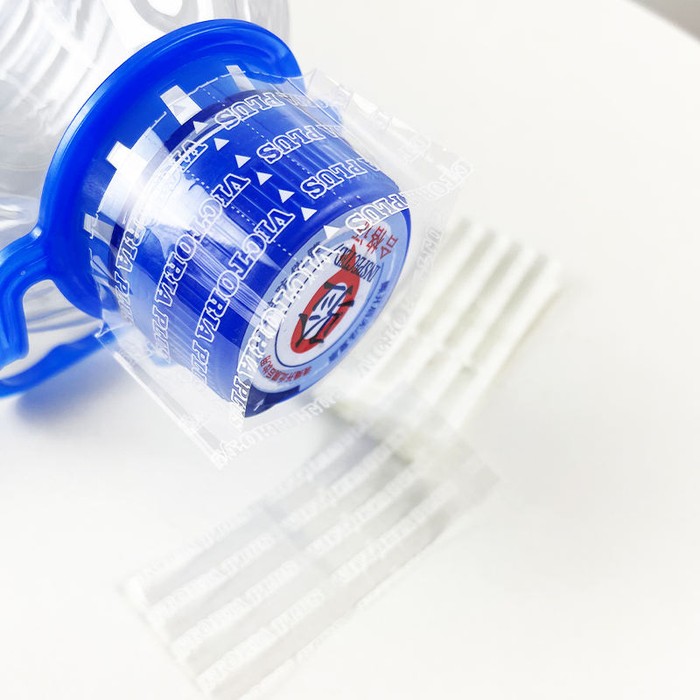
Clear perforated PVC shrink bands, custom width and height
Clear perforated band stock sold to a stated lay-flat width and height, so you order the size your closure measures rather than a nominal jar size. The listing shows the band applied to a capped container and states its own minimum order.
- Role: Fit trial
- Perforated tear line
- PVC
- Custom width and height
- MOQ: Check current listing
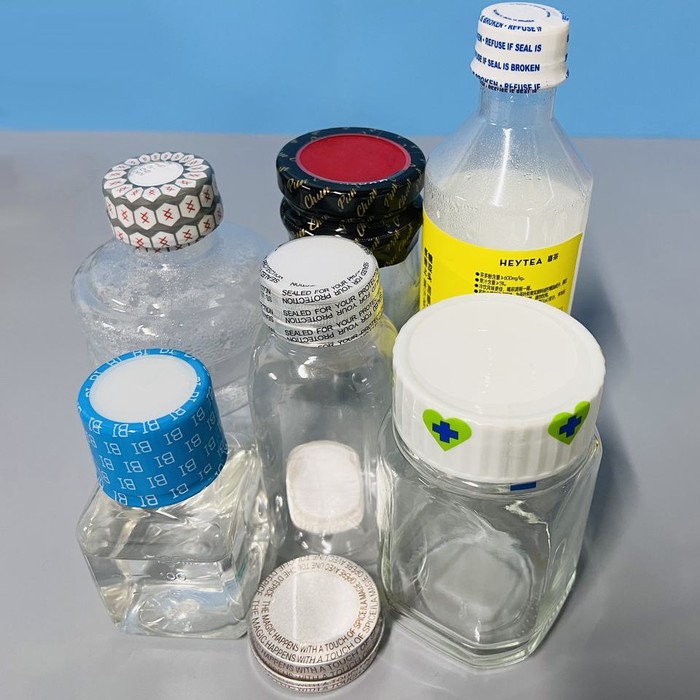
Custom PVC perforated shrink bands, printed
A custom-printed perforated band line for a size and artwork you have already settled, with printing and packaging customisation listed separately from the plain band price.
- Role: Custom path
- Printed option
- Perforated tear line
- PVC
- MOQ: Check current listing
Both listings are priced by quantity tier rather than as sample packs, so request a sample and confirm the current minimum order before committing to a production run. A sample jar sealed with the band from the lot you intend to buy is the only check that answers the fit question on this page.
FAQ
Can I band jars before they go into the canner?
No. Shrink bands are made to react to heat, and processing comes before the jar has cooled, sealed and been tested. Band only jars that are sealed, cooled and dry, and ask your supplier at what temperature the film starts to shrink.
Does one band size fit both regular and wide mouth?
No. The finishes differ by 16 mm in diameter, which is about 25 mm of lay-flat width (π × 16 ÷ 2).
Will a hair dryer work?
Compatibility is product-specific. One supplier says its bands shrink with a conventional hair dryer that reaches 200 to 250°F; test your own film on a sample.
References
-
Hitt, D., & Gilbert, M. (2000). Biaxial orientation of poly(vinyl chloride) compounds. Part 2: Structure–property relationships and their time dependency. Plastics, Rubber and Composites. Repository record Source
-
Jinkarn, T., & Suwannaporn, P. (2015). Trade-off analysis of packaging attributes for foods and drinks. British Food Journal, 117(1), 139–156. Source
-
Orlowski, M., Lefebvre, S., & Boman, L. (2022). The unintended effects of tamper-evident food closures. International Journal of Hospitality Management, 107, 103315. Source
Hook this up to your favourite commenting platform — Giscus, Disqus, or your own.
Continue reading

Custom Printed Shrink Bands: Artwork, Minimums & Proofing for Small Brands
Printing on the band buys a message, not tamper evidence. Decide whether you need it, then walk the approval chain from unprinted fit test to a shrunk sample on your own container.

How to Choose a Handheld Induction Sealer for Small Batch Bottles
Match the cap, liner, output and process before you buy

Do You Need a Cap Liner Insertion Machine?
A small-batch guide to manual, pre-cut and automatic cap lining