Why Chair Felt Pads Keep Falling Off and What to Use Instead
A pad that lets go is telling you which part failed. Read the residue, prepare the foot properly, and decide when a fitted sleeve or a mechanical glide is the better answer.
 Lena Schmidt
Disclosure: We may earn a commission if you purchase through links on this page, at no additional cost to you.
The next time a chair pad comes loose, pause before peeling a replacement from the sheet. The old pad can tell you what failed. Look at the two sides: did the adhesive stay on the felt, or remain on the chair foot? That small detail separates a pad that has worn out from a surface the glue never held. A curled edge is a different clue again. It often means the rim has been caught or twisted during movement, so another sticker may repeat the same failure.
Turn the chair over and check the other feet while you are there. A dining set can look uniform from above, yet one leg may have a different angle or finish. If the pads on every chair are lifting, think about what they have in common: the same cleaner, coating, or application method. If one pad keeps letting go, inspect that foot and the patch of floor it travels across. Self-adhesive felt suits a flat, clean contact area better than a foot that rocks or moves with a lot of sideways force.
Read the failure before replacing the pad
Start with the residue. A bare chair foot and a film of glue on the felt suggest that the bond let go at the furniture surface. Dust, polish, oil, and moisture can all get between a pad and that surface. When the glue stays on the chair but the felt separates, the pad itself has come apart. A gray, compressed face points to wear rather than a fresh installation problem. These clues are easy to miss if you simply throw the old piece away.
An edge that lifts only after the chair has been moved deserves a look at the floor and the pad’s outline. A seam, grout line, or floor transition can catch a lip that projects beyond the foot. On an angled or rounded foot, a flat sticker may touch the floor along only a narrow strip. Sliding the chair then pulls against that edge, rather than loading the felt evenly. More glue does little for a pad that is being peeled mechanically.
A useful comparison is one bad leg against the rest of the set. If the same corner loses pads repeatedly, inspect that foot for a curve, damaged cap, residue, or rocking. When every chair loses pads, the common application or surface condition is a better place to look. A rocking chair can shift weight unevenly across its feet, which may wear one pad faster. The pattern does not prove the cause, but it helps narrow down what to inspect next.
A Reddit thread about rounded chair feet describes the same nuisance: replacing pads that will not stay put. It is one owner’s experience, not a test of competing products. Still, it illustrates why a flat adhesive dot can be a frustrating match for a curved foot that is dragged sideways several times a day.
Prepare a chair foot before trying another adhesive pad
Before buying another pack, look closely at the chair foot. Is it bare wood, painted metal, or a plastic cap? That matters because a cleaner that is harmless on one finish may mark another. The old pad can leave a gummy ring, while the rest of the foot has a coat of polish or ordinary kitchen dust. Follow the chair maker’s care advice if you have it. If you do not, try a mild cleaner in a hidden spot. I would not scrape blindly with a knife: a scratched leg is an annoying price to pay for a ten-cent pad.
Give the cleaned foot time to dry all the way. Around a metal rim, a bead of water can hide after the flat part looks dry. Polish can be harder to spot; the surface may simply feel slick. Check the pad package for its own fitting directions, including any wait before the chair goes back into use. There is no universal adhesive cure time. If the instructions say to leave it overnight, do that; a different brand may say something else.
Now hold a fresh piece against the foot before taking off its backing. Does it cover the contact area, or hang over the edge? That extra lip can catch on grout, a doorway strip, or a floorboard joint. A circle is a poor fit for some feet, even when it looks close from above. If the bottom is rounded or sharply sloped, the pad may touch along a narrow band and peel as soon as the chair moves. A bigger sticker cannot make that surface flat.
Try the replacement on a single chair first. Press it on as directed, put the chair down, and leave it alone for the time the label specifies. Then pull it along the route it normally takes. Dining chairs often cross the same few feet of floor dozens of times; a side chair in the spare room may barely move. If a corner rolls back during that ordinary pull, you have learned something useful before fitting the rest of the set. Stop there and change the style.
One shortcut deserves a mention because it looks so convenient: sticking a new pad over the old one. The layers can slide against each other, and the extra height may leave one chair foot sitting proud. Pull away the loose felt, remove residue gently, and set the chair on a flat floor to check for wobble. A damaged cap or uneven leg needs attention on its own. Felt can soften contact with the floor; it cannot level a chair.
Choose a different attachment when chairs move every day
A stick-on pad is not a bad product by default. It is a poor match for a chair that gets pulled out several times a day. A side table that barely moves asks little of its adhesive; a dining chair repeatedly tugs at the pad’s edge. If you have replaced the same one twice, I would stop trying to win with a stronger glue. Look at a cap that wraps around the foot, or a glide designed for that leg. Check the floor type too, since the wrong bottom can scratch or drag.
A slip-on sleeve grips the outside of the foot rather than relying on a sticker underneath. On some designs, the felt is built into the cap, so there is no little adhesive circle exposed at the edge to start peeling. Fit is the trade-off. A loose one may twist or creep down; an undersized one may sit crooked or refuse to go fully on. After fitting, lift the chair by the seat. The cap should come with it. If it stays on the floor, try another size or shape.
A screw-in or nail-on glide is another route for a solid wood leg, where the chair design permits it. Lowe’s installation guide walks through marking the center, making a pilot hole, and keeping the glide straight. That is useful for the right kind of leg. It is not a reason to drill into an unknown one. Thin metal tubing, a hollow leg, engineered wood, or an existing threaded insert calls for a different fixing. If the construction is unclear, check with the chair maker or a repairer before making a hole. [3]
Whatever you choose, the felt still needs looking after. The National Wood Flooring Association recommends fabric-faced glides and periodic checks for soil embedded in them. Tiny grit caught in the nap is easy to miss; under a chair, it can travel over the same patch of floor again and again. Brush it out or replace the worn piece when needed. A sleeve can keep a protector attached, but it cannot make dirty felt safe for a finish. [2]
Think about the floor before choosing a bottom. Felt lets a chair move on wood, laminate, or tile; on carpet it may bunch or drag. For carpet, start with a glide made for the pile and the chair. Tile brings a different nuisance: a narrow felt edge can catch at a grout line. Smart Surface says its own adhesive pads may struggle on sanded grout and angled legs. That warning belongs to its product, but the fit questions apply more broadly: is the floor rough, and does the chair foot meet it flat? [4]
Check the leg before buying a slip-on cap
Measure the part of the leg the sleeve will grip, not the widest point you can see from across the room. For a round foot, take its diameter. For a square or rectangular one, measure both sides. If the leg tapers, check the width where the cap is meant to sit. Then compare that number with the maker’s size chart. “Medium” is a label, not a measurement, and a sleeve that has only been pushed halfway on is not fitted.
Put the chair back upright and look at the back legs. They are often set at an angle. A cap can match the diameter on paper and still meet the floor crooked. Test one protector, move the chair the way you normally do, and check two things: did it stay on, and is the chair still level? If felt touches the floor only along one edge, the leg angle or cap shape may be the issue. There is little value in installing four before you know.
If you are unsure how to take the measurement, a short fitting video can show where to put the tape and how a sleeve should sit. Chair Tips Australia has clips for round and rectangular legs and for several protector styles. Pay attention to the sample leg: is it the same shape as yours? A straight, blunt foot in a video tells you little about a tapered back leg that leans out. Use the clip to understand the fitting, then check your own chair dimensions. [5]
For a concrete example, the BUMACO 40-piece listing on Amazon describes its large option for round legs measuring 1 5/16 to 2 inches across. Treat that as the range for that option, not a universal fit guide. Listings can change, and the selected size matters, so confirm the variant and dimensions on the live page. A round measurement also says nothing about a square leg or a sharply splayed foot.
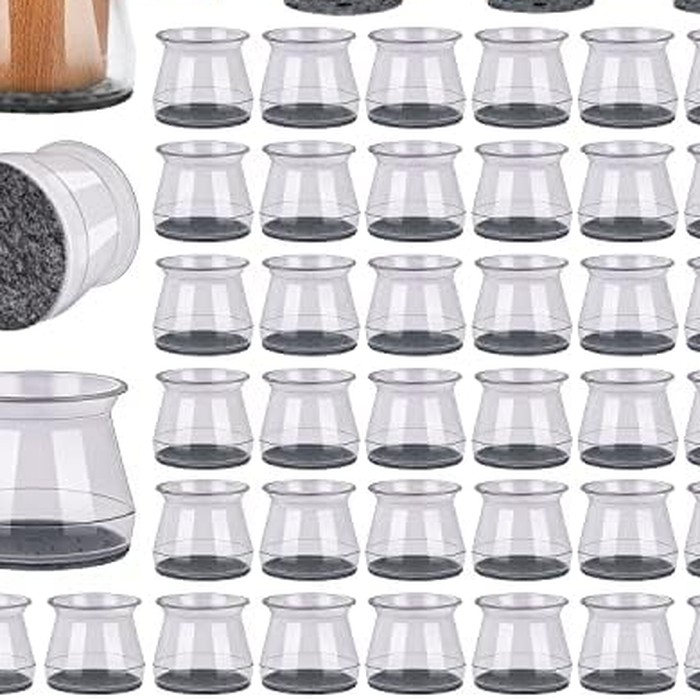
BUMACO 40-piece chair leg floor protectors
Clear sleeves that grip the outside of the leg and carry the felt on the bottom, so there is no adhesive disc at the edge to start peeling. Sold in a set that covers several leg diameters.
- Role: Amazon consumer option
- 40 pieces
- Felt-bottom sleeve
- Round legs 1 5/16 to 2 in
- MOQ: Check current listing
Keep the floor protector working after installation
Take a look beneath the table when you vacuum or hear a new scrape. Is the felt still there? Is it flat, or has it worn through at one edge? The National Wood Flooring Association calls for periodic checks for embedded soil and replacement as needed. That is more useful than promising a fixed replacement interval, since a chair in a busy kitchen will collect more wear than one used occasionally. [2]
Grit is easy to overlook. A small piece caught in felt can scratch the finish while the chair glides, so clear debris around the feet and brush or replace pads that have picked it up. Lift a chair over a rough threshold or when a foot catches in a rug; pulling harder can dislodge a cap as well as a sticker. If you notice a new mark, check the pad and the floor for grit before blaming the material.
When you find a pad loose, make a quick note of which chair it came from and what stayed behind. If it is always the same leg, compare its angle and floor path with the other three. If the whole set fails in the same way, revisit the cleaning and attachment choice. One small observation can save you from replacing pads that are still doing their job.
Questions people ask
Can I put a new felt pad over the old adhesive
Usually, yes. Loose felt and residue can keep a new pad from reaching the chair surface. Remove them carefully if the finish permits, let the foot dry, and follow the replacement’s instructions. If the coating is damaged or the adhesive maker excludes that material, use a compatible sleeve or glide instead.
Will stronger glue stop the pads from falling off
Only when the bond is the problem. More glue will not flatten a rounded foot or stop a floor joint from catching an overhanging edge. It can also make removal harder or harm the finish, so check the furniture and protector instructions first. If the pad keeps peeling during an ordinary chair pull, change the fit or attachment.
Should I use felt pads on carpet
Usually not when the goal is to move a chair across carpet. Felt is intended to slide over hard flooring, while carpet requires a glide designed for that pile and chair. Check the glide maker’s floor guidance. A protector made for hardwood may create drag or pull away when pushed across carpet.
If a clean, correctly fitted adhesive pad still peels during normal chair use, stop rebuying the same sticker. Match the replacement to the chair’s material and shape: a fitted felt-bottom sleeve for a compatible leg, or a mechanically attached glide when the leg is designed to accept one. Then inspect the felt for wear and grit. That sequence addresses the failure rather than repeating the same repair.
References
-
3M, Scotch Self-Stick Felt Pads. Product materials and use on finished surfaces. Source
-
National Wood Flooring Association, Installation Guidelines. Furniture glides, embedded soil checks, and replacement guidance. Source
-
Lowe’s, How to Install Furniture Pads and Glides. Centering and fastening furniture glides. Source
-
Smart Surface Products, FAQ. Manufacturer notes on wear, angled legs, and grout lines for adhesive pads. Source
-
Chair Tips Australia, Installation Tutorials. Measurement and installation videos for different leg shapes and glides. Source
Hook this up to your favourite commenting platform — Giscus, Disqus, or your own.
Continue reading

Do Washing Machine Anti-Vibration Pads Stop Walking?
A pad that has shifted out from under the washer is a symptom, not the diagnosis. Check the machine is stable and the foot fits the cup before buying a grippier set.
When a Silicone Faucet Mat Pools Water, Check the Fit and Drain Path
A mat that holds a puddle is failing at one of three points: the counter does not drain toward the bowl, the mat is set the wrong way, or its outlet is blocked.
How to Keep a Cutting Board From Sliding on a Countertop
Most boards move because of a film of water or oil, a warped corner, or an overhang, not because the board is light. Find the cause, then pick a damp cloth or a grip pad.