Why Your Garbage Disposal Smells and How to Clean It Safely
A sour smell usually means residue on the splash guard or in the grind chamber, not a failed motor. Find the source first, then clean it safely.
 Lena Schmidt
Disclosure: We may earn a commission if you purchase through links on this page, at no additional cost to you.
A sour or rotten smell near the kitchen sink usually comes from food residue left on the disposal’s grind chamber or on the underside of its rubber splash guard. A foaming tablet can help with routine residue inside the unit, but it cannot scrub the guard, remove a lodged object, or clear a clogged drain. For an odor that keeps returning, clean the guard and chamber safely, flush with enough cold water, and check whether the smell is actually coming from the sink drain or dishwasher hose.
That distinction is easy to miss. Short cleaning videos often show ice, citrus, or a burst of brown water coming back up the sink, while product pages promise foam and fresh scent. Those can be satisfying demonstrations, but the useful fix depends on where the residue sits. InSinkErator identifies food buildup and insufficient water flow as common reasons for disposal odor, and Consumer Reports notes that residue on the splash guard is often the source people overlook [1][2].
First identify where the odor is coming from
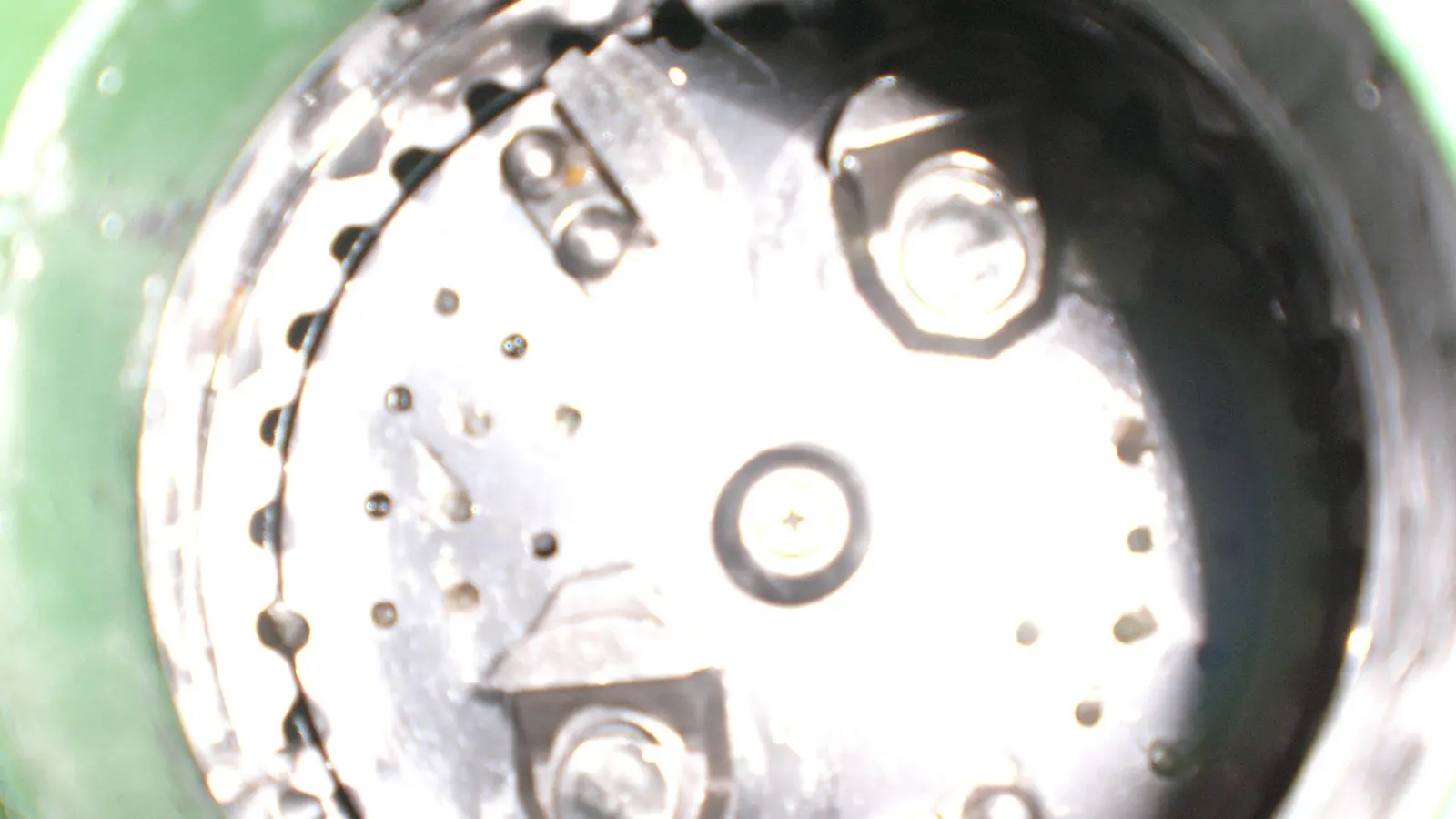
Run cold water briefly without turning on the disposal. If the smell is strongest at the drain opening, inspect the rubber baffle or splash guard first. Food film collects on its underside and around the upper lip of the grinding chamber. A quick wipe of the visible sink surface will not reach that hidden face.
If the odor is strongest when the dishwasher drains, check the dishwasher connection and the sink drain area. A disposal can share a drain path with a dishwasher, and residue or a drainage issue in that route may smell as if it is coming from the grinding chamber. If the sink drains slowly, water backs up, or the odor resembles sewer gas, stop treating it as a simple deodorizing job. A persistent drain problem may need a plumber or appliance technician.
Look for other clues before cleaning. A humming motor, repeated jams, leaks, or a disposal that will not start are mechanical symptoms, not evidence that the unit needs a stronger cleaner. Switch it off and use the reset or troubleshooting instructions in the owner’s manual. Never reach into the chamber, even with the power switch off. Manufacturer guidance specifically warns against putting a hand inside the disposal [1].
What causes the smell
A disposal grinds food waste against a stationary ring; it does not make food residue disappear. Ground particles need water to move through the chamber and drain. If the faucet runs only while the motor is on, or stops the moment grinding ends, scraps can remain in the chamber or drain path. Grease and starchy or fibrous scraps can also cling to surfaces or contribute to a blockage. InSinkErator advises running a moderate flow of cold water during use and continuing briefly after grinding [1].
The splash guard is a separate source. Its folds and underside are close to the sink opening, where splashes and food particles can collect. If the rubber smells when you lift it, cleaning the chamber alone may leave the main odor source untouched. Some guards are removable for cleaning, but their removal and dishwasher compatibility depend on the model. Check the manual before pulling or soaking parts.
A product labeled “disposal cleaner” has a different role. The Affresh tablets discussed in this guide are designed to foam through the grind chamber and drain path. They are a convenient maintenance option for internal residue, but they do not physically wipe the guard or dislodge a solid object. Keep that limitation in mind when choosing between a brush and a tablet.
Clean the splash guard and chamber without reaching inside
Start with the exact model instructions. If the manual calls for disconnecting power before manual cleaning, unplug the unit or switch off the correct breaker, then verify the wall switch cannot activate it. Keep hands outside the chamber. Use a long handled disposal brush or a nonabrasive pad to scrub the surfaces you can reach from above. A disposal-specific brush such as Mr. Scrappy’s 11-inch disposal brush is designed to reach into the channel while keeping your hand above the opening; its stiff bristles suit stuck residue, so avoid using it on delicate rubber or any surface the manual says to protect [3].
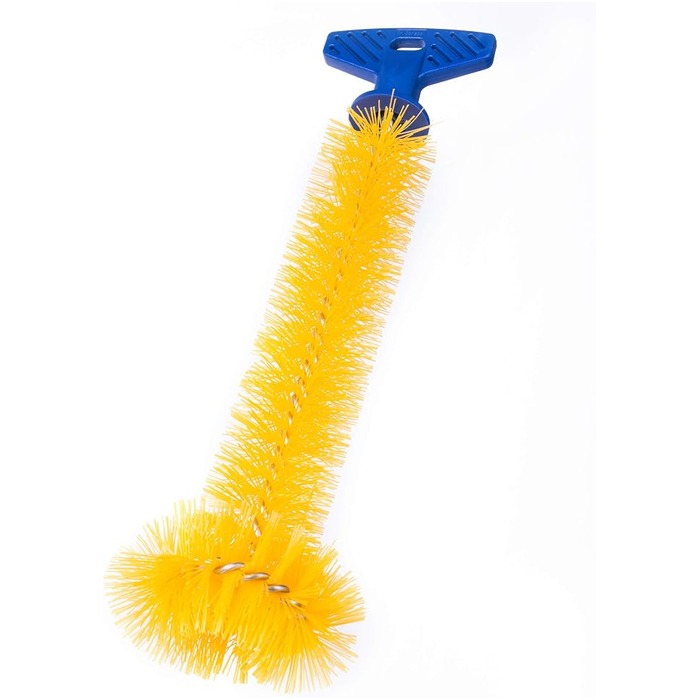
Mr. Scrappy 11-inch garbage disposal brush
An 11-inch brush with a sturdy grip, intended to reach under the guard flaps and into disposer channels from above the drain. Stiff bristles lift food film; the length keeps your hand out of the opening.
- Role: Amazon consumer option
- 11 inches long
- Stiff bristles
- Keeps your hand above the drain
- MOQ: Check current listing
If your splash guard is designed to lift out, remove it only as directed. Scrub both sides with warm water and dish soap, rinse, and let it dry before reinstalling. If it is fixed, clean the underside carefully with a brush or cloth while the unit is disconnected from power. Do not force the guard upward or push a brush deep into a place you cannot see. If you cannot safely reach a buildup, stop and use a qualified service person.
For the chamber, follow your manual’s approved method. Some manufacturers suggest a baking soda flush; others recommend a branded disposer cleaner or citrus peels. These methods are not identical, and internet advice sometimes conflicts. For example, InSinkErator’s current odor instructions use a baking soda and water flush after power is disconnected for scrubbing, while Whirlpool gives an affresh tablet method and also lists baking soda and citrus options [1][4]. Use the method for your unit rather than combining several recipes.
After scrubbing, remove the brush and any loose debris with the disposal still off. Restore power only when tools and hands are clear. Flush with cold water and run the disposal according to the manual. InSinkErator recommends a moderate cold-water flow and a brief rinse after grinding; Whirlpool specifies keeping cold water flowing for at least 15 seconds after a normal grind [1][4]. Because recommendations vary, follow your product manual if it gives a different interval.
When a cleaner tablet helps
A disposal cleaner tablet is useful when the chamber smells stale but there is no clog, leak, jam, or unusual noise. It offers an easy maintenance step: wet the unit, add the tablet as directed, run the disposal for the listed time, and rinse away remaining foam. The specific Affresh three-tablet pack in the linked listing is described as a three-month supply, with one tablet intended for monthly use or as needed [5]. The package directions take priority over this summary.
Affresh Garbage Disposal Cleaner tablets target odor-causing residue with foaming action in the grind chamber, impeller area, and drain pipe, according to the product listing [5]. This is a better fit for someone who wants a simple recurring maintenance product. The three-count pack is also a smaller commitment than a large multipack if you are still deciding whether a disposer tablet helps your sink.
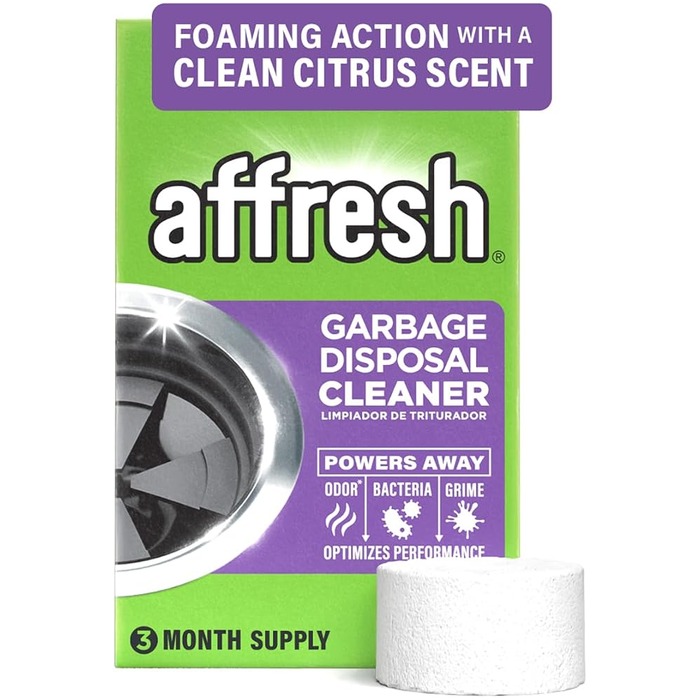
Affresh garbage disposal cleaner, 3 tablets
A repeat-use tablet for chamber maintenance, not a replacement for brushing the guard. It foams through the grind chamber and drain path, so treat it as a different tool for a different surface.
- Role: Amazon consumer option
- Three tablets
- For chamber maintenance
- Not a substitute for brushing
- MOQ: Check current listing
Do not expect foam to clean every surface. If the rubber guard is slimy, lift and scrub it safely; if debris is lodged, a tablet will not remove it; if the drain is obstructed, a deodorizer will not repair the blockage. And a cleaner tablet does not justify pouring another cleaner into the unit at the same time. Follow the label, use one cleaning product at a time, and rinse as directed.
Are ice, lemon, vinegar, and baking soda good ideas
Ice and citrus are widely shared in short videos because they are easy to film. One viral TikTok demonstrated ice being packed into the disposal, followed by hot water and dirty water bubbling up. The Kitchn’s follow-up reported that the plumber it consulted viewed that dramatic backflow as a sign the disposal and drain had been overfilled, not as a necessary part of cleaning [6]. The point is not that every use of ice is harmful; it is that a clip showing debris returning to the sink is not a reliable target to reproduce.
Manufacturer advice differs even on ice. InSinkErator’s FAQ describes grinding ice with citrus and water, while GE’s guidance describes an ice method with scouring powder or baking soda and says not to use water during that method [7][8]. Since these directions do not match, do not assume a popular hack is universally suitable. Check the manual for your make and model, use a modest amount of material, and do not pack the chamber full.
Citrus peels can leave a fresh scent, but fragrance does not prove that grease or residue has been removed. A few peel pieces may be acceptable if the manufacturer permits them; use plenty of water and avoid overloading the chamber. Baking soda appears in some official cleaning procedures, but it is not a substitute for physically scrubbing a dirty guard.
Avoid chemical drain openers and caustic cleaners. GE warns that chemical drain cleaners can damage disposer components [9]. Never combine bleach with vinegar or another acid: the CDC warns that mixing bleach with other cleaners can release dangerous gas [10]. Do not mix baking soda, vinegar, bleach, and commercial tablets into a homemade sequence. Choose one model-approved approach and rinse it fully.
Prevent the smell from coming back
The most reliable habit is good flushing, not a weekly cocktail of ingredients. Run cold water before switching the disposal on, keep it flowing while food is ground, and continue for a short rinse after the sound changes. The precise run-on time varies among manufacturers, so use the manual as your standard [1][4]. Add food gradually rather than feeding a large wad at once. Scrape large leftovers into the trash or compost, and do not pour fats or cooking oil into the sink [1].
Check the appliance manual for foods your model should not process. Fibrous scraps, large bones, pits, and expandable foods can create problems depending on the unit and plumbing. Do not treat a list from another model as universal. If the disposal begins to drain slowly after a particular food, stop adding material and troubleshoot the blockage rather than masking the smell.
Clean the splash guard when it starts to smell or feel coated. If your guard is removable and the manual allows it, washing it at the sink is straightforward. If not, a long brush helps clean its underside without putting fingers near the grind chamber. A tablet can fit a monthly routine if its label recommends that interval, but you do not need to buy one just because a social post says every disposal must be cleaned on a fixed schedule.
If the odor returns within a day or two after cleaning, use that as a diagnostic clue. Recheck the guard, confirm the sink drains freely, and observe whether the dishwasher is involved. A persistent sewer-like smell, a leak, repeated standing water, or a recurring clog calls for inspection of the drain connection or the appliance. More scent tablets will not solve a plumbing fault.
Choose the tool for the job
A long disposal brush is the practical choice when you can see or feel residue on the reachable chamber surfaces or baffle. The Mr. Scrappy brush linked below has an 11-inch handle and stiff bristles; its Amazon listing showed a 4.6-star average from 4,187 reviews and 2,000+ purchases in the previous month [3]. Those numbers are snapshots and can change. The brush is useful for physical scrubbing, though its stiff bristles are not appropriate for every rubber component.
A foaming cleaner is the simpler choice for routine odor maintenance when the unit drains normally and has no visible buildup requiring manual removal. The linked Affresh three-tablet listing showed a 4.6-star average from 49,050 reviews [5]. Reviews describe buyer experience, not a guarantee that a tablet will fix every odor. Treat it as a maintenance product with a defined use, not a repair product.
If the smell comes from a dirty sink stopper or a drain beyond the disposal, neither item is the right first purchase. Clean the removable stopper and visible sink surfaces, check the dishwasher drain setup if relevant, and address slow drainage separately. Spending on the wrong product can make a strong fragrance cover the symptom briefly while the underlying source stays in place.
A quick decision guide
If the odor appears right at the disposal opening and the guard feels greasy, disconnect power as directed and scrub the guard and reachable chamber surfaces. If the chamber smells but has no visible film and drains normally, a disposal-specific cleaner tablet can provide a convenient maintenance clean. If the smell coincides with slow drainage, a leak, recurring backup, or dishwasher discharge, stop adding cleaners and investigate the drain or call a professional.
In practice, the order matters: identify the odor source, clean the surface that actually holds residue, rinse with the water flow your manual recommends, then maintain the unit with the habits that prevent food from sitting inside it. That approach is less dramatic than a viral backflow video, but it answers the real question: what is making the sink smell, and which fix can reach it?
References
-
InSinkErator, “There’s an Odor Coming From Garbage Disposal,” Source
-
Consumer Reports, “How to Clean Your Garbage Disposal,” Source
-
Product listing: Mr. Scrappy 11-inch Universal Garbage Disposal Brush
-
Whirlpool Product Help, “Odor and Smells - Disposer,” Source
-
Product listing: Affresh Garbage Disposal Cleaner, 3 tablets
-
The Kitchn, “How to Clean Your Garbage Disposal With Ice, The Right Way,” Source
-
InSinkErator, “FAQs: Garbage Disposal Support and Advice,” Source
-
GE Appliances, “Disposer Cleaning,” Source
-
GE Appliances, “Disposer Cleaning and Deodorizing,” Source
-
CDC, “Cleaning and Disinfecting with Bleach,” Source
Hook this up to your favourite commenting platform — Giscus, Disqus, or your own.
Continue reading
Do Washing Machine Anti-Vibration Pads Stop Walking?
A pad that has shifted out from under the washer is a symptom, not the diagnosis. Check the machine is stable and the foot fits the cup before buying a grippier set.
When a Silicone Faucet Mat Pools Water, Check the Fit and Drain Path
A mat that holds a puddle is failing at one of three points: the counter does not drain toward the bowl, the mat is set the wrong way, or its outlet is blocked.
How to Keep a Cutting Board From Sliding on a Countertop
Most boards move because of a film of water or oil, a warped corner, or an overhang, not because the board is light. Find the cause, then pick a damp cloth or a grip pad.