How to Choose a Reusable Pet Hair Remover for Clothes and Furniture
A clothes brush and a chamber roller solve different problems. Match the mechanism to the surface you actually clean, then check how it empties.
 Lena Schmidt
Disclosure: We may earn a commission if you purchase through links on this page, at no additional cost to you.
Pet hair on a black shirt and pet hair woven into a sofa are different cleanup jobs. A compact clothes brush can be convenient before leaving home, yet slow on a sofa cushion. A chamber-style roller can collect loose fur from upholstery quickly, yet feel awkward on a sleeve that shifts under the tool. The useful question is not which reusable remover is universally best. It is which tool matches the surface you clean most often.
For clothing touch-ups, start with a small directional fabric brush and a base that removes collected hair. For sofas, bedding, and broad, taut fabric panels, a chamber roller is usually easier to clear between passes. Before using any tool on delicate fabric, check its care instructions and test a hidden area.
Product pages often promise one tool for clothes, couches, rugs, car seats, and every kind of pet hair. Independent testing points to a more useful split. Good Housekeeping tested 26 popular tools on clothing, carpets, and pillow covers, rating ChomChom highly overall and choosing OXO FurLifter for clothing. The tester found the larger roller harder to maneuver around collars and noted that the garment brush handled surface fur, not deeply embedded hair.[1] Consumer Reports also tested brush-style and tape-based removers against hair from four cats.[2]
Start with the surface, not the product name
Look closely at where the fur sits. Hair lying on the surface of a jacket, blanket, or sofa is a different problem from strands caught deep in a dense weave. A reusable brush or roller can lift loose hair, but it cannot guarantee that embedded hair will come out without more effort. For stubborn buildup, a vacuum upholstery attachment, a fabric-specific tool, or laundering when the care label allows may be a better next step.
Clothing brings small, moving areas and sensitive finishes. Sleeves, seams, collars, pleats, and pockets need control. A smaller brush is easier to steer than a broad furniture roller. It is also easier to stop before crossing a delicate knit or a garment with a loose loop. If the clothing is hanging freely, support the section with your other hand or lay it flat. A loose shirt bunches under a roller; tension gives the tool a stable surface.
Furniture brings the opposite constraints. Cushions and seat backs are wide, and fur may cover a large area. A tool that stores hair in an internal compartment reduces the stop-and-peel rhythm of disposable tape. But the fabric needs to stay reasonably flat. If a cushion cover is slack or the pet bed is soft and puffy, hold the fabric taut where possible, or work over a firmer surface. A chamber roller may simply push loose fabric around when it cannot make reliable contact.
The material matters too. Smooth woven cotton may respond differently from velvet, fleece, boucle, or a loose knit. Some fabrics have a nap that changes appearance when brushed in different directions. Avoid dragging a toothed scraper or stiff brush across an unknown textile. Follow the maker’s care guidance and test an inconspicuous spot; an effective tool can still snag yarns or leave marks.
Know the three reusable designs
A self-cleaning fabric brush uses directional micro-bristles or a similar textile surface to gather loose hair. After brushing, the head goes into a base that strips away the collected debris. Its strengths are quick clothing touch-ups, compact storage, and a tidy reset between uses. Its limits are coverage and reach: a small head takes many strokes on a sofa, and surface brushes may leave fur that is worked into the fabric.
A chamber roller uses a fabric-contact surface and a back-and-forth motion to collect fur inside a receptacle. Emptying the chamber replaces throwing away used tape sheets. The design suits broader upholstery, blankets, and pet beds when the fabric can be held flat. It is not literally hands-free: you still need to roll, open the chamber, remove hair, and close it again. A full chamber can make further passes less effective, so empty it when hair begins to escape or transfer back.
Washable sticky gel rollers are another category. Their attraction is a tacky surface that can be rinsed and reused. Their performance depends on the product’s construction and condition, and users often disagree about whether tack returns after washing. A sticky surface can also be less appealing for delicate textiles or areas where residue is a concern. Follow that model’s cleaning directions; do not assume that all “washable” rollers tolerate the same soap, water temperature, or drying method.
There is also a simple reusable clothes brush, often made with a fabric nap on one or both sides. It does not need a chamber or adhesive, but direction matters: brushing against the nap may gather lint, while the return stroke can spread it again. Check the arrows or instructions on the handle. If the brush has no marked direction, try a small hidden area and use short, consistent strokes in one direction, lifting the brush between passes.
Match the mechanism to the job
If your daily problem is fur on work clothes, compare head size, brushing direction, and cleanup. A compact self-cleaning brush is easier to keep by a closet than a wide upholstery roller. OXO describes its FurLifter garment brush as a micro-bristle tool that clears in its base; its Amazon page currently shows 4.3 stars, roughly 13,000 reviews, and 800+ purchases in the past month. These figures change and do not prove it works on every fabric. Good Housekeeping found it effective on surface fur, not embedded hair.[1]
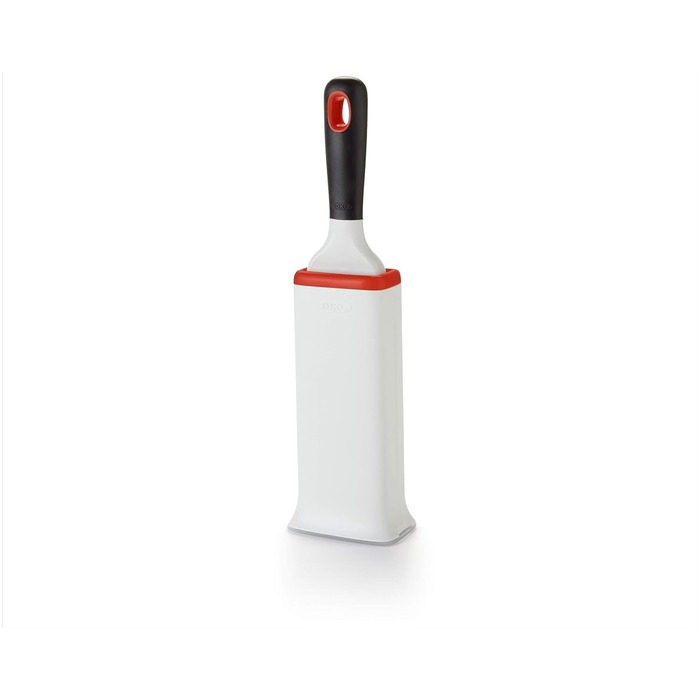
OXO Good Grips FurLifter garment brush
A micro-bristle brush that clears collected hair into its own base. It is sized for garments, so it suits collars, sleeves and seams that a wide upholstery roller struggles to reach. Surface fur is its job; hair worked into the weave is a different problem.
- Role: Amazon consumer option
- Micro-bristle brush
- Self-cleaning base
- Sized for garments
- MOQ: Check current listing
If you repeatedly clean a sofa, pet bed, or car seat, a chamber roller may earn its size. ChomChom’s original roller currently shows 4.5 stars, about 206,000 reviews, and 10,000+ purchases in the past month on Amazon. Good Housekeeping found it effective on test surfaces and easy to empty, but large for clothing details.[1] The Spruce Pets’ hands-on review found it effective on a blanket and sofa, but less useful on a loose sweatshirt or soft bedding unless fabric was taut.[3]
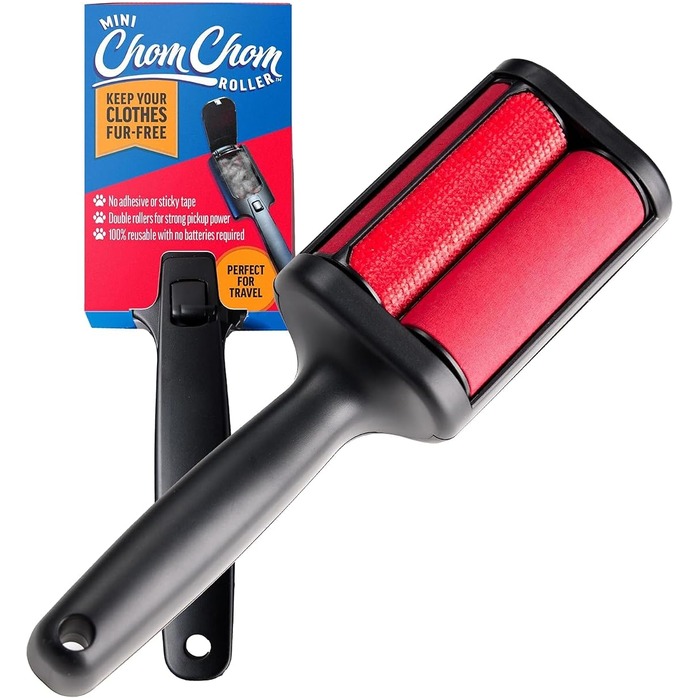
ChomChom Roller original size
A chamber roller that collects fur inside a receptacle as you work back and forth. It covers wide, taut surfaces such as a sofa cushion or pet bed quickly, and empties without sheets. Its head is large for clothing details.
- Role: Amazon consumer option
- Chamber collects the hair
- Reusable, no sheets
- Better on wide taut surfaces
- MOQ: Check current listing
Treat reviews as clues, not a substitute for matching the tool to your fabric. Ratings combine different pets, textiles, and expectations. Read lower-rated reviews for repeated, specific problems: snagging, fur being redeposited, a chamber that is hard to empty, or a head that is too large for clothes. One dramatic review is not a failure rate.
The difference is functional, not just brand preference: a garment brush offers control on small wearable surfaces; a chamber roller collects and stores fur from broader panels. If you clean both, two task-specific tools may be more efficient than expecting one device to do everything. If you only clean clothes, the larger roller adds bulk. For upholstery, a small brush may require too many strokes.
Public community threads reflect the same split: owners may keep one tool for the couch and another for clothes. Recommendations and experiences differ, so these posts are useful for identifying the question, not predicting performance in every home. A video demo can show a tool’s movement, but one test surface cannot establish compatibility with every fabric or long-term durability.[5]
Use the tool without roughing up the fabric
Start with a dry surface unless the product instructions specifically say otherwise. Moisture can change how hair clings and may affect some finishes; do not wet furniture simply because a social post recommends it. Check the upholstery care code or the furniture maker’s instructions before using water or any cleaning agent. For delicate clothing, follow the garment label and test the remover on an inside seam or hem.
On a garment, lay the piece flat or hold one panel taut. Brush in the direction marked on the tool, using light, short strokes. Avoid repeated hard scrubbing over a single spot. Lift the tool between strokes if its surface tends to redeposit hair. Check seams and cuffs separately instead of forcing the head into narrow corners. If the garment has a raised nap, brush with the nap and stop if the finish changes.
On a cushion, flatten the cover with one hand and use short back-and-forth strokes with a chamber roller. Work in manageable strips so you can see whether fur is being collected or merely moved. Empty the receptacle when it fills. For a removable cover, check the care label before laundering; a roller is a maintenance step, not a replacement for routine cleaning. On a pet bed, pull the cover taut if possible. If it remains too soft to support the roller, remove the cover or use a vacuum tool approved for the fabric.
For a sofa with multiple materials, test each fabric panel separately. The arms, cushions, piping, and back may have different weaves or finishes. Stop if a test area snags, shines, pills, or changes color.
Keep the reusable tool working
Reusable does not mean maintenance-free. Hair trapped in the brush, base, or chamber can reduce pickup and may transfer back to the next surface. Empty the chamber or self-cleaning base after a large session, and check the manufacturer’s cleaning instructions before rinsing any component. OXO directs users to dip its FurLifter brush into the base to clean it and open the bottom compartment to empty trapped debris when full.[4] ChomChom’s directions call for short back-and-forth strokes, then opening the chamber and removing collected hair.
Store the tool dry and keep its working surface protected from dust, lint, and debris. Do not cut fibers or pry apart a sealed head unless the maker says it is removable. When performance drops, first check whether the base or chamber is full and whether hair is wound around an edge. Then inspect the cleaning surface for wear. A product with no replacement head may be economical only while that head remains usable.
A practical buying checklist
Before ordering, answer five questions: What is the main surface—clothes, a sofa, bedding, or a car seat? Is the hair loose or worked into the weave? Can the fabric be held flat? Does the tool use a chamber, a cleaning base, or washable adhesive? How will you empty, wash, or store it after a real cleanup?
Then compare the actual head size and grip against your use. Large furniture rollers cover more ground but are clumsier around buttons and seams. Small brushes offer precision but take longer on broad cushions. Read product reviews for repeated complaints tied to your surface, not just the overall star average. If you have expensive or delicate textiles, prioritize low-risk testing and care instructions over claims such as “works on everything.”
Buy for the job you repeat most. For daily clothing touch-ups, a directional fabric brush with a self-cleaning base is a reasonable starting point. For recurring couch and bedding cleanup, a chamber roller can reduce disposable-sheet use, provided the fabric is taut enough for it to work. Keep a compact backup only if you routinely need a quick finish away from home. No reusable remover eliminates shedding or guarantees a hair-free house; the goal is to make the recurring cleanup easier without damaging the textile.
Frequently asked questions
Is a reusable pet hair roller good for clothes?
It can work for loose surface fur, but a large chamber roller may be awkward around collars, sleeves, and seams. A smaller fabric brush or lint roller is usually easier to steer. If the hair is embedded in a knit, expect to need more than a surface brush.
Why does a reusable roller work on a couch but not a sweatshirt?
The couch cushion may hold the fabric flat while a sweatshirt shifts and bunches. Some chamber rollers also have broad heads that cannot maneuver around clothing details. Try supporting the garment, making short strokes, or switching to a smaller garment brush.
Will these tools damage velvet or delicate fabric?
No product can be called universally safe for every textile. Follow the care label, avoid aggressive scraping, and test a hidden area first. Stop if the tool catches yarns or changes the fabric’s nap or appearance.
Should I buy one tool for clothing and furniture?
Only if its size and cleaning method suit both jobs you actually do. A small brush can handle quick clothing touch-ups but may be slow on a sofa. A large chamber roller can collect upholstery fur but is less precise on clothes. Two task-specific tools can be simpler than one compromise.
Are reusable rollers better than disposable lint rollers?
They avoid replacement sheets, but they require emptying or cleaning and may not suit every fabric. Disposable tape remains useful for travel, precise clothing cleanup, or a last pass. Choose based on the surfaces you clean and how much maintenance you will tolerate.
References
-
Good Housekeeping Institute, “The 8 Best Pet Hair Removers for Clothes, Furniture, Carpets, and More,” July 29, 2026. Source
-
Consumer Reports, “3 Best Lint Brushes and Rollers of 2026, Tested by Experts.” Source
-
The Spruce Pets, “ChomChom Roller Review: A Must-Have for Pet Owners.” Source
-
OXO, “Remove Pet Hair From Furniture With FurLifter Brush.” Source
-
YouTube, “Battle of Fur Removers: Chom Chom Roller vs OXO Good Grips Furlifter.” Source
-
OXO, “How to Get Rid of Pet Hair.” Source
Hook this up to your favourite commenting platform — Giscus, Disqus, or your own.
Continue reading
How to Choose Couch Grippers for Hardwood Floors
Match grippers to the sofa's feet, check floor compatibility, and choose between cut-to-fit pads, adhesive pads and a rug setup.
How to Hang a Cashmere Sweater Without Stretching It
Fold it flat when the garment is wet or heavy; use a fold-over method only when closet space makes hanging necessary
How Often Should You Wash Cashmere?
A wear-vs-wash decision guide for sweaters, cardigans and scarves