How to Choose Couch Grippers for Hardwood Floors
Match grippers to the sofa's feet, check floor compatibility, and choose between cut-to-fit pads, adhesive pads and a rug setup.
 Lena Schmidt
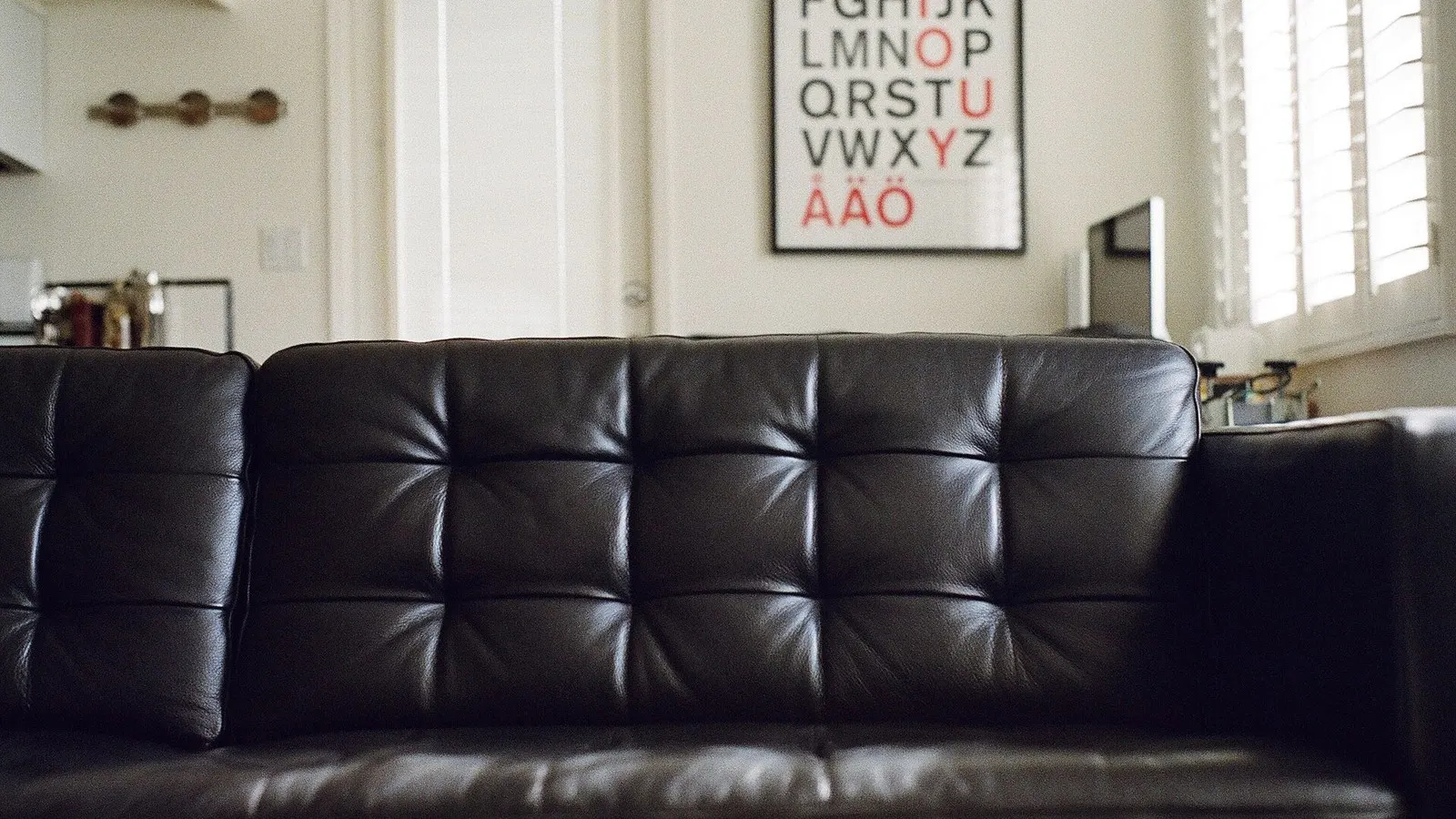
Disclosure: We may earn a commission if you purchase through links on this page, at no additional cost to you.
A sofa that shifts a little every time someone sits down can become a surprisingly persistent problem. It drifts away from the wall, separates from a neighboring sectional piece, or leaves a faint track where a foot has crossed the finish. The fix is usually a small contact surface under each load-bearing point, but “non-slip pad” is not a precise enough buying specification. The pad has to fit the sofa’s feet, stay under them during use, and be compatible with the floor finish.
For most sofas with distinct feet on a smooth hardwood floor, start with a rubber-style gripper under every load-bearing foot. Choose a cut-to-fit sheet when the feet are unusually wide or irregular; choose a pre-sized self-adhesive pad when each foot has a flat, clean underside and the pad dimensions suit it. If the sofa has a continuous rail or plinth instead of legs, a rug with a floor-compatible rug pad may be the better route. Felt is useful when furniture needs to glide. It is generally the wrong first choice when the goal is to stop a sofa from moving.
First check what is actually moving
Before ordering anything, watch the sofa during the movement that causes the problem. Does the whole frame creep backward when someone stands up? Does one corner pivot? Do two sectional modules separate while the feet stay in place? Those are different problems.
If all feet travel across the floor, improve the grip at each contact point. If only one corner moves, inspect whether that foot is loose, missing a glide, or carrying less weight. If sectional pieces pull apart, pads may reduce the movement of each module, but they do not connect the modules. Use the manufacturer’s sectional connectors or compatible joining hardware for that job.
Look underneath the sofa with a flashlight. Count the actual contact points, including center supports that are easy to miss. A three-seat sofa may have more than four feet. A low sofa may rest on a broad base; a reclining sofa may have a metal mechanism or moving components close to the floor. Do not put a pad under a mechanism, a cable, or a decorative edge that is not meant to bear weight.
A useful check is to gently rock each corner while the sofa is empty. A loose leg or uneven frame can make a correctly selected gripper appear ineffective. Tighten a serviceable leg according to the furniture instructions before you judge the pad.
Measure the foot, not the package label
Measure the flat area touching the floor. For a round foot, record its diameter. For a square or rectangular foot, record both width and depth. If the foot has a rounded edge, bevel, screw head, or recessed center, note that too. The gripper needs a stable contact area, not merely a matching overall dimension.
A pad smaller than the foot leaves part of the leg unsupported and may concentrate pressure near an edge. One much larger than the foot can be visible and may shift if the sofa’s weight does not hold it flat. A little margin can help keep a foot centered, but there is no universal overhang that suits every pad material and floor. Follow the product’s sizing instructions and choose a shape that can sit flat.
Measure all feet rather than assuming they match. Replacement legs, center supports, and corner blocks can differ. Also check floor clearance: a thick pad can slightly raise the sofa, which may matter for a low frame, a robot vacuum, a reclining mechanism, or a sectional connector.
A practical paper template is often easier than measuring a curved foot twice. Place paper under the leg, trace the contact outline, and compare it with the pad’s usable surface. This is especially helpful for a tapered leg: the visible leg may be much wider than its flat bottom.
Choose among three pad styles
Cut-to-fit grip sheets
A larger gripper sheet is useful when a sofa has wide feet, feet with different shapes, or a broad rail that needs several custom pieces. It reduces the chance of ordering a set where none of the pre-cut sizes fit. The trade-off is that cutting and placement take care. Make a paper template first, cut the pieces to match the contact area, and keep each one flat without folds or ragged corners.
One option is Slipstick GorillaPads, 4-inch pre-scored gripper pads. The product listing describes square rubber gripper pads that can be cut to size and includes optional adhesive backing. That format makes sense when the sofa’s feet do not match a standard small square. Confirm the number of pieces in the current listing and how the adhesive is intended to be used before purchase; product packaging and offers can change.
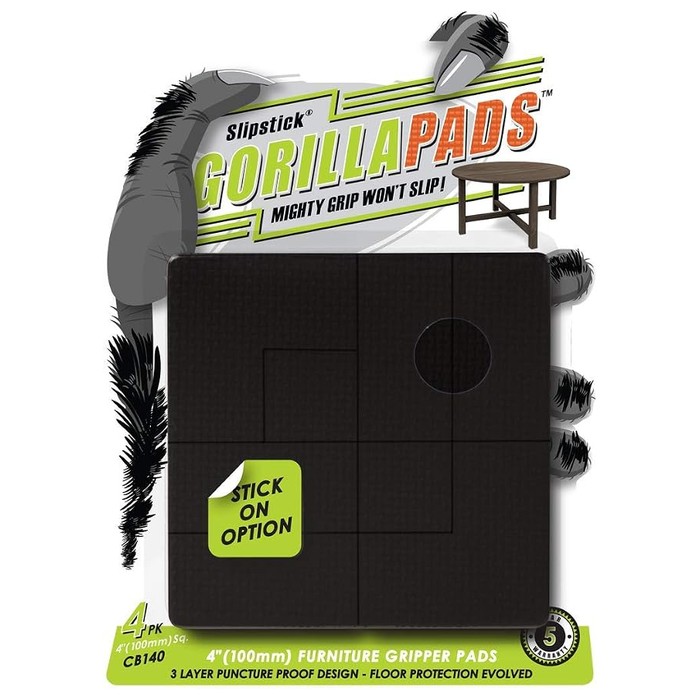
Slipstick GorillaPads 4-inch pre-scored pads
Square rubber gripper pads that can be cut to size, with optional adhesive backing. That format suits wide or irregular feet that do not match a standard small square. Confirm the piece count in the current listing and how the adhesive is meant to be used before you buy; packaging and offers change.
- Role: Amazon consumer option
- Cut-to-fit 4-inch pads
- Optional adhesive backing
- Suits wide or irregular feet
- MOQ: Check current listing
Pre-sized adhesive pads
A pre-sized pad is quicker when all feet have a similar, flat underside and the listed size covers the contact area. Adhesive keeps the pad attached to the leg when the sofa is lifted or repositioned, but it is not a floor-safe guarantee. Adhesive belongs on the furniture side, never on the hardwood. Check that the foot material is clean, dry, and suitable for the adhesive, and confirm that the pad will not overhang into view.
The X-PROTECTOR 3-inch furniture grippers are listed as self-adhesive, square furniture pads. They are a more direct fit candidate for feet whose flat undersides suit that footprint. Do not assume a 3-inch pad fits every “3-inch” leg: the leg’s contact patch, edge shape, and the product’s actual dimensions matter more than a rounded label.
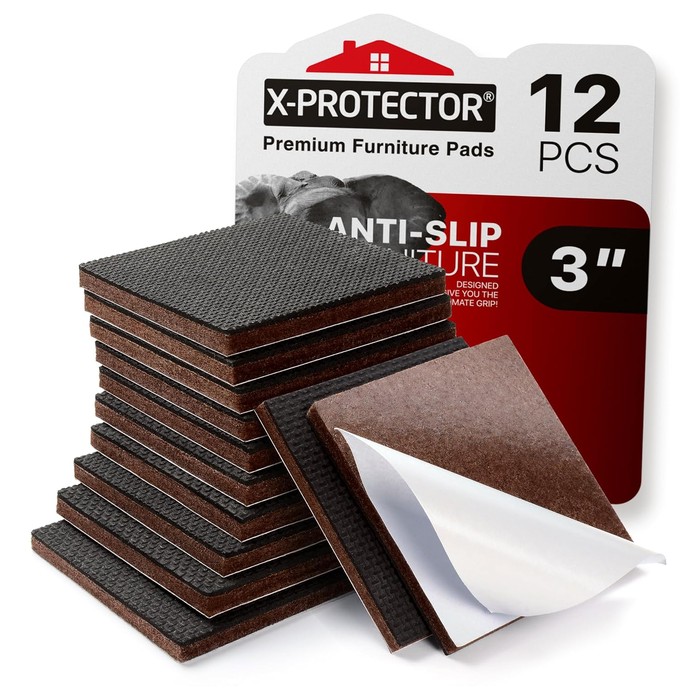
X-PROTECTOR 3-inch self-adhesive pads, 12-pack
Self-adhesive square pads, a direct fit when every foot has a similar flat underside. Do not assume a 3-inch pad fits every leg described as 3 inches: the contact patch, the edge shape and the actual dimensions matter more than the rounded label.
- Role: Amazon consumer option
- 12 self-adhesive 3-inch pads
- Best for uniform flat feet
- Check contact patch and edge shape
- MOQ: Check current listing
Cups or deep-profile grippers
A cup can help when a foot is round or narrow and tends to walk off a flat pad. Its raised edge physically helps keep the leg centered. That same edge can make it a poor fit for broad square feet, angled legs, or bases that need to sit fully flat. Measure the inside dimensions and depth, not just the outside diameter.
Cups are also more visible and can collect dust. If the sofa is moved often, a loose cup can stay behind or turn as the leg shifts. A fitted cap that grips the foot is less likely to separate from the furniture, but the fit must be close enough to prevent wobble. Do not force a cap onto a leg that is too large.
Rubber, felt, cork, or a rug?
For a sofa that should stay put, friction is the goal. Rubber-style surfaces are commonly sold as grippers for hard floors. Felt is designed to make furniture easier to slide and to reduce scratching during repositioning, so it can solve one problem while worsening another. People discussing hardwood-floor sofa creep report exactly this trade-off: felt protected the floor but let the sofa move; rubber pads were suggested for furniture that should remain in place. These accounts are useful signals of the practical decision, not controlled product tests.
A rug can address a larger footprint or a sofa with no discrete feet. But the rug itself must stay anchored to the hardwood, and the sofa must sit on it in a stable way. A rug pad needs to be compatible with the specific floor finish. Do not assume that every rubber-backed or PVC-backed rug pad is suitable for every hardwood floor. Ask the flooring manufacturer or installer what materials are allowed, especially on a recently finished floor or when the finish is unknown.
Cork and felt-rubber combinations may be useful when floor protection and some resistance are both needed, but product materials and performance vary. Treat category names as starting points, not proof. A “hardwood safe” claim from a seller does not override the instructions for your floor. The National Wood Flooring Association advises routine care based on the floor and finish; its maintenance guidance recommends removing dust and dirt and using a cleaner appropriate for the finish. Keep grit away from any furniture pad because trapped particles can abrade the surface as the sofa moves.
Protect the finish before you install
Hardwood may be solid or engineered, newly finished or decades old, and sealed with different finishes. A pad material that behaves well on one floor may discolor, leave residue, or interact differently with another finish over time. There is no honest universal promise that a particular rubber or adhesive is safe for every wood floor.
Check the flooring paperwork or ask the installer before leaving a rubber product in place for months. If you cannot identify the finish, test the product in a concealed area for the period recommended by the floor maker. Check for color transfer, tackiness, residue, or a change in sheen. A quick test is not a long-term guarantee, so inspect the area again after installation and periodically thereafter.
Never stick adhesive directly to the floor. Avoid strong double-sided tape, household glue, and improvised sticky materials under the sofa; removal can damage a finish or leave residue. If the floor maker advises against direct rubber contact, use a compatible barrier or choose a different solution approved for that floor.
Clean both sides of the contact before installation. Lift the sofa with help rather than dragging it across the floor. Wipe dust from the foot bottom and floor with a method appropriate for the finish, then let both surfaces dry completely. Do not use a wet mop, steam, oil, or a solvent to prepare the spot. NWFA’s general hardwood maintenance guidance recommends dry or slightly damp dust removal and a cleaner suited to the floor finish, not wet or steam mopping.
Install, test, and adjust
Set every pad under a real load-bearing foot and center the foot on it. If the pad is adhesive-backed, attach it to the foot as directed and press evenly; do not improvise with extra adhesive. If it is a loose gripper, make sure the foot cannot sit partly off the pad. For a cut-to-fit piece, check that the edges are neat and the whole foot is supported.
Lower the sofa carefully. With another person nearby, sit down in the place that normally causes the sofa to move, then stand up as usual. Watch the feet rather than pushing the sofa hard by hand. If the couch still creeps, check whether a pad has folded, moved, or become contaminated; whether one foot is carrying little weight; and whether a hidden center support was missed.
Do not respond to movement by stacking pads. Stacking can make the sofa unstable, raise it unevenly, or create a small edge that the foot can slide off. Use one correctly sized layer at each support point. If a sofa is extremely heavy or has an unusual frame, check with the furniture maker before changing the support height.
After a few days, inspect each contact point. Recheck after vacuuming, moving the sofa, or cleaning the floor. If you see residue, discoloration, a glossy or dull patch, or a pad that has adhered to the floor, stop using it and follow the flooring maker’s guidance. Do not scrape a finish or apply a chemical cleaner to remove residue without checking compatibility first.
When grippers are not the right fix
A floor pad will not repair a loose leg, a broken frame, or a defective recliner mechanism. It also cannot stop two sectional units from separating if the modules are not connected. Use the correct furniture hardware for those conditions.
If the sofa needs to move regularly for cleaning, a high-grip pad may make that task frustrating. Consider a setup that can be deliberately repositioned, such as a properly anchored rug, or use furniture sliders only while moving the sofa and remove them afterward. Do not leave glide-style felt or plastic sliders in place if their low-friction surface is the reason the couch keeps drifting.
If the sofa has a broad continuous base, do not balance it on several tiny pads unless the furniture manufacturer permits that arrangement. A larger compatible rug-and-pad setup may distribute contact more naturally. If the sofa sits on casters, make sure the caster is designed for the floor and that it locks; a gripper placed under a rolling wheel is not a substitute for a brake.
A short buying checklist
Before ordering, write down the shape and dimensions of every contact point, the total number of load-bearing feet, whether each foot is flat, and whether the sofa must remain movable. Then check that the selected pad’s usable area supports the foot, that the material is approved for your floor finish, and that any adhesive is intended for the furniture side.
Choose cut-to-fit pads for irregular or mixed-size feet; pre-sized adhesive pads for uniform flat feet that match the stated dimensions; and cups or fitted caps when a small leg needs a physical edge to stay centered. Use a rug setup for a broad base only when the rug and rug pad are compatible with the floor. Skip felt as the permanent answer when stopping movement is the main task.
The useful test is simple: after installation, the sofa should stay in position during normal sitting and standing, every support point should remain stable, and the hardwood should show no residue or finish change. If one of those conditions fails, adjust the fit or choose another floor-compatible approach instead of adding more layers.
References
-
National Wood Flooring Association, Maintenance. Source
-
Google Search Central, Creating helpful, reliable, people-first content. Source
-
The Spruce, 5 Ways to Finally Stop Your Sofa From Moving and Damaging Your Floors. Source
-
Livingetc, How to Stop Your Couch From Sliding — 4 Tricks to Try. Source
-
Homesteady, Hardwood Floors: How to Stop Couches From Sliding on Hardwood Floor. Source
Hook this up to your favourite commenting platform — Giscus, Disqus, or your own.
Continue reading

How to Choose a Reusable Pet Hair Remover for Clothes and Furniture
A clothes brush and a chamber roller solve different problems. Match the mechanism to the surface you actually clean, then check how it empties.

How to Hang a Cashmere Sweater Without Stretching It
Fold it flat when the garment is wet or heavy; use a fold-over method only when closet space makes hanging necessary
How Often Should You Wash Cashmere?
A wear-vs-wash decision guide for sweaters, cardigans and scarves